
Key Takeaways
- Arkansas’s public system through OSAMH and two 16-bed Crisis Stabilization Units serves broad community needs, but operates within state referral and reporting structures that may not fit responders prioritizing confidentiality 1, 3, 8.
- Trauma exposure drives elevated drinking in public safety work, with PTSD-positive officers averaging AUDIT scores of 8.4 versus 4.9 for those without PTSD 6, 7.
- For Arkansas first responders, decision factors extend beyond cost to confidentiality boundaries, peer cohort fit, wait times for detox, and whether clinicians understand shift work and chain-of-command dynamics.
- Responders weighing care can compare a private men’s residential program against OSAMH-funded providers reachable through the state locator line, choosing based on disclosure control rather than pressure from supervisors 1.
The Confidentiality Math You’re Already Running at 11 p.m.
You’re weighing what happens if the wrong person finds out about seeking help: fitness-for-duty concerns, potential impact on your career, or how colleagues and family might perceive you. This isn’t paranoia; it’s a rational assessment of the risks involved.
National research indicates that alcohol misuse in law enforcement is underreported, largely due to occupational culture and the stigma associated with seeking care 9. Similarly, the SAMHSA responder bulletin highlights that repeated trauma exposure in firefighting and EMS increases behavioral health and substance use risks, yet formal treatment is underused because of fears surrounding disclosure 7.
The critical question isn’t whether to seek help, but whether there’s a program that respects these concerns—one that ensures clinical information remains confidential, understands the demands of shift work and chain of command, and caters specifically to the unique experiences of first responders.
Why the Job Changes the Drink
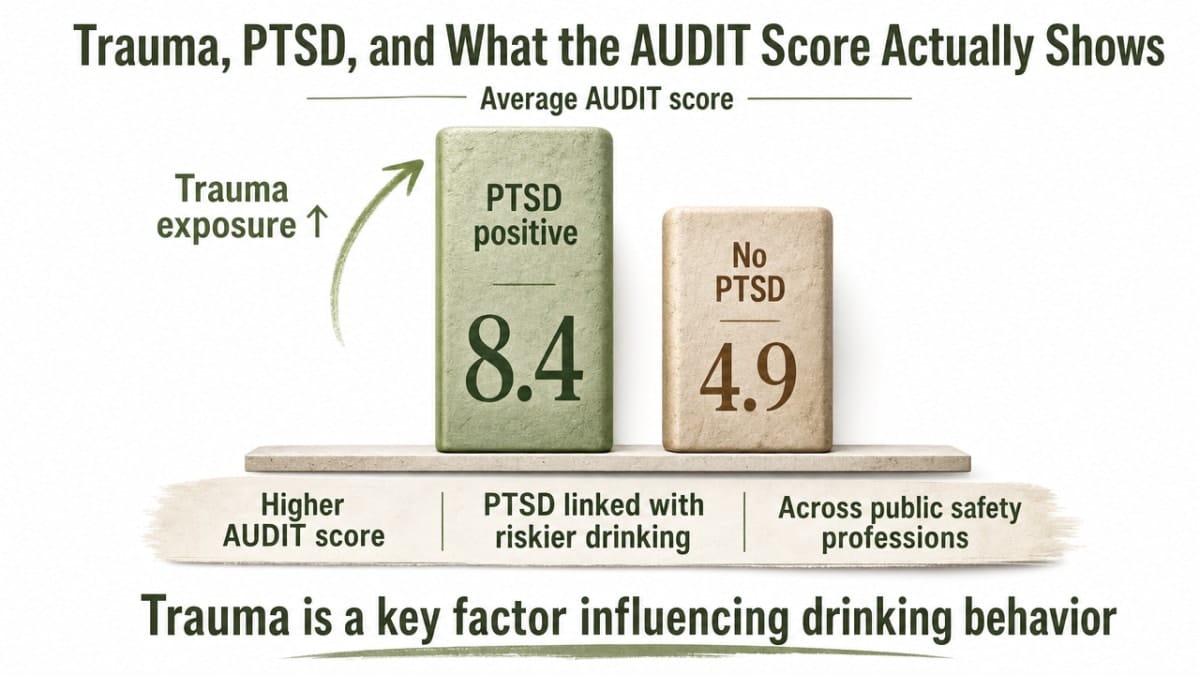
Trauma, PTSD, and What the AUDIT Score Actually Shows
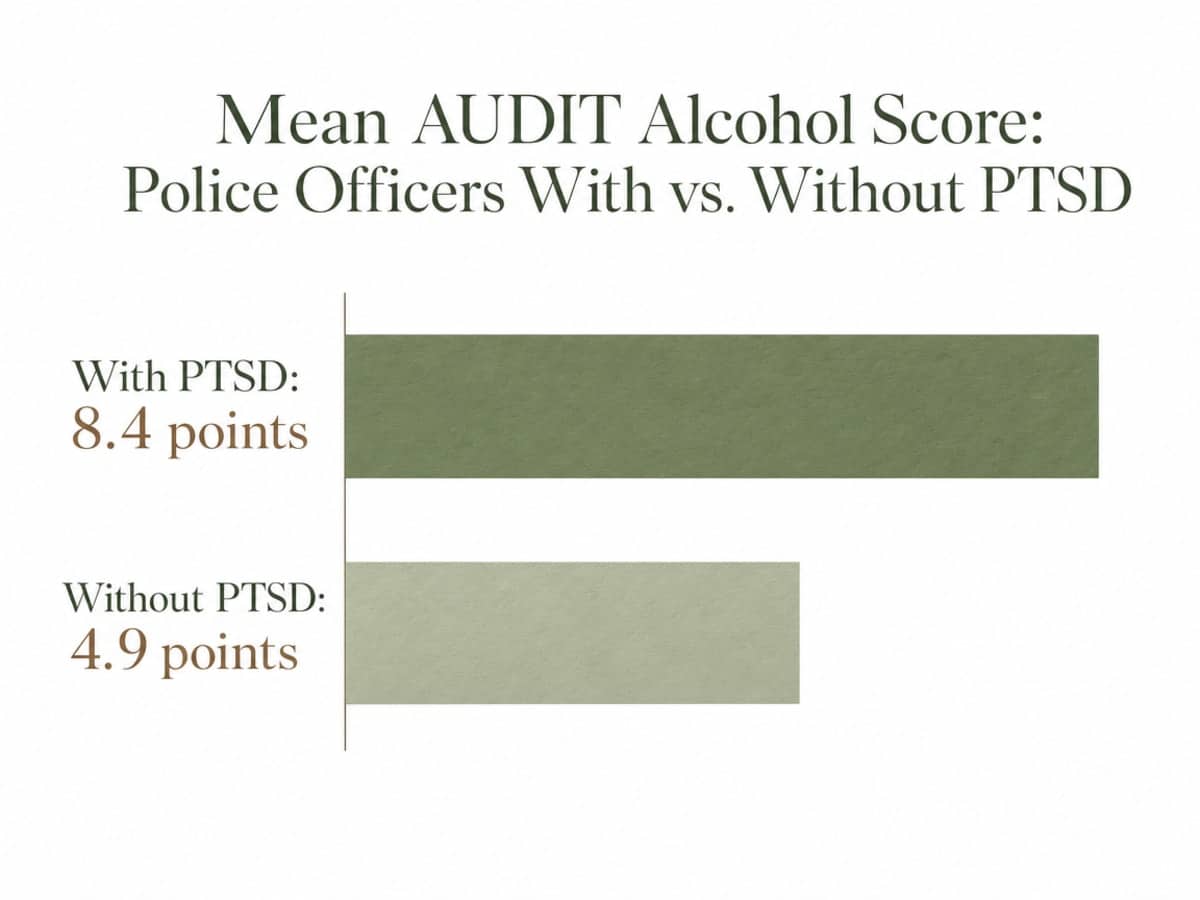
The increase in drinking often correlates with the accumulation of traumatic experiences on the job. The Alcohol Use Disorders Identification Test (AUDIT) is a tool clinicians use to assess risky drinking. A CDC-hosted study of police officers revealed that those screening positive for PTSD had an average AUDIT score of 8.4, significantly higher than the 4.9 average for officers without PTSD 6.
This data suggests that trauma exposure is a key factor influencing drinking behaviors among first responders. The SAMHSA responder bulletin further supports this, noting that repeated exposure to trauma and emergencies across public safety professions elevates the risk of behavioral health issues and substance misuse 7. The underlying mechanism remains consistent, regardless of the specific uniform.
Shift Work, Suicide Risk, and the Silence Around Both
Beyond trauma, the demanding schedule of a first responder significantly impacts well-being. Rotating shifts disrupt sleep, appetite, and personal life, and when combined with mandatory overtime, this prevents the nervous system from fully recovering. This constant state of alert contributes to underlying stress that can exacerbate substance use.
The occupational risks are substantial. A CDC/NIOSH review found that law enforcement officers, firefighters, EMS clinicians, and public safety telecommunicators face unique stressors and are at an elevated risk for suicide 5. Data from the National Violent Death Reporting System also showed higher suicide rates in protective service occupations compared to the general workforce 10.
Career, Clearance, and Chain of Command: The Real Barriers to Care
Many first responders hesitate to seek help due to concerns about how it might affect their careers. The RAND review confirms that alcohol misuse in law enforcement is common but underreported, with occupational culture and stigma being primary deterrents to seeking care 9. The SAMHSA responder bulletin echoes this, stating that fear of career repercussions and loss of confidentiality prevents firefighters, EMS clinicians, and dispatchers from accessing formal treatment 7.
These fears are legitimate and include concerns about fitness-for-duty reviews, firearm surrender, mandatory psychological evaluations, and how colleagues or supervisors might perceive them. There are also worries about the impact on promotions or the disclosure of personal information to family members.
A private, small-capacity residential program offers a different approach. Clinical records are maintained by the treating facility, not shared with state referral systems or HR departments. A men’s-only setting fosters an environment where other clients are more likely to share similar professional experiences, reducing the need to explain the unique stressors of the job. Furthermore, a single clinician as a point of contact minimizes the number of individuals handling your chart, and family communication boundaries are established at admission, giving you control over who knows what and when.
This approach empowers you to decide when and to whom you disclose your treatment, whether it’s to a spouse, union representative, chief, or department wellness coordinator. The treatment process itself does not dictate this timeline, offering care that respects the unique circumstances of first responders.
Mapping Arkansas: What the Public System Does and Doesn’t Cover
OSAMH-Funded Providers and the Statewide Locator Line
Arkansas has a public behavioral health system managed by the Office of Substance Abuse and Mental Health (OSAMH) within the Department of Human Services. OSAMH funds community-based providers and contracts with organizations to deliver prevention, treatment, and recovery services statewide 2, 8. For uninsured or underinsured individuals, DHS offers a statewide locator line and a state-funded pathway to access mental health and addiction services 1. Additionally, a consolidated DHS page provides access to 24/7 crisis support for suicidal thoughts and behaviors 4.
While this public infrastructure is vital for many Arkansans, first responders often face different considerations. Publicly funded providers operate within specific catchment areas and grant reporting structures, meaning your information becomes part of a broader system. If confidentiality is a primary concern, a state-funded intake line may not align with your specific needs, even if it serves a broader public good.
Crisis Stabilization Units Are for the People You Respond To, Not You
Arkansas has two 16-bed Crisis Stabilization Units (CSUs) that operate 24/7 as alternatives to jail or emergency rooms for individuals in mental health or substance misuse crises who encounter law enforcement 3. These units, established under Act 423 of 2017, accept referrals at any hour 3.
CSUs are effective for diverting individuals from the criminal justice system and providing immediate crisis intervention. However, they are short-term facilities designed for stabilization, not comprehensive residential addiction treatment. For first responders, utilizing a CSU for personal treatment would place them in a law-enforcement-facing facility intended for others, without the trauma-focused therapy or medically supervised detox typically offered in a dedicated residential program.
Public vs. Private Residential: A Non-Price Comparison
Beyond cost, key differences between publicly funded pathways and small-capacity private men’s residential programs include confidentiality, capacity, wait times, and cultural fit.
- Confidentiality.
- An OSAMH-funded provider operates within a state-referral and grant-reporting framework 1, 8. A private residential program, like Serenity Park, maintains your record solely with the treating facility, offering a tighter circle of confidentiality.
- Capacity.
- Public providers scale to meet broader demand. Serenity Park, a small-capacity private program, serves up to 20 clients, ensuring a more intimate setting where group dynamics are conducive to shared experiences among professional men.
- Wait time.
- While CSUs offer immediate crisis stabilization 3, public residential admissions often follow catchment-area referral rhythms. Private residential programs, with their smaller census, can frequently initiate medical detox within a day of your call.
- Responder cultural fit.
- Public providers serve a diverse population. A men’s-only residential setting specifically designed for adult professional men, where trauma, shift work, and chain-of-command dynamics are inherently understood, provides a more tailored and supportive environment. This distinction is crucial for first responders seeking a program that aligns with their unique experiences.
What a Men’s Residential Program Built Around Responders Looks Like
Medical Detox, Trauma-Focused Therapy, and Peer Cohort Fit
Effective treatment begins with addressing the physical impact of substance use. If you’ve been drinking daily or mixing substances, medically supervised detox is crucial for managing withdrawal safely. Clinicians monitor vitals and adjust medications to ensure your safety during this initial phase.
Detox is merely the first step. The core of treatment involves trauma-focused therapy. The SAMHSA responder bulletin emphasizes that repeated trauma exposure drives behavioral health and substance use risks in this population, necessitating care that directly addresses trauma rather than treating substance use in isolation 7. This includes individual counseling with clinicians experienced in PTSD, group therapy with peers who understand your experiences, and evidence-based behavioral therapies that provide practical coping tools.
The peer cohort is vital. A men’s-only residential setting for adult professional men means you’ll be alongside individuals who understand the demands of high-stress professions, whether they are contractors, engineers, veterans, or other first responders. This shared understanding eliminates the need to explain your experiences, fostering an environment where group therapy can effectively combat the isolation that often accompanies substance use.
Wearable Monitoring: Familiar Tech, Clinical Purpose
First responders are accustomed to technology that monitors their well-being, from duty watches to sensors in turnout gear. Serenity Park integrates this familiarity into clinical care through wearable monitoring.
Residential clients at Serenity Park wear a device, in partnership with Huml Health, that tracks heart rate, stress signals, and sleep patterns in real time. This physiological data is reviewed by your clinician alongside your overall clinical picture. For example, persistently elevated resting heart rates during detox or fragmented sleep patterns can signal the need for immediate adjustments to your care plan. This continuous data stream allows for personalized interventions in a small-census setting, providing a quiet reassurance for individuals who may have spent years overlooking their body’s signals.
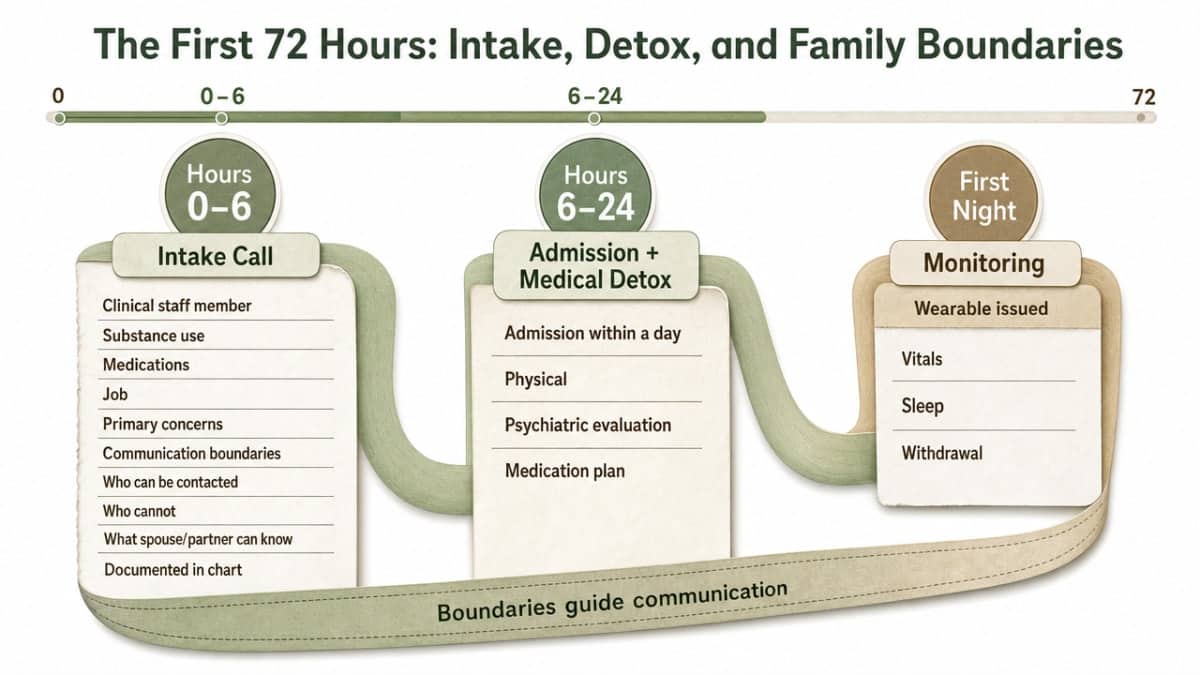
The First 72 Hours: Intake, Detox, and Family Boundaries
The initial 72 hours of treatment are critical and carefully managed, especially for first responders concerned about confidentiality and job implications.
Hours 0–6: The intake call. Your first call is with a clinical staff member, not a call-center representative. You discuss your substance use, medications, job, and primary concerns. Crucially, you establish communication boundaries: who can be contacted, who cannot, and what information can be shared with your spouse or partner. These boundaries are documented in your chart.
Hours 6–24: Admission and medical detox begins. A small-capacity program can often facilitate admission and medical detox within a day. You receive a physical, a psychiatric evaluation, and a medication plan. The wearable device is issued, and your first night is monitored for vitals, sleep, and withdrawal symptoms, ensuring you are not left unsupervised.
Hours 24–72: Stabilization and initial conversations. Medications are adjusted based on your response. You begin sessions with your individual counselor. You have the option, but not the obligation, to have a structured contact with your spouse or a designated family member, strictly adhering to the communication terms you set during intake. Employer contact is avoided if you requested no disclosure.
If You’re a Spouse, Union Rep, or Wellness Coordinator Reading This
If you are supporting a first responder, understanding their unique concerns is paramount. The RAND review highlights that officers underreport alcohol misuse due to occupational culture and fear of career consequences 9. Therefore, approaching the conversation with sensitivity is crucial.
Avoid ultimatums. Instead, lead with observations and concerns rather than accusations. Presenting options, such as a private, small-capacity men’s residential program or the state locator line through OSAMH for those without insurance 1, offers choice and empowers the individual.
Crucially, protect their confidentiality. Do not involve supervisors or colleagues without explicit permission. The SAMHSA bulletin notes that fear of disclosure prevents responders from seeking formal care 7. As a wellness coordinator, keep referrals off department letterhead. The goal is to facilitate access to help while respecting their need for discretion, allowing them to make the call themselves.
Frequently Asked Questions
Will my department find out if I go to residential treatment in Arkansas?
Not unless you choose to tell them, or if a specific legal or fitness-for-duty process requires it. A private residential program maintains your clinical record with the treating facility, separate from state referral systems or your department’s benefits office. You establish communication boundaries during intake, specifying who can be contacted and what information can be shared with family, and these boundaries are respected throughout your treatment.
How is a private men’s residential program different from an OSAMH-funded provider or a Crisis Stabilization Unit?
OSAMH funds community providers that serve all Arkansans, including those without insurance 1, 8. Arkansas’s two 16-bed Crisis Stabilization Units are short-term crisis intervention facilities for individuals encountered by law enforcement, not residential addiction treatment centers 3. A private men’s residential program, like Serenity Park, is characterized by its small census, strict confidentiality, and trauma-focused care tailored for adult men. Each option serves a distinct purpose; the best choice depends on your specific needs and concerns.
I drink to sleep after shift, not on duty. Is that really a problem worth treating?
If you rely on alcohol to sleep, it indicates your nervous system is struggling to cope with job-related stressors. National evidence links repeated trauma exposure in public safety to substance misuse and behavioral health risks, even when drinking occurs off-duty 7. Off-duty drinking can still register on assessments like the AUDIT, disrupt sleep patterns, and elevate your baseline stress levels. Problems often begin in off-duty hours and are treatable.
What actually happens in the first 72 hours after I call?
Upon calling, you will speak with a clinical staff member who will discuss your substance use, medications, job, and confidentiality preferences. Admission and medically supervised detox can often begin within a day. A wearable device will be provided for continuous monitoring of vitals and sleep. By the third day, medications are adjusted, your individual counselor is assigned, and any family contact occurs only according to the terms you established during intake.
I’m a spouse or union rep. How do I bring this up without making it worse?
Focus on what you’ve observed rather than making judgments. First responders often underreport alcohol misuse due to occupational culture and fear of career repercussions 9. If your initial approach sounds threatening, it reinforces their existing fears. Offer concrete options, such as a private residential program or the OSAMH locator line 1, and allow them to make the decision themselves.
Why wearable monitoring during treatment, and what does it track?
At Serenity Park, residential clients wear a device, in partnership with Huml Health, that tracks heart rate, stress signals, and sleep patterns in real time. This data is reviewed by your clinician to inform your treatment. For instance, if your resting heart rate remains elevated during detox or your sleep is fragmented, the treatment team can make timely adjustments to your care plan. This technology provides objective data for personalized care in a small-census setting.
References
- Find Substance Abuse or Mental Health Treatment. https://humanservices.arkansas.gov/divisions-shared-services/shared-services/office-of-substance-abuse-and-mental-health/samh-treatment/
- Office of Substance Abuse and Mental Health. https://humanservices.arkansas.gov/divisions-shared-services/shared-services/office-of-substance-abuse-and-mental-health/
- Crisis Stabilization Units. https://humanservices.arkansas.gov/divisions-shared-services/shared-services/office-of-substance-abuse-and-mental-health/crisis-stabilization-units/
- Programs for Mental Health & Substance Abuse Issues. https://humanservices.arkansas.gov/learn-about-programs/programs-for-mental-health-substance-abuse-issues/
- Suicide among First Responders: A Review of the Evidence and Recommendations. https://stacks.cdc.gov/view/cdc/159456
- Posttraumatic stress disorder and alcohol drinking behavior among police officers. https://stacks.cdc.gov/view/cdc/248284
- First Responders: Behavioral Health Concerns, Emergency Response, and Trauma. https://archive.hshsl.umaryland.edu/handle/10713/14980
- About OSAMH – Arkansas Department of Human Services. https://humanservices.arkansas.gov/divisions-shared-services/shared-services/office-of-substance-abuse-and-mental-health/about-osamh/
- Mental Health Disorders and Substance Use Among U.S. Police Officers. https://www.rand.org/pubs/research_reports/RR1009.html
- Suicide Rates by Industry and Occupation — National Violent Death Reporting System. https://www.cdc.gov/mmwr/volumes/69/wr/mm6949a1.htm