
Key Takeaways
- Pine Bluff supports outpatient counseling, peer recovery, and state-funded services through the DHS catchment system, but medically-supervised detox and men’s residential care are concentrated in Little Rock.
- The 45-mile drive up I-530 takes under an hour, keeping families close for visits while separating the individual from familiar triggers during early recovery.
- Before choosing a program, compare on-site MAT availability, dual-diagnosis capability, Arkansas Medicaid enrollment status of prescribers, and whether medication continues after discharge 11, 12.
- Funding paths differ by situation: commercial insurance benefits checks, Arkansas Medicaid MAT coverage through September 2025 17, and the DHS access line at 1-844-763-0198 for uninsured residents 2.
The 45-Mile Question: Staying in Pine Bluff or Driving to Little Rock
The decision between seeking substance use treatment in Pine Bluff or traveling to Little Rock often comes down to the level of care required. While Pine Bluff offers local resources, higher-level care, such as medically-supervised detox, residential programs, and dual-diagnosis support, is more concentrated in Little Rock due to the presence of specialized facilities and medical professionals.
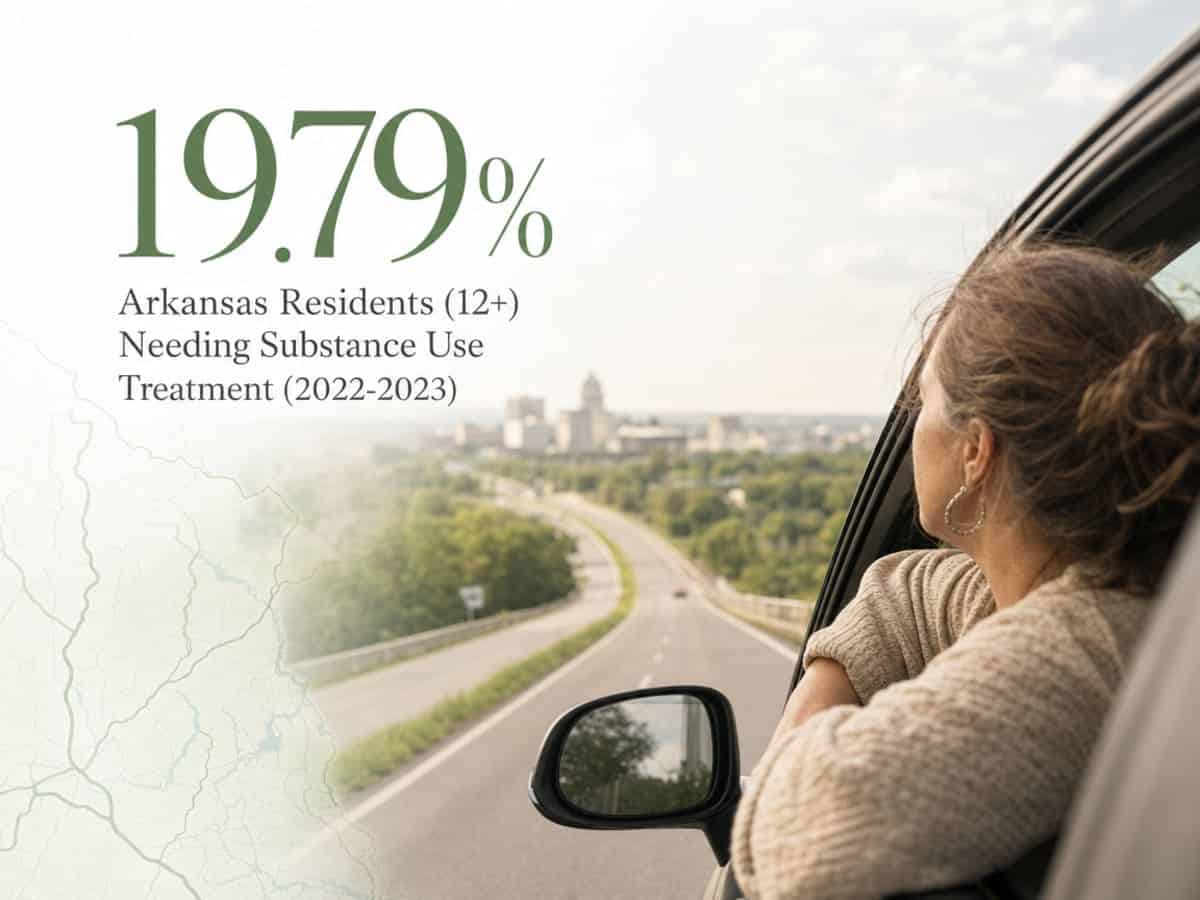
An estimated 19.79% of Arkansans aged 12 and older require substance use treatment, yet approximately 74.93% do not receive it 1. This disparity highlights a significant gap in treatment availability, particularly for advanced care. For residents of South-Central Arkansas, Little Rock represents the nearest option for comprehensive, higher-level treatment.
The 45-minute drive from Pine Bluff to Little Rock, while seemingly a barrier, can offer distinct advantages. It’s close enough for family visits and integration with local primary care doctors in Pine Bluff for discharge planning. Simultaneously, it provides a necessary distance from familiar triggers and environments, fostering a focused recovery process away from daily temptations.
Pine Bluff’s Local Treatment Resources
Pine Bluff provides essential resources that support recovery, particularly for individuals who have completed residential care or are beginning their treatment journey. The Arkansas Department of Human Services (DHS) divides the state into eight catchment areas, and Pine Bluff is part of a network that offers state-funded substance use services for those without insurance. Residents can contact 1-844-763-0198 (Monday through Friday, 8:00 a.m. to 5:00 p.m.) to connect with providers within this system 2.
Local services include outpatient counseling, community mental health programs, and peer recovery support. These options are suitable for individuals with stable housing who have safely detoxed and can maintain employment while attending regular sessions. They also serve as valuable step-down care following residential treatment, helping to sustain recovery progress without extensive travel.
Transportation within Pine Bluff is facilitated by Pine Bluff Transit, which operates city routes that can transport individuals to appointments, probation check-ins, or family residences 14. This service helps overcome logistical challenges that can impede consistent care.
Navigating the Drive to Little Rock for Treatment
The drive from Pine Bluff to Little Rock for treatment involves traveling approximately 45 miles north on I-530. This route typically takes less than an hour during normal weekday conditions, passing through open fields and treelines before reaching the outskirts of Little Rock. The Arkansas Department of Transportation (ARDOT) provides detailed maps of this corridor, including Jefferson Inset 35A (Pine Bluff) and Pulaski Inset 60A and 60C (Little Rock) 3.
Beyond the practical aspects, the journey carries significant emotional weight. For many, this drive signifies a deliberate step towards change, leaving behind environments associated with substance use. The change in scenery and anonymity in a new city can be a powerful catalyst for focusing on recovery.
Travelers should be aware of potential roadwork; ARDOT has undertaken widening projects in Jefferson County, including U.S. Highway 79 South 15. Checking current construction updates before the trip is advisable, especially for those coming from southern Pine Bluff. I-530 generally offers the most direct path north from central or eastern Pine Bluff.
Upon returning to Pine Bluff, or for family members visiting, Pine Bluff Transit can assist with local transportation needs, connecting individuals to various points within the city 14. This helps bridge the “last-mile” gap, making the overall journey more manageable even without a personal vehicle.
When preparing for admission, it’s recommended to pack lightly, as residential programs often have specific lists of permitted items. The focus should be on facilitating the individual’s entry into care, as the treatment facility will guide the rest of the process.
Understanding Higher-Level Care in Little Rock
Higher-level care refers to structured treatment provided in a facility with medical supervision, designed to help individuals safely cease substance use. For many men from Pine Bluff, this involves a supervised reset, moving beyond weekly counseling to a more intensive, immersive program.
The initial 72 hours are critical, particularly for individuals with severe substance dependence. Medically-supervised detox ensures safety and comfort during withdrawal, with medical staff monitoring vitals and administering medication to manage symptoms. This phase allows the body to stabilize, paving the way for deeper therapeutic work.
Following detox, residential treatment focuses on addressing underlying issues. This includes individual counseling to explore the roots of substance use, group therapy with peers, and psychiatric evaluations for co-occurring mental health conditions. Dual-diagnosis care is particularly important, as many individuals use substances to cope with untreated mental health issues.
Treatment admissions among adults aged 26 and older are rising in Arkansas, indicating that many individuals seeking this level of care are mature adults with established lives 16. Smaller residential programs, such as Serenity Park in Little Rock, which limits its census to around 20 men, can offer a more personalized and engaging environment. In such settings, staff can provide individualized attention, and group therapy becomes a more intimate and effective exchange.
Modern treatment approaches in Little Rock may also incorporate wearable biometric monitoring. This technology tracks physiological responses like heart rate, sleep patterns, and stress markers, providing clinicians with objective data on a patient’s progress. This data-driven approach can enhance accountability and tailor treatment plans more effectively.
The goal of higher-level care is to provide an integrated environment where medical, psychiatric, and personal recovery needs are addressed comprehensively by a dedicated team, allowing for sustained change.
Medication-Assisted Treatment: Improved Access and Concentration
Medication-assisted treatment (MAT) has seen significant improvements in Arkansas, offering a crucial component for sustained recovery, particularly for individuals from Pine Bluff considering treatment options. MAT involves using FDA-approved medications—such as buprenorphine, naltrexone, methadone, or extended-release injectables—in conjunction with counseling to support individuals recovering from opioid or alcohol dependence. This approach helps stabilize brain chemistry, enabling individuals to engage more effectively in therapy without the constant struggle of intense cravings.
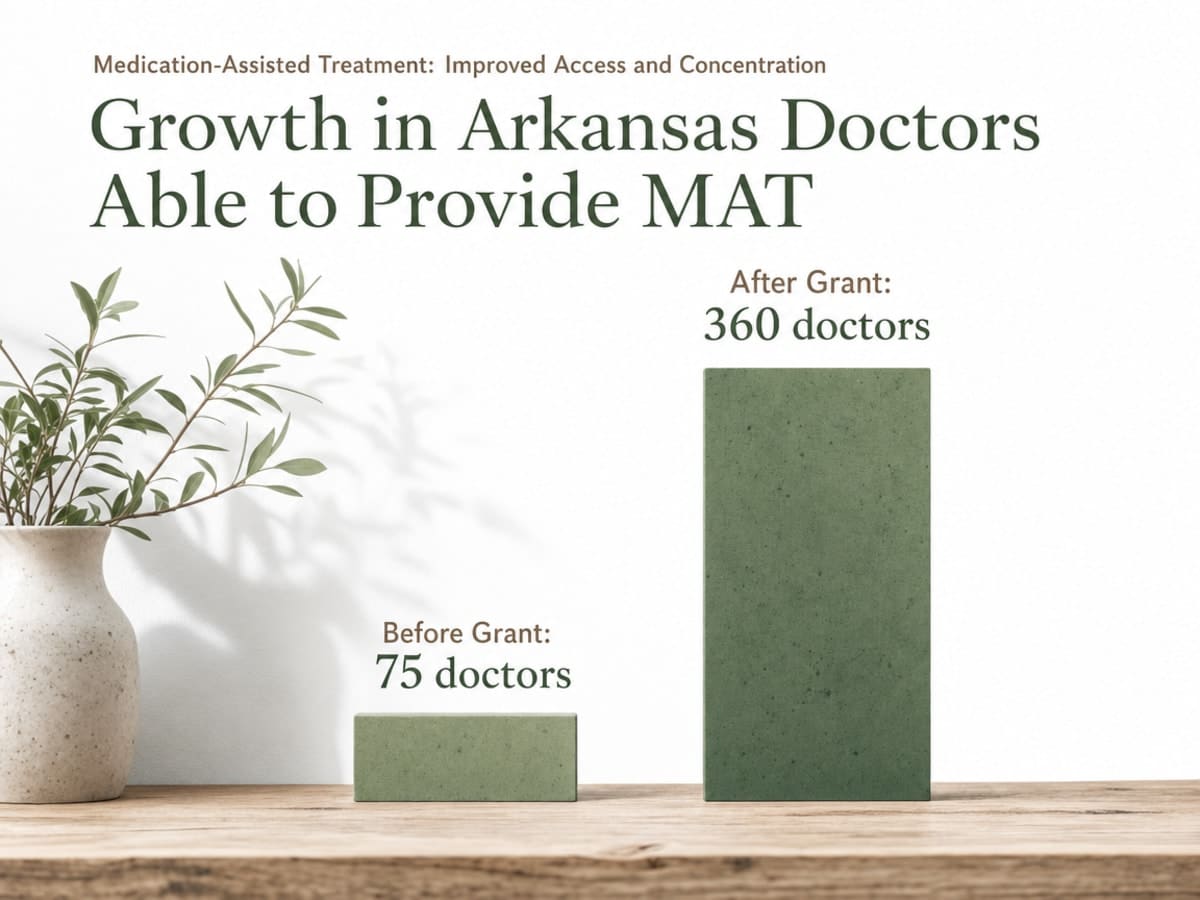
Arkansas has made substantial investments in MAT, notably through the State Opioid Response grant, which increased the number of MAT-certified physicians in the state from 75 to 360 4. This expansion has created a more robust network of prescribers capable of accepting new patients. However, these prescribers tend to be concentrated in urban centers like Little Rock, making access in rural and smaller metropolitan areas, including much of Jefferson County, still challenging.
It’s important for families to understand the regulatory requirements for MAT providers. In Arkansas, providers for opioid use disorder must be state-licensed and possess a current X-DEA identification number on file with Medicaid 11. When evaluating treatment programs, inquire whether MAT is:
- available on-site,
- prescribed by staff clinicians, and
- continued post-discharge.
A program that meets these criteria is typically designed for long-term recovery success.
For individuals recovering from alcohol dependence, naltrexone can reduce cravings, enhancing the effectiveness of group therapy. For opioid use disorder, buprenorphine can significantly improve the quality of life during the initial recovery phase. Both medications are valuable tools that can improve treatment retention and outcomes.
Funding Treatment: Insurance, Medicaid, and Uninsured Options
Understanding how to pay for residential treatment is a primary concern for many families. The first step is to assess existing insurance coverage. For individuals with commercial insurance through employment, most major plans in Arkansas include behavioral health benefits that cover medically-supervised detox and residential treatment when deemed medically necessary. Reputable treatment programs will conduct a benefits verification, typically within one business day, to outline out-of-pocket costs. It is advisable to request this information in writing.
For those with Arkansas Medicaid, coverage for medication-assisted treatment (MAT) has expanded. MAT is included in the state plan for qualifying beneficiaries who meet medical necessity criteria, provided the prescriber is licensed in Arkansas and has an X-DEA identification number on file with Medicaid 11, 12. This coverage is currently active through September 2025 17. When contacting programs, confirm that their MAT prescribers are enrolled with Arkansas Medicaid to ensure coverage for this often-expensive component of treatment.
If an individual lacks insurance, state-funded options are available. The Arkansas DHS access line at 1-844-763-0198 (Monday through Friday, 8:00 a.m. to 5:00 p.m.) connects uninsured residents to substance use treatment services through the state’s catchment area system 2. Additionally, SAMHSA’s Arkansas Medicaid and CHIP navigation page can help determine eligibility for various programs 6.
For families considering private payment, many premium residential programs offer flexible payment structures, including deposits, installment plans, and options for using Health Savings Account (HSA) funds or health-loan partners. It is always recommended to inquire about these possibilities.
Initiating the Admission Process Without Delay
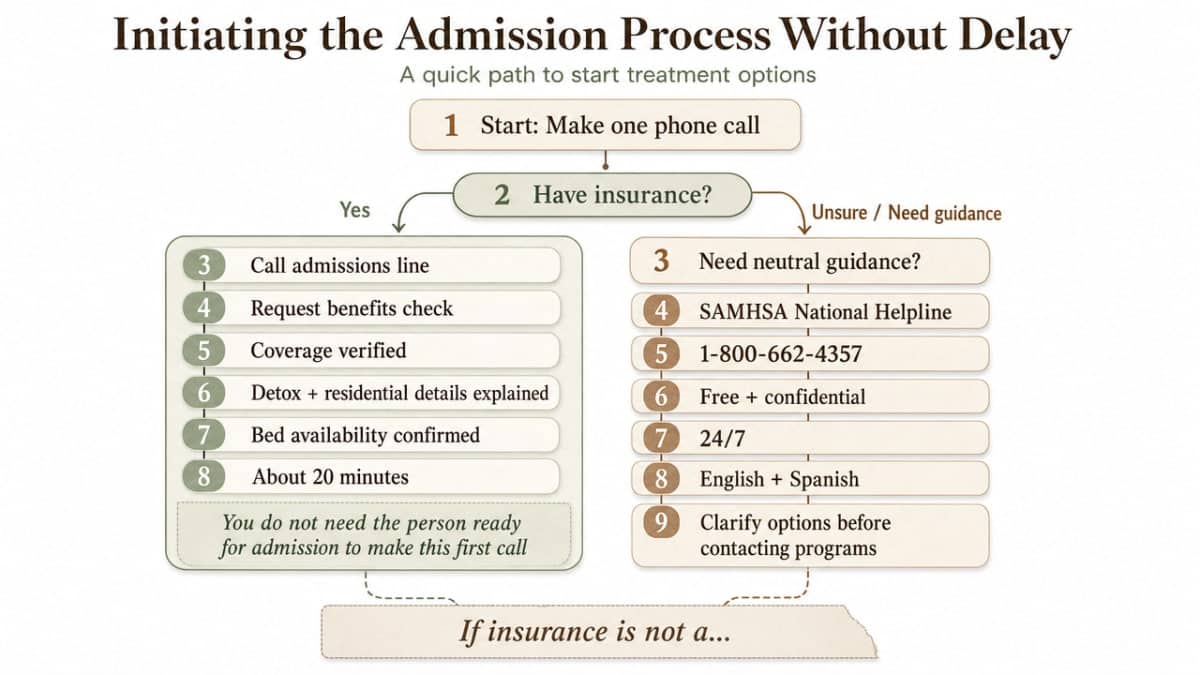
Starting the treatment process can feel overwhelming, but the initial step is straightforward: make one phone call. If the individual has insurance, contact the admissions line of a Little Rock residential program directly to request a benefits check. For instance, Serenity Park’s team can verify coverage, explain the details of a men’s medically-supervised detox and residential stay, and confirm bed availability. This conversation typically takes about 20 minutes, and it’s not necessary to have the individual ready for admission before making this initial inquiry.
For those seeking neutral guidance or unsure where to begin, SAMHSA’s National Helpline (1-800-662-4357) offers free, confidential support 24/7 in both English and Spanish 7. This resource can help clarify options before engaging with specific programs.
If insurance is not an option, the Arkansas DHS access line (1-844-763-0198, Monday through Friday, 8 a.m. to 5 p.m.) provides a pathway to state-funded treatment 2. SAMHSA’s Arkansas Medicaid and CHIP navigation page can also assist in determining eligibility for various programs 6.
Before making the intake call, gather essential information:
- the individual’s date of birth,
- a photo of their insurance card (front and back), and
- a rough timeline of substance use over the past two weeks (type, quantity, frequency).
This information is sufficient for the initial assessment; more detailed clinical questions will be addressed upon admission.
On admission day, plan to depart Pine Bluff by mid-morning. Ensure the individual brings their driver’s license, current medication bottles, and comfortable clothing. For employment concerns, HR departments can be informed of medical leave without disclosing specific details, and FMLA protections may apply for eligible employees. The most crucial step is making that initial call to begin the journey toward recovery.
Frequently Asked Questions
Is there a residential rehab with medical detox in Pine Bluff itself?
Pine Bluff offers outpatient counseling and community mental health services connected to the state system 2. However, it generally does not have extensive medically-supervised detox beds or men’s residential programs. For this higher level of care, Little Rock is the closest practical option, as it concentrates licensed facilities and clinical staffing.
How long is the drive from Pine Bluff to Little Rock for treatment?
The drive from Pine Bluff to Little Rock is approximately 45 miles via I-530, typically taking less than an hour on a normal weekday. ARDOT’s maps for Jefferson (Pine Bluff) and Pulaski (Little Rock) counties detail this corridor 3. If traveling from southern Pine Bluff, it’s advisable to check for current construction on U.S. Highway 79 15. This distance allows for family visits while providing a necessary separation from the home environment.
What if he has a job and can’t disappear for weeks without questions?
An individual’s HR department does not require specific clinical details for medical leave. For employers with 50 or more staff, the Family and Medical Leave Act (FMLA) provides up to 12 weeks of job-protected leave for serious health conditions, which includes substance use disorder. Residential programs can provide documentation for HR without disclosing the diagnosis. Seeking treatment in Little Rock also offers a degree of privacy not available in a local setting.
What are the options if he doesn’t have insurance?
If there is no insurance, contact Arkansas DHS at 1-844-763-0198 (Monday through Friday, 8 a.m. to 5 p.m.) 2. DHS manages state-funded substance use treatment for uninsured residents through its catchment area system, which includes Pine Bluff. SAMHSA’s Arkansas Medicaid and CHIP navigation page can also help determine eligibility for coverage 6. For confidential, 24/7 guidance, SAMHSA’s National Helpline is available at 1-800-662-4357 7.
Does Arkansas Medicaid cover medication-assisted treatment (MAT)?
Yes, Arkansas Medicaid covers MAT for qualifying beneficiaries who meet medical necessity criteria. This coverage is part of the state plan through September 2025 17. The prescriber must be licensed in Arkansas and have a current X-DEA identification number on file with Medicaid 11, 12. When contacting treatment centers, confirm that their MAT prescriber is enrolled with Arkansas Medicaid to ensure coverage for medication-related treatment.
How do we actually start the admission process this week?
The first step is to make a single phone call. Contact the admissions line of a Little Rock residential program and request a benefits check. This conversation typically lasts about 20 minutes. Be prepared with the individual’s date of birth, a photo of their insurance card, and a general overview of their substance use in the past two weeks. The clinical team will handle more detailed questions once the individual is admitted. The goal is to initiate the process, not to resolve everything at once.
References
- ARKANSAS – National Survey on Drug Use and Health – SAMHSA. https://www.samhsa.gov/data/sites/default/files/reports/rpt56188/2023-nsduh-sae-state-tables_0/2023-nsduh-sae-state-tabs-arkansas.pdf
- Find Substance Abuse or Mental Health Treatment. https://humanservices.arkansas.gov/divisions-shared-services/shared-services/office-of-substance-abuse-and-mental-health/samh-treatment/
- Route and Section Maps – Arkansas Department of Transportation. https://ardot.gov/divisions/planning/gis-mapping/route-and-section-maps/
- State Awarded $21 Million Grant to Grow Substance Abuse Prevention Treatment Programs. https://humanservices.arkansas.gov/news/state-awarded-21-million-grant-to-grow-substance-abuse-prevention-treatment-programs/
- Substance Misuse Education and Prevention – Arkansas Department of Health. https://healthy.arkansas.gov/programs-services/prevention-healthy-living/substance-misuse-education-and-prevention/
- Help for mental health, drugs, alcohol: AR Medicaid, CHIP. https://www.samhsa.gov/find-support/health-care-or-support/professional-or-program/medicaid-or-chip/arkansas
- National Helpline. https://www.samhsa.gov/find-help/national-helpline
- 2022-2023 National Surveys on Drug Use and Health: Model-Based Estimated Totals (50 States and the District of Columbia). https://www.samhsa.gov/data/report/2022-2023-nsduh-estimated-totals-state
- 2022-2023 National Surveys on Drug Use and Health: Model-Based Prevalence Estimates. https://www.samhsa.gov/data/report/2022-2023-nsduh-state-prevalence-estimates
- 2023 National Survey on Drug Use and Health: Methodological Summary and Definitions. https://www.samhsa.gov/data/report/2023-methodological-summary-and-definitions
- 016.27.20 Ark. Code R. 010 – SPA #20-0013 Medication Assisted Treatment. https://www.law.cornell.edu/regulations/arkansas/016-27-20-Ark-Code-R-010
- 501.682.8292 F – Arkansas Department of Human Services. https://humanservices.arkansas.gov/wp-content/uploads/MAT-Revised-Website-posting-12.14.pdf
- TN: 2021-0003. https://humanservices.arkansas.gov/wp-content/uploads/Final-Filing-Posting-Packet-MAT-Rule-133.pdf
- Transit – City Of Pine Bluff. https://www.cityofpinebluff-ar.gov/pine-bluff-transit
- Public Meeting about Widening U.S. Highway 79 South …. https://ardot.gov/news/20-048/
- Annual Profile of Substance Use and Mental Health Indicators in Arkansas: 2021 (Part 1). https://humanservices.arkansas.gov/wp-content/uploads/SEOW-2021-Annual-Profiles-Report-Part-1.pdf
- 016.29.23 Ark. Code R. 004 – Medication Assisted Treatment (MAT) and Over the Counter (OTC) Updates. https://www.law.cornell.edu/regulations/arkansas/016-29-23-Ark-Code-R-004