
Key Takeaways
- The $30,000 sticker price you see online is almost never what an insured person pays, because billed prices, insurance adjustments, and your actual cost are three separate numbers.
- Self-pay residential rehab ranges from roughly $5,000 at state-funded programs to $80,000+ at luxury facilities, with staffing, detox, amenities, and length of stay driving the gap 1.
- Your real cost equals billed price minus insurance adjustment minus plan payment, and your out-of-pocket maximum is the worst-case ceiling you should memorize before making any calls.
- MHPAEA and the ACA require that deductibles, coinsurance, and out-of-pocket caps for rehab be no more restrictive than medical or surgical care 10, 5.
- Parity law standardizes the dollars but not the door, so prior authorization, medical necessity criteria, and network status still decide whether a specific admission gets approved 7.
- Employer plans, ACA Marketplace plans, and Arkansas Medicaid each produce different cost math, with Medicaid capping total cost-sharing at 5% of family income per quarter 14.
- A side-by-side comparison shows the out-of-pocket maximum is the ceiling on commercial and Marketplace plans, while Medicaid ties the ceiling to household income instead.
- Before calling a facility, call member services to confirm your deductible, coinsurance, out-of-pocket max, and prior authorization rules, then get a reference number to protect the quote.
The $30,000 Number That Scared You Into This Search
You typed “how much does rehab cost” into a search bar, and the first thing you saw was probably a five-figure number. Maybe $30,000. Maybe more. Your stomach dropped, and now you’re here, wondering if getting help — for yourself, for your husband, for your son — is even financially possible.
Take a breath. That sticker price is real, but it’s almost never what an insured person actually pays.
Rehab pricing sits in three separate conversations that most articles smash together: what a facility bills, what your insurance adjusts and pays, and what you owe at the end. Those three numbers can be thousands of dollars apart. Federal parity law, the ACA, and Arkansas Medicaid rules all work in your favor here — they cap, redirect, and reshape that scary headline number in ways that aren’t obvious from a Google result.
This guide walks you through the real cost math, coverage path by coverage path, so by the time you finish reading you’ll know what to ask, who to call, and what you’re likely to owe.
What Residential Rehab Actually Costs Before Insurance Touches It
The Self-Pay Range: $5,000 to $80,000+ for 30 Days
Here is the honest range for 30 days of residential addiction treatment if you were paying cash with no insurance in the picture at all.
On the low end, state-funded and nonprofit programs can run around $5,000 for a month of care, sometimes less if you qualify for a sliding-fee scale. Standard evidence-based private residential programs — the kind with medical detox, daily group therapy, individual counseling, and psychiatric care — typically fall between roughly $14,000 and $30,600 for 30 days. Luxury and executive programs, with private rooms and boutique amenities, can exceed $80,000 for the same month.
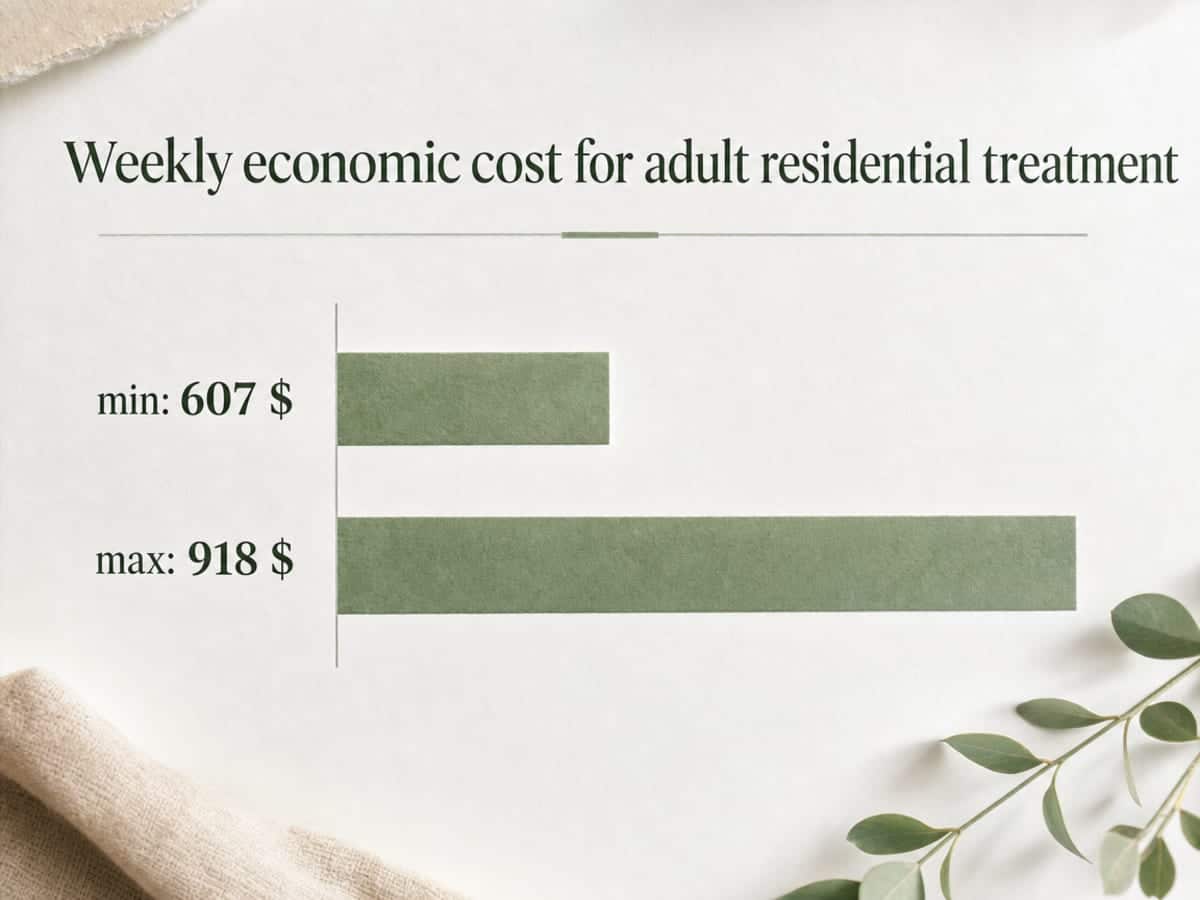
That’s the sticker price. It’s not the same thing as what it actually costs a facility to deliver care. Peer-reviewed economic research on adult residential treatment estimates the underlying weekly cost of running a program at roughly $607 to $918 per week, or about $2,600 to $3,900 for a 30-day stay 1. The gap between that economic cost and a $30,000 invoice reflects staffing intensity, real estate, amenities, and — for private-pay patients — the absence of any insurance-negotiated discount pulling the number down.
You are looking at three different price tags for what can be very similar clinical care. Which one lands on your credit card depends almost entirely on how you pay, not on the level of treatment you receive.
Why Two Facilities Charge Wildly Different Prices for the Same 30 Days
You’ll call two programs on the same day, describe the same situation, and hear quotes that are $20,000 apart. That’s not a mistake, and it doesn’t necessarily mean one is a scam and the other is a bargain.
A handful of things move the number:
- Staffing ratios and clinical intensity. A program with a psychiatrist on-site daily, 24-hour nursing, and small group sizes costs more to run than one with weekly medical oversight and larger groups. Program duration and intensity are the biggest drivers of residential treatment cost 1.
- Medical detox. If you need medically supervised withdrawal, that adds several days of higher-acuity care to the front of your stay — nurses, medications, monitoring — often billed separately from the residential rate.
- Amenities. Private rooms, chef-prepared meals, gyms, equine therapy, and ocean views are real costs. They can also be optional to your recovery.
- Length of stay. A 20-day stay and a 90-day stay are priced very differently, and some facilities bundle assessments and aftercare planning into the base rate while others itemize.
- Payer mix. Facilities that mostly take insurance and Medicaid quote different numbers than cash-pay-only programs, because negotiated rates and reimbursement schedules reshape what they can afford to charge.
When you compare quotes, ask what’s actually included. A $12,000 program and a $28,000 program can deliver similar clinical outcomes if the underlying therapy hours and medical support match.
Billed Price vs. What You Actually Pay
The Formula: Billed Price Minus Insurance Adjustment Minus Plan Payment Equals Your Cost
Here’s the equation that turns a $30,000 invoice into a manageable number: Billed Price − Insurance Adjustment − Plan Payment = Your Cost.
Start with the billed price. That’s the sticker figure the facility sends to your insurer. If the program is in-network, your insurer has already negotiated a discount — the insurance adjustment — that knocks the billed price down to a contracted rate. That negotiated rate is often thousands less than the sticker, and you never see the difference on your bill.
From that contracted rate, your plan pays its share. If you’ve already met your deductible, the plan covers its coinsurance percentage (say, 80%) and you owe the rest (20%) until you hit your out-of-pocket maximum. If you haven’t met your deductible yet, you pay down that first, then coinsurance kicks in.
So a $30,000 sticker on a 30-day stay might land as a $12,000 contracted rate, of which your plan pays most, leaving you with a four-figure share — not a five-figure one. Federal parity rules require that this cost-sharing structure be no more restrictive than what your plan applies to medical or surgical care 10.
The Ceiling You Should Memorize: Your Out-of-Pocket Maximum
For a residential stay, this cap is your worst-case number. If your plan’s OOP max is $6,500 and you’re admitted to an in-network facility, that’s the ceiling — even if the billed price is $30,000 and the stay runs 45 days. MHPAEA requires that the OOP limit combine medical/surgical and substance use benefits into a single cumulative cap, not two separate ones 5, 10.
Write your OOP max on a sticky note before you make a single call. That one figure reframes the entire conversation from “can we afford this?” to “can we plan for this?”
How Parity Law Changes the Math for Insured Readers
What MHPAEA and the ACA Actually Guarantee
Two federal laws quietly do most of the work of shrinking that scary invoice. The Mental Health Parity and Addiction Equity Act (MHPAEA) says that if your plan covers substance use treatment, the deductible, copays, coinsurance, and out-of-pocket limits for that care can’t be more restrictive than what the plan applies to medical or surgical care 10. The Affordable Care Act then went further by naming mental health and substance use services as one of ten essential health benefits that individual and small-group Marketplace plans must cover 5.
What this means in practice: your plan can’t invent a separate, higher deductible just for rehab. It can’t set a lower annual out-of-pocket cap for medical care and a higher one for addiction treatment. Those cumulative financial requirements have to combine both categories into one number 5, 6.
The Department of Health and Human Services parity task force estimated that ACA-era changes expanded meaningful behavioral health coverage to roughly 15 million more people, with cost-sharing brought closer to parity with other health services 7. That’s the legal scaffolding underneath your out-of-pocket max — and the reason a $30,000 sticker rarely lands as a $30,000 bill.
What Parity Does Not Fix: Prior Authorization, Medical Necessity, and Network Status
Here’s the part no one wants to tell you: parity law standardizes the dollars, not the door. Your plan still gets to decide whether a specific admission is medically necessary, whether you need prior authorization before you check in, and whether the facility you picked is in-network. Those are called non-quantitative treatment limitations, and the same parity task force that celebrated cost-sharing progress flagged them as the barrier that keeps tripping people up 7.
A few practical consequences to hold onto:
- Prior authorization can delay admission. Some plans require review before residential care starts, and continued-stay reviews every few days after that.
- Medical necessity criteria vary. Two insurers can look at the same person and reach different conclusions about whether residential is warranted versus a lower level of care.
- Out-of-network changes everything. Your coinsurance jumps, your OOP max may not apply, and balance billing can appear.
- State enforcement varies. Parity protections are stronger and better enforced in some states than others 8.
None of this cancels your coverage. It just means the first phone call matters — and that’s the next section.
Three Coverage Paths, Three Different Cost Conversations
Employer or Commercial PPO Plans
If your coverage comes through work — a PPO, HMO, or high-deductible plan tied to your employer — you’re in the group with the most predictable math and the most paperwork. Federal parity rules apply to almost all employer-sponsored plans, meaning the deductible, coinsurance, and out-of-pocket cap for residential rehab have to match what your plan uses for medical or surgical care 6, 10.
Here’s what that looks like in practice. Say your plan has a $3,000 deductible, 20% coinsurance after that, and a $7,500 out-of-pocket maximum. For an in-network 30-day residential stay, you’d pay the deductible first, then 20% of the negotiated rate until you hit that $7,500 ceiling. Everything covered above the ceiling is on the plan.
Two catches worth naming. Prior authorization is common — your insurer wants to green-light the admission before you check in. And self-funded employer plans (usually at larger companies) follow federal parity but not state parity rules 8, so your HR benefits contact and the plan’s Summary of Benefits document matter more than any state hotline.
ACA Marketplace Plans
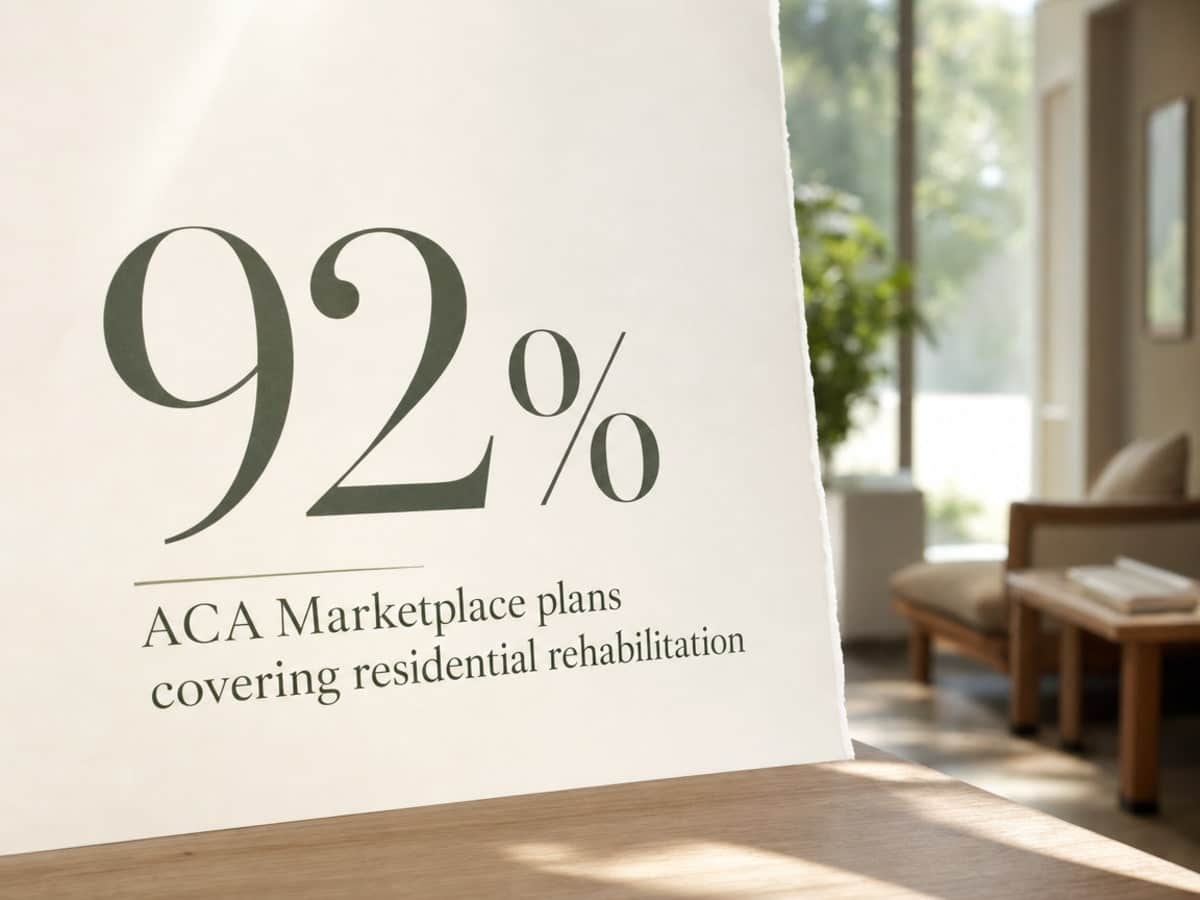
If you bought your plan through the Marketplace — a Silver, Gold, or Bronze plan you picked during open enrollment — residential rehab is almost certainly in your benefits. A study of ACA Marketplace plan documents found that 92% covered residential rehabilitation for substance use disorder 9. That’s the anchor number for this coverage path.
Read that stat carefully, though. “Covered” means the benefit exists in the plan’s design. It does not mean every admission is automatically approved. Your plan can still require prior authorization, apply medical necessity criteria, and steer you toward in-network facilities. Marketplace plans must cover mental health and substance use services as one of ten essential health benefits, and cost-sharing for those services can’t be more restrictive than for medical care 4.
The math looks a lot like the employer path: deductible first, coinsurance second, out-of-pocket max as the ceiling. Silver plans tend to have moderate deductibles and coinsurance around 20% for in-network specialty behavioral health 9. Bronze plans have lower premiums but higher deductibles, which means more of the residential bill lands on you before the plan starts paying its share.
Arkansas Medicaid and the 5% Income Cap
If you have Arkansas Medicaid, the cost conversation looks fundamentally different from the commercial and Marketplace paths — and in most cases, dramatically cheaper.
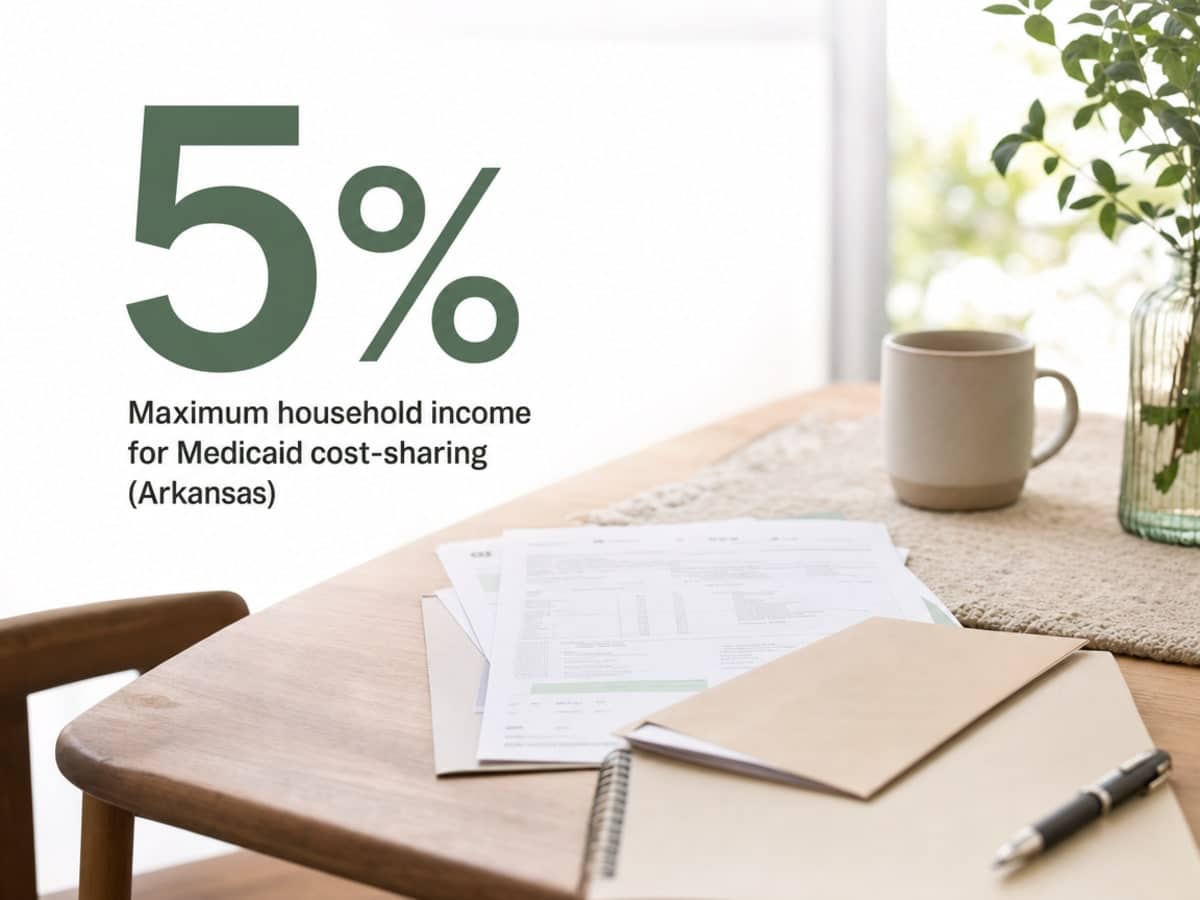
Arkansas caps total Medicaid premiums and cost-sharing at 5% of family income, applied on a quarterly or monthly basis 14. That’s a hard ceiling on what you can be charged for covered care in a given period, no matter how many services you use. For a household earning $2,500 a month, that’s a maximum of about $125 in monthly cost-sharing across all covered Medicaid services combined, not just rehab.
The bigger recent change is on the coverage side. In July 2025, CMS approved Arkansas’s Section 1115 demonstration to cover medically necessary short-term inpatient and residential SUD treatment in institutions for mental diseases, targeting an average length of stay of 30 days or less 12. Translation: Arkansas Medicaid can now pay for the kind of residential episode that used to be a coverage gap, while the 5% income cap still governs what you owe.
Two practical notes. Facilities must be certified SATS providers to bill Arkansas Medicaid, and services have to meet medical necessity criteria 16. And Medicaid reimbursement rates are lower than commercial rates 13, so not every residential program in the state accepts Medicaid — worth confirming on your first call.
A Side-by-Side Look at the Three Plan Scenarios
To make the differences between coverage paths concrete, here’s a variable-based comparison for a 30-day in-network residential stay. Real numbers depend on your specific plan, so the table uses the levers that actually determine your bill.
| Plan Type | Deductible | Coinsurance After Deductible | Ceiling on Your Cost | Prior Auth Common? |
|---|---|---|---|---|
| Employer / Commercial PPO | Plan deductible ($X), same as medical/surgical 10 | Plan coinsurance (often ~20% in-network) | Plan’s combined out-of-pocket max 5 | Yes |
| ACA Marketplace (Silver/Gold/Bronze) | Metal-tier deductible ($X), parity-protected 4 | Around 20% in-network for specialty behavioral health 9 | Federal annual OOP max for the plan | Yes |
| Arkansas Medicaid | None or nominal | None or nominal per-service copay | 5% of household income per quarter or month 14 | Yes (medical necessity, SATS-certified provider) 16 |
Three quick reads from that table. On a commercial or Marketplace plan, your worst-case number is the out-of-pocket maximum, and it’s the same cap you’d hit for a major surgery. On Arkansas Medicaid, the ceiling isn’t a plan-defined dollar amount — it’s a percentage of your income, which for most households lands well below what a commercial deductible alone would cost 14. Across all three, prior authorization is the gatekeeper, not the price.
The Verification Call You Can Make in the Next Hour
What to Ask Your Insurer Before You Ask the Facility
Flip your insurance card over. The member services number on the back is the one you want. Have your member ID, date of birth, and a pen ready. This call takes 15 to 20 minutes if you’re organized, and it changes everything about the next conversation you have with a treatment facility.
Ask these questions in this order, and write down the answers verbatim:
- “Does my plan cover inpatient residential substance use disorder treatment?” Get a yes or no, then ask for the specific benefit language.
- “What is my in-network deductible, and how much have I already met this plan year?”
- “What is my coinsurance for in-network residential behavioral health?” Federal parity rules require this to be no more restrictive than medical/surgical coinsurance 10.
- “What is my in-network out-of-pocket maximum, and how much of it have I already met?” This is your ceiling.
- “Is prior authorization required, and who submits it — me or the facility?”
- “What are your medical necessity criteria for residential SUD care?” Ask them to email or mail the criteria.
- “Can you give me a reference number for this call?”
That reference number matters. If a rep quotes you a benefit and the plan later denies it, the call log is your proof.
What to Ask the Facility’s Admissions or Billing Team
Now you have numbers. Call the facility with them in hand and ask questions that pin down what your actual bill will look like.
- “Are you in-network with my specific plan?” Not just the insurer — the plan. A center can be in-network with one Blue Cross product and out-of-network with another.
- “Will you handle prior authorization and continued-stay reviews for me?” Good admissions teams do this as part of intake.
- “Based on my deductible, coinsurance, and OOP max, what’s your estimate of my patient responsibility for a typical stay?”
- “What’s included in the daily rate, and what gets billed separately?” Detox, medications, labs, and psychiatric visits can be line-itemed.
- “If my insurer denies coverage or authorizes fewer days than clinically needed, what are my options?” Ask about single-case agreements, appeals support, and sliding-fee scales.
You’re allowed to call more than one facility and compare answers. Making this call is the first concrete step, and it’s entirely yours to take.
If You’re Uninsured or Underinsured
No insurance card, or a card that leaves too much of the bill on you, doesn’t mean residential treatment is off the table. It means the path there looks different.
Start with two SAMHSA-recognized options that most people don’t know exist. The first is a sliding-fee scale, where the price you pay is set by your income rather than the facility’s rack rate — many providers that treat substance use offer this, and asking directly during admissions is what unlocks it 3. The second is federal block grant–funded programs, which use SAMHSA dollars to cover care for people without the means to pay 2. Nationally, most treatment facilities accept some combination of private insurance, Medicaid, and government-funded slots, so a facility that quoted you $28,000 self-pay may still have a funded bed available if you ask 11.
If you’re uninsured in Arkansas, check Medicaid eligibility before you check anything else. The July 2025 Section 1115 demonstration expanded coverage for short-term residential SUD care, and enrollment is possible year-round if you qualify 12. If Medicaid isn’t a fit, ACA Marketplace enrollment during open enrollment or a special enrollment period (job loss, move, family change) is your next lever.
Ask every facility three questions: Do you offer a sliding-fee scale? Do you have any scholarship, grant-funded, or state-funded beds? Can you help me apply for Medicaid on intake? A yes to any of those changes your math entirely.
Frequently Asked Questions
Does insurance have to cover residential rehab?
If your plan covers substance use treatment at all, federal parity law requires that the deductible, copays, coinsurance, and out-of-pocket limits be no more restrictive than what your plan applies to medical or surgical care 10. ACA Marketplace plans must include substance use services as an essential health benefit 4. Coverage of the specific admission still depends on medical necessity and prior authorization.
Can a rehab center be denied even if my plan covers it?
Yes. Parity law standardizes the dollars, not the door. Your insurer can still require prior authorization, apply medical necessity criteria, or push you toward a lower level of care 7. If you’re denied, ask for the denial in writing, request the specific criteria used, and file an appeal. Facilities with experienced admissions teams routinely handle these appeals and can request peer-to-peer reviews on your behalf.
How do I find out what my plan will actually pay before I commit?
Call the member services number on the back of your card and ask four things: your remaining in-network deductible, your coinsurance for residential behavioral health, your remaining out-of-pocket maximum, and whether prior authorization is required. Get a call reference number. Then share those figures with the facility’s admissions team, who can estimate your patient responsibility based on their contracted rate with your specific plan.
What if I have Arkansas Medicaid — will I owe anything for rehab?
Very little in most cases. Arkansas caps total Medicaid cost-sharing at 5% of family income per quarter or month across all covered services combined 14. The July 2025 Section 1115 demonstration also expanded coverage for medically necessary short-term residential SUD treatment 12. You’ll need a SATS-certified provider and documentation of medical necessity 16, so confirm on your first call that the facility bills Arkansas Medicaid.
What are my options if I don’t have insurance at all?
Three real paths. Ask every facility about a sliding-fee scale that sets your price based on income 3. Ask about SAMHSA block grant–funded beds or state-funded slots that cover care for people without means to pay 2. And check Medicaid eligibility — Arkansas enrollment is possible year-round, and many admissions teams will help you apply during intake if you qualify.
Why does the same 30 days of rehab cost $5,000 at one place and $30,000 at another?
Staffing intensity, medical detox capability, amenities, length of stay, and payer mix all move the number 1. A state-funded program with larger groups and weekly medical oversight runs differently than a private program with daily psychiatric care and small groups. Ask what’s included in the daily rate, what gets billed separately, and how many clinical hours per week you’ll actually receive — that’s the real comparison.
References
- The Economic Costs of Substance Abuse Treatment. https://pmc.ncbi.nlm.nih.gov/articles/PMC2614666/
- How to Pay for Mental Health, Drug, or Alcohol Treatment. https://www.samhsa.gov/find-support/how-to-pay-for-treatment
- Free & Low Cost Treatment Options for Mental Health and Substance Use. https://www.samhsa.gov/find-support/how-to-pay-for-treatment/free-or-low-cost-treatment
- Mental Health & Substance Abuse Coverage. https://www.healthcare.gov/coverage/mental-health-substance-abuse-coverage/
- The Mental Health Parity and Addiction Equity Act (MHPAEA). https://www.cms.gov/marketplace/private-health-insurance/mental-health-parity-addiction-equity
- Mental Health and Substance Use Disorder Parity. https://www.dol.gov/agencies/ebsa/laws-and-regulations/laws/mental-health-and-substance-use-disorder-parity
- Mental Health & Substance Use Disorder Parity Task Force Final Report. https://www.hhs.gov/sites/default/files/mental-health-substance-use-disorder-parity-task-force-final-report.PDF
- State Parity Laws and Access to Treatment for Substance Use Disorder in the United States. https://pmc.ncbi.nlm.nih.gov/articles/PMC4047825/
- Behavioral health coverage under the Affordable Care Act: Parity and essential health benefits. https://pmc.ncbi.nlm.nih.gov/articles/PMC5832546/
- 29 U.S. Code § 1185a – Parity in mental health and substance use disorder benefits. https://www.law.cornell.edu/uscode/text/29/1185a
- National Survey of Substance Abuse Treatment Services (NSSATS) 2020. https://www.samhsa.gov/data/sites/default/files/reports/rpt35313/2020_NSSATS_FINAL.pdf
- Arkansas Opportunities for SUD and SMI Section 1115 Demonstration Approval (July 22, 2025). https://www.medicaid.gov/medicaid/section-1115-demonstrations/downloads/ar-opps-sud-smi-appvl-07222025.pdf
- Substance Abuse Treatment Services Fee Schedule (Arkansas Medicaid). https://humanservices.arkansas.gov/wp-content/uploads/160119_SATS-fees.pdf
- Medicaid Premiums and Cost Sharing (Arkansas State Plan Attachment). https://humanservices.arkansas.gov/wp-content/uploads/4.18-AttachF-CostSharing.pdf
- Arkansas AR-19-0011 – CHIP State Plan Amendment (Includes Cost Sharing). https://www.medicaid.gov/medicaid/spa/downloads/AR-19-0011.pdf
- 016.06.11 Ark. Code R. 017 – Substance Abuse Treatment Services (SATS). https://www.law.cornell.edu/regulations/arkansas/016-06-11-Ark-Code-R-017