
Key Takeaways
- Meth recovery starts with stabilization, not therapy: the first 72 hours to two weeks focus on restoring sleep, reducing paranoia, and containing aggression before any behavioral work can land.2,17
- No FDA-approved medication treats methamphetamine use disorder, so early care relies on benzodiazepines for acute agitation and second-generation antipsychotics for psychosis, paired with a quiet, dim, closely supervised environment.1,4
- Staff-to-client ratio and small census are the hidden variables that determine outcomes, because meth acuity shifts fast and overnight coverage decides whether paranoia and aggression get caught early.9
- Once stability holds, contingency management moves to the front of care, supported by CBT and motivational interviewing during the long middle when wiring is still repairing.2,3,10
The First 72 Hours Decide Everything
If you’re reading this at 2 a.m. because your brother hasn’t slept in four days, or because your partner just accused you of something that didn’t happen, or because a colleague you respect finally admitted what’s been going on—start here. Meth recovery does not begin with therapy. It begins with a room, a schedule, and enough staff to keep a man safe while his brain reboots.
That reordering matters. Most programs describe treatment as one continuous arc: intake, detox, counseling, aftercare. Meth breaks that arc in half. The first stretch—roughly the initial 72 hours, sometimes extending to two weeks—is not therapy at all. It is stabilization. Paranoia has to come down. Sleep has to come back. Aggression has to be contained without shame or restraint escalations that will haunt someone later. Only then can cognitive-behavioral work, contingency management, or motivational conversations do anything useful.2,17
The clinical stakes in that window are real. Chronic meth users often arrive with anxiety, confusion, insomnia, mood swings, violent behavior, and psychotic features including paranoia, hallucinations, and delusions—symptoms that can persist for months and be re-triggered by stress. Meanwhile, stimulant-involved overdose deaths keep climbing, frequently in combination with opioids. This is not a substance that lets you skip steps.7,14
What follows is a clinical map of that first phase: what’s happening inside a man’s body and mind, what a treatment setting actually needs to provide, and how to tell the difference between a program built for this intensity and one that just markets to it. If you’re making a decision this week, the next few sections are what you came for.
What Early Meth Abstinence Actually Looks Like in a Man’s Body and Mind
Paranoia That Doesn’t Read as Paranoia
Meth paranoia rarely announces itself. It shows up as vigilance, first. He checks the windows. He asks who you talked to yesterday. He wants to know why the car outside has been parked there for an hour. If you push back, the story tightens rather than loosens. He is not confused. He sounds organized. That is what makes it dangerous.
Clinically, this is stimulant-induced paranoid ideation, and it sits on a spectrum that can slide into frank psychosis with delusions and hallucinations. NIDA’s research report is blunt about the range: chronic users often present with anxiety, confusion, insomnia, mood disturbances, violent behavior, and psychotic features including paranoia and delusions. Higher-frequency use tracks with more severe paranoia and sleep disturbance in cross-sectional data. And the paranoia can outlast the drug. Psychotic symptoms sometimes persist for months or years after last use and can be re-triggered by stress.12.14
The part families miss most often: paranoid users acquire weapons. In one review, 37% of meth users with paranoia obtained a weapon, 11% used one, and 15% attacked another person. That statistic changes what safe intake looks like. Before he walks in the door, someone needs to know what he might be carrying, who he thinks is following him, and whether he has slept. Stabilization begins with those questions, not with a treatment plan.16
Sleep Collapse and the Psychosis Feedback Loop
Meth doesn’t just keep a man awake. It rewrites what sleep means to him. Two, three, sometimes seven days without meaningful rest, and the brain starts filling in gaps that aren’t there. Shadows move. Conversations happen in the next room that no one else hears. This is not a metaphor. It is a documented mechanism, and it is why sleep restoration sits at the center of the first phase of care.
Sleep deprivation is one of the most under-studied contributors to meth-associated psychosis, and reviewers keep flagging it as a driver clinicians can actually intervene on. The cross-sectional data line up: heavier use maps to worse sleep disturbance and more paranoia. You cannot talk someone out of a delusion he built during 96 hours awake. You have to let him sleep first.12,16
That is the feedback loop a treatment setting has to break. Stimulant clearance opens a window where exhaustion crashes in. If the environment is loud, bright, unpredictable, or under-staffed, the crash gets interrupted and the paranoia stays lit. If the environment is quiet, dim, and continuously supervised, sleep returns—usually within the first several days—and the psychiatric picture starts to soften on its own. Sleep is not comfort care here. It is treatment.
Aggression as a Dose-Response Problem
If you have watched someone you love turn on you during a meth run, you already know the argument is not really an argument. It is chemistry meeting exhaustion meeting fear. But the research adds something families rarely hear: the aggression is dose-related, not personality-related, and it is measurable.
A prospective longitudinal study tracked violent behavior across changing patterns of meth use in the same individuals over time. Compared with no use in the past month, using meth 1–15 days that month raised the odds of violent behavior by 2.8 times. Using 16 or more days raised the odds by 9.5 times. Psychotic symptoms doubled the odds again, independently, with an odds ratio of 2.0. The pattern is not “some people get violent on meth.” The pattern is “more meth, more violence, and psychosis stacks on top.”6
That shape matters for what the first week of care has to look like. A man walking in after a heavy run is not a therapy candidate yet. He is a supervision candidate. De-escalation, unobstructed sightlines, staff trained to read escalation early, and enough bodies on shift to interrupt a bad moment without force—those are the interventions the numbers demand. TIP 52 makes the same point from the gender-responsive side: men in treatment often present with externalizing behaviors, including aggression, and benefit from structured, goal-oriented programming with adequate staff presence. Residential settings built for severe substance use disorders are supposed to provide exactly that 24-hour structured environment with integrated medical and psychiatric services.8,9
The takeaway for families making a decision this week: ask specifically how a program staffs against agitation, not just how it treats addiction. The answer tells you whether they have read this literature or only quoted it.
What Stabilization Requires: Environment, Medication, Staff
The Room Itself: TIP 33’s Environmental Prescription
Before you think about medication or a therapist, think about the room. SAMHSA’s TIP 33 is direct about what a space for acute stimulant-induced psychosis needs to look like: a quiet room, moderate lighting, enough physical space to move, and enough staff nearby to intervene without crowding. Voices stay subdued. Movements stay slow and predictable. No sudden noises, no bright overheads, no cornering.4
That prescription reads like design guidance, but it is really a clinical intervention. A man coming down off a heavy run is scanning his environment for threats his brain has invented. Fluorescent light flicker, a raised voice down the hall, a door slamming behind him—any of those can escalate paranoia that was starting to settle. The environment either helps his nervous system quiet or keeps it lit.
Two things follow from this. First, high-volume facilities with long corridors, shared bays, and unpredictable admissions traffic are structurally wrong for this window, no matter how good their clinical team is. Second, the physical footprint matters as much as the schedule. A residential program capped at 20 clients has a different acoustic and visual signature than one running at 60 or 120. Quiet is not an amenity here. It is medicine.
The Pharmacology of Getting Someone Through the First Week
The pharmacology of early meth care is narrower than most families expect. There is no Suboxone equivalent. No FDA-approved medication treats methamphetamine use disorder itself, and no medication has proven efficacy for meth withdrawal or craving. What medication does in this phase is buy time and safety while the brain resets.1,2
Two drug classes carry most of the first-week work. Benzodiazepines are first-line for acute intoxication with agitation and aggressive behavior—they take the edge off, help sleep return, and reduce the risk that someone hurts himself or a staff member during the crash. Second-generation antipsychotics are the preferred choice when frank psychosis is present, and they are generally tapered within about six months as symptoms remit rather than continued indefinitely. Benzodiazepines and antipsychotics are often used together during severe agitated psychosis, with dosing repeated over several hours until acute symptoms settle.1,15
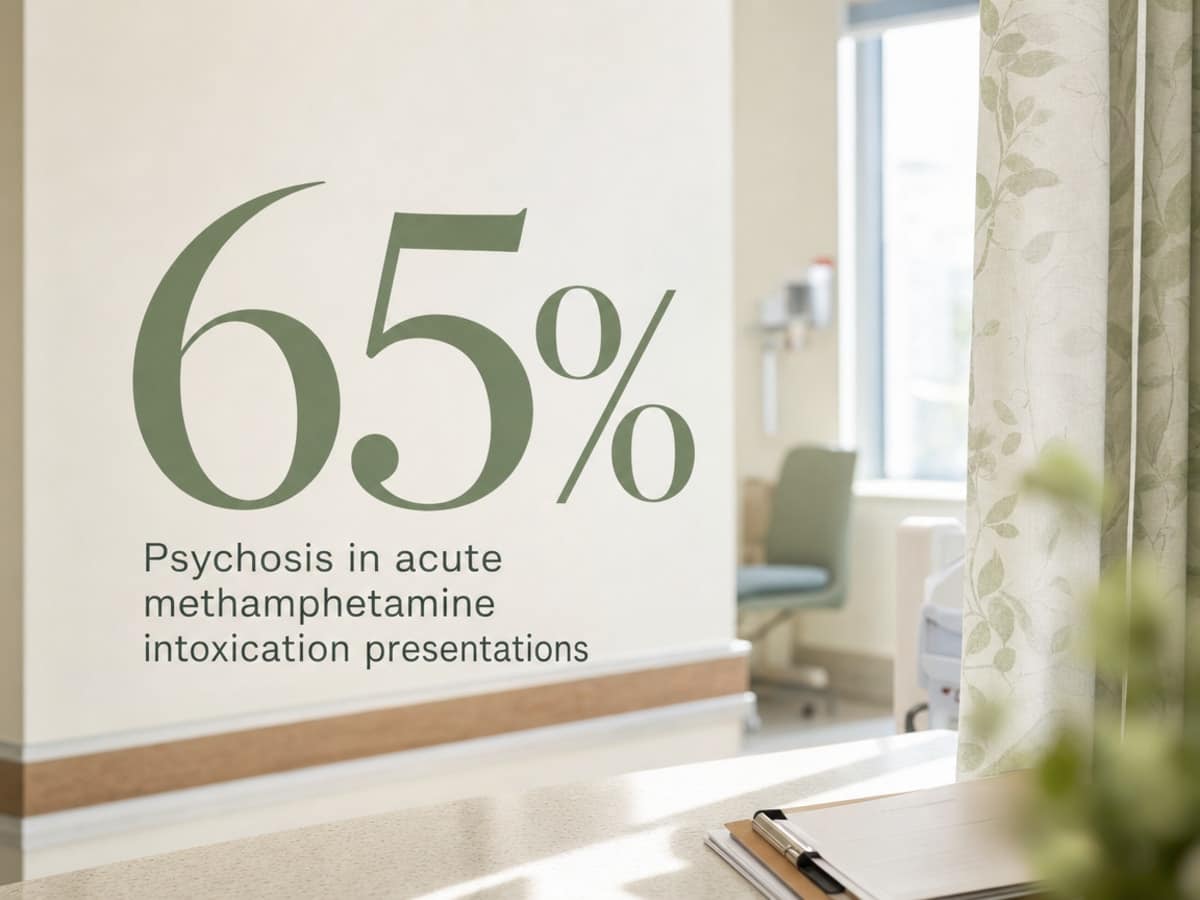
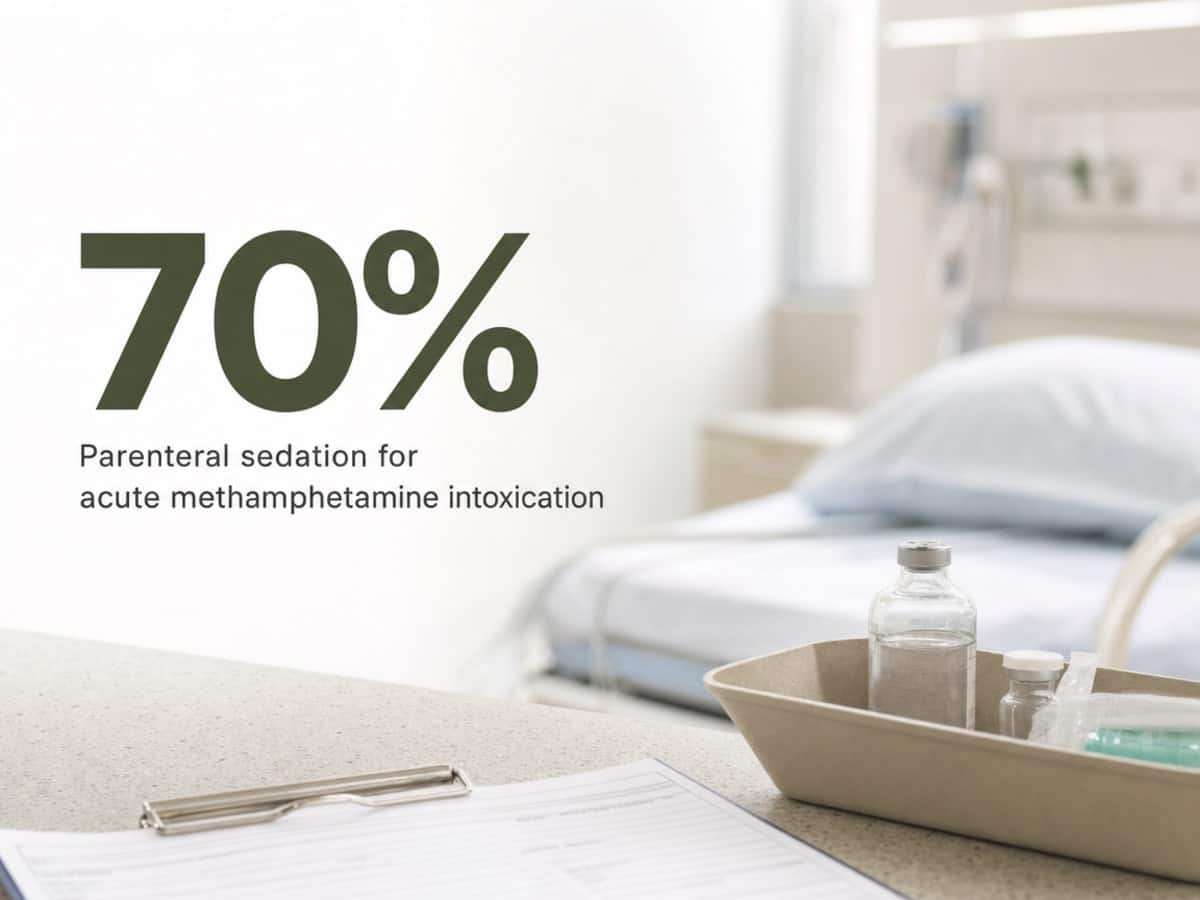
The good news buried in the acute data: most of these episodes are manageable and transient with the right setting. A 2024 prospective study of 205 emergency department presentations for acute meth intoxication found paranoid delusion in 65% of cases, chemical sedation used in 95% (parenteral sedation in 70%), and symptom resolution within 24 hours in 83% of cases. Read that carefully. Most acute meth psychosis resolves inside a day when the setting can hold the person safely and dose appropriately. What determines the outcome is not whether the drugs exist. It is whether there is a room quiet enough, a nurse close enough, and a physician available fast enough to use them well.5
Why Staff-to-Client Ratio Is the Hidden Variable
Read enough rehab websites and you will see the same features listed everywhere: evidence-based programming, medical detox, dual diagnosis, aftercare. What you will rarely see spelled out is the number that decides whether any of it works during the first week of meth care. Staff-to-client ratio.
SAMHSA’s TIP 27 frames residential treatment as most appropriate for people with severe substance use disorders who need a 24-hour structured environment and integrated medical and psychiatric services. TIP 52 adds that men in treatment often present with externalizing behaviors, including aggression, and do better in structured, goal-oriented programs with adequate staff presence. Neither guideline hands you a magic ratio. Both make the same point: the schedule and the staffing have to match the acuity walking in the door.8,9
For meth specifically, the acuity is high and it moves fast. A man can be sleeping quietly at 3 a.m. and standing at the window convinced someone is in the yard at 4. TIP 33’s environmental prescription only works if someone is actually there, awake, close enough to notice the shift and respond before it escalates. That is what a 1.5:1 staff-to-client ratio buys, and why a 20-bed cap matters—the math only holds when the census stays small. At Serenity Park, that staffing density is the operational reason a low-stimulation environment can be maintained through the volatile first stretch, when paranoia and aggression are most likely to spike.4
Stabilization Phase vs. Treatment Phase: Two Chapters, Not One
Here is the sequencing error that sinks most meth care: treating the first two weeks and the next twelve as one continuous program. They are not. They are two chapters with different goals, different clinical tools, and different measures of success. Confusing them is why a man can complete a 30-day stay and leave more fragile than when he arrived.
The stabilization chapter runs roughly from day zero to day fourteen. The goal is narrow and physical: get him sleeping, bring paranoia down, keep agitation contained, and manage acute psychosis when it appears. The tools are environmental and pharmacologic. Benzodiazepines are first-line for acute intoxication with agitation and aggressive behavior. Second-generation antipsychotics carry the psychosis load, generally tapered within about six months as symptoms remit. No medication has proven efficacy for meth withdrawal or craving, and none is FDA-approved for methamphetamine use disorder itself. What you are doing in this chapter is buying a stable nervous system. That is the whole assignment.1
The treatment chapter starts once that stability holds. Now the tools change entirely. Contingency management moves to the front, endorsed by SAMHSA as a primary intervention for stimulant use disorder given the absence of approved medications. Cognitive-behavioral therapy takes on cravings, high-risk situations, and the thought patterns that pull a man back toward use. Motivational interviewing helps him work through ambivalence about the life he is rebuilding. The 2024 ASAM/AAAP guideline organizes these psychosocial interventions as the core of ongoing care, with contingency management and structured behavioral work at the center.2,3,10,11
Trying to run the second chapter during the first is where programs fail. A man three days off a heavy run cannot process a CBT worksheet on cognitive distortions. He is barely tracking the room. Group therapy at that stage is not therapy; it is stimulation he cannot filter. If a program schedules him into process groups on day two because that is what the calendar says, they are treating their timeline, not him.
The reverse mistake is just as common. Programs that only detox—get him through the acute crash, then discharge—hand a still-fragile man back to the same environment that produced the run. Stabilization without the treatment chapter that follows is a bridge to nowhere.
What you want to hear from any program you are considering is that they know which chapter he is in on any given day, and that the schedule bends around clinical readiness rather than a marketing brochure. Sleep first. Sedation and antipsychotics as needed. Then, and only then, the therapy work that actually changes the arc.
What Comes After Stability: Contingency Management, CBT, and the Long Middle
Say the first two weeks go well. He is sleeping six hours at a stretch. The paranoia has receded from certainty to background noise. He is eating, showering, making eye contact. This is the moment most families exhale. It is also the moment the real work begins, and the moment programs most often stall.
The long middle is where recovery actually gets built. And the tools that build it look nothing like the tools that carried him through the first week. Contingency management moves to the front of the schedule. SAMHSA’s 2024 advisory names it a primary and potentially life-saving intervention for stimulant use disorder, precisely because no medication treats meth craving directly. The mechanism is unglamorous: verified abstinence earns tangible reinforcement, delivered on a predictable schedule. It works because it gives a depleted dopamine system something to organize around while it heals.3
Cognitive-behavioral therapy carries the next layer. Once he can track a conversation, CBT gives him a working map of his own cravings—what triggers them, what he tells himself in the moment before he uses, which situations he cannot yet walk into safely. Motivational interviewing threads through the individual sessions, meeting the ambivalence that shows up around week three when the crisis has faded and the reasons to leave start whispering. OHSU’s clinical summary is direct: behavioral therapy is the cornerstone of meth treatment, with contingency management, CBT, the Matrix Model, and residential care as the working modalities.10,11,17
The 2024 ASAM/AAAP guideline organizes all of this into one clinical picture: structured psychosocial care, delivered with enough consistency and staff continuity to hold a man through the months when the acute drama is gone but the wiring is still repairing. That continuity is what a small-census residential setting is built to provide. When staff know his sleep pattern, his trigger list, and the specific delusion he had on night four, the therapy that follows lands differently than it does in a program where the clinical team rotates weekly. The long middle is not glamorous. It is the part that decides whether stabilization becomes recovery.2
Why Men Present Differently and What Programs Should Do About It
Men do not walk into meth treatment the same way women do. The literature on gender differences in stimulant use is consistent on one point: men more often present with externalizing behaviors, including aggression, higher rates of justice-system involvement, and less willingness to name fear or exhaustion out loud. He will tell you he is fine. He will tell you he can handle it. He will minimize the psychosis he had on Tuesday and get quiet about the fight he cannot remember.13
That presentation shapes what a program actually needs to do. SAMHSA’s TIP 52 is direct: men in treatment benefit from structured, goal-oriented programming with clear expectations and adequate staff presence to hold behavioral limits without shaming him for needing them. Structure is not a personality clash with masculine independence. It is what lets a man who has been running his own life for decades put the wheel down for two weeks without feeling like he has surrendered something permanent.8
The practical implications for early meth care are specific. Intake needs to expect underreporting of symptoms and screen actively for paranoia, sleep loss, and recent aggression rather than waiting for him to volunteer them. Staff need to be trained to read escalation in a population that will not say it is escalating. And the setting has to be male-only for that first stretch, because mixed environments add social performance to a nervous system that has none to spare. A small residential program built for men—Serenity Park’s 20-bed cap and 1.5:1 staffing among them—matches that clinical requirement, not by branding, but by math.
Choosing a Program: What to Ask Before Anyone Packs a Bag
By the time you are comparing programs, you have already read too many websites that say the same thing. Evidence-based. Compassionate. Personalized. None of that tells you whether a facility can hold a man through the first two weeks of meth abstinence. A short list of specific questions will.
Start with staffing. Ask for the current census and the number of awake staff on the overnight shift. If the ratio thins out after 10 p.m., that is when paranoia and sleep disruption spike, and that is when your family member needs someone in the hall. TIP 27 is explicit that residential care for severe substance use disorders means a genuine 24-hour structured environment with integrated medical and psychiatric services, not a night manager and a call list.9
Ask about the physical setting. Are rooms quiet and dimly lit during the acute phase? Is there space to pace without cornering? Can staff intervene without crowding? TIP 33 treats these as clinical variables, not decor. A program that cannot describe how it manages sound, light, and sightlines during agitation has not read the guideline it claims to follow.4
Ask about medication protocols. Who prescribes benzodiazepines for acute agitation, who prescribes second-generation antipsychotics for psychosis, and how quickly can either be adjusted overnight? “We have a psychiatrist on staff” is not the answer. “Our psychiatrist is reachable within 30 minutes and orders are written the same shift” is.1
Ask what happens on day fifteen. When stabilization holds, does the program pivot to contingency management as a core intervention, as SAMHSA’s 2024 advisory recommends? Is CBT delivered by clinicians who know his specific trigger list, or by rotating contractors? A program that cannot describe the handoff between chapters will not execute it well.3,10
Ask about capacity. A 20-bed cap is not a marketing number. It is what makes a 1.5:1 staff-to-client ratio possible on an overnight shift, and what keeps the acoustic and visual environment inside the range TIP 33 describes. Larger facilities can be excellent programs. They cannot be quiet in the way this window requires.
One last question, and it is the one that separates programs built for meth from programs that accept meth patients: how do you screen for weapons, active paranoia, and recent aggression at intake, and what does the first 24 hours look like for a man who arrives having not slept in four days? If the answer is specific—room assignment, medication plan, staffing coverage, contact rhythm with family—you are in the right conversation. If the answer is a brochure, keep calling. Serenity Park’s staffing model exists for exactly this stretch, and the questions above are the ones worth pressing before anyone packs a bag.
Frequently Asked Questions
How long does the stabilization phase usually last before therapy can begin?
For most men, the acute window runs roughly 72 hours to two weeks. Sleep tends to return first, followed by a gradual softening of paranoia and agitation. Once he can track a conversation, sit through a meal, and sleep several hours at a stretch, structured therapy becomes possible. Programs that push CBT or group work before that point are treating the calendar, not the patient.2,10
Is there a medication that treats meth addiction the way Suboxone treats opioid use?
No. There is no FDA-approved medication for methamphetamine use disorder, and no drug has proven efficacy for meth withdrawal or craving. What medication does in early care is manage acute symptoms: benzodiazepines for agitation, second-generation antipsychotics for psychosis. The rest of recovery leans on structured psychosocial work, with contingency management as a primary intervention endorsed by SAMHSA.1,2,3
My brother is paranoid and hasn’t slept in days. Is that a psychiatric emergency or part of meth withdrawal?
It can be both, and the distinction matters less than the response. Acute meth-induced paranoia with sleep deprivation belongs in a supervised medical setting, not at home. Symptoms often resolve within 24 hours once sedation, sleep, and a quiet environment are in place. If he is threatening harm or has acquired a weapon, call emergency services now and arrange transport to an ED or crisis unit.5,16
Why does staff-to-client ratio matter more for meth than for other substances?
Because meth acuity moves fast and unpredictably. A man can be calm at 3 a.m. and standing at the window certain someone is outside at 4. The TIP 33 environmental prescription—quiet room, moderate lighting, subdued voices—only works when staff are actually present to notice shifts and respond before escalation. A 1.5:1 ratio with a 20-bed cap makes that overnight coverage mathematically possible.4,9
Can meth-induced psychosis come back months after someone stops using?
Yes. NIDA documents that psychotic symptoms can persist for months or years after last use and can be re-triggered by stress. That is why the treatment chapter after stabilization matters so much. CBT-based relapse prevention, trigger mapping, and consistent psychiatric follow-up during the long middle are what reduce the risk of a stress-induced recurrence months down the road.10,14,17
What questions should I ask a residential program before admitting a family member for meth treatment?
Four questions cut through the marketing. What is your current census and awake overnight staffing? How do you manage sound, light, and sightlines during acute agitation? Who prescribes benzodiazepines and second-generation antipsychotics, and how fast can orders change overnight? What does day fifteen look like—does the program pivot to contingency management and CBT with consistent clinicians?1,3,4,10
References
- Evidence-Based Guidelines for the Pharmacological Management of Methamphetamine-Related Disorders. https://pubmed.ncbi.nlm.nih.gov/28297728/
- The ASAM/AAAP Clinical Practice Guideline on the Management of Stimulant Use Disorder. https://stacks.cdc.gov/view/cdc/156927
- Using Contingency Management to Address Stimulant Use Disorder: SAMHSA Advisory (PEP24-06-001). https://library.samhsa.gov/sites/default/files/contingency-management-advisory-pep24-06-001.pdf
- Treatment for Stimulant Use Disorders (TIP 33) – SAMHSA. https://www.govinfo.gov/content/pkg/GOVPUB-HE20_400-PURL-gpo171771/pdf/GOVPUB-HE20_400-PURL-gpo171771.pdf
- Psychosis in Acute Methamphetamine Intoxication is Common and Mostly Short-Lived: A Prospective Observational Study. https://pubmed.ncbi.nlm.nih.gov/37460167/
- Does Methamphetamine Use Increase Violent Behaviour? Evidence from a Prospective Longitudinal Study. https://pubmed.ncbi.nlm.nih.gov/24400972/
- Stimulants Involved in Overdose Deaths – CDC Data. https://www.cdc.gov/drugoverdose/data/stimulants.html
- Substance Abuse Treatment: Addressing the Specific Needs of Men – Treatment Improvement Protocol (TIP 52). https://www.ncbi.nlm.nih.gov/books/NBK64194/
- Residential Treatment for Substance Use Disorders – TIP 27 (SAMHSA). https://www.ncbi.nlm.nih.gov/books/NBK64164/
- Cognitive-Behavioral Therapy (CBT) for Substance Use Disorders – NCBI Book Chapter. https://www.ncbi.nlm.nih.gov/books/NBK424847/
- Motivational Interviewing in Substance Use Treatment – NCBI Book Chapter. https://www.ncbi.nlm.nih.gov/books/NBK424857/
- Patterns of Methamphetamine Use and Psychiatric Symptoms: A Cross-Sectional Study. https://pubmed.ncbi.nlm.nih.gov/32052476/
- Gender Differences in Methamphetamine Use and Treatment Outcomes. https://pubmed.ncbi.nlm.nih.gov/30367844/
- Methamphetamine – National Institute on Drug Abuse (NIDA). https://nida.nih.gov/sites/default/files/methrrs.pdf
- Methamphetamine Psychosis: Epidemiology and Management. https://pmc.ncbi.nlm.nih.gov/articles/PMC5027896/
- Methamphetamine-Associated Psychosis. https://pmc.ncbi.nlm.nih.gov/articles/PMC3280383/
- Methamphetamines and Psychosis – OHSU. https://www.ohsu.edu/sites/default/files/2025-03/AMH25-2-Sokolski-Methamphetamine.pdf