
Key Takeaways
- When the pour becomes the first act of coming home, drinking is reorganizing the day rather than rewarding it, meeting a diagnostic sign of AUD 17.
- Consistently drinking more or longer than intended, even without lying about it, matches one of the eleven DSM-5-TR criteria for alcohol use disorder 23.
- Hidden second drinks in garages, offices, or travel mugs signal shame about need, not preference, and rank among the earliest family-observable warning signs 18.
- Weekends that quietly migrate away from hikes, dinners, and family events toward drinking-friendly settings reflect giving up important activities, a core DSM-5-TR criterion 23.
- Disproportionate anger, contempt, or stonewalling whenever drinking is mentioned functions as a defensive shield around the behavior and is a named warning sign 18.
- Repeated failed attempts at Dry January, weeknight rules, or switching to beer reflect unsuccessful efforts to cut down, another DSM-5-TR diagnostic criterion 23.
- Morning tremor that eases after the first drink often signals early withdrawal, which can begin six hours after the last drink and sometimes progresses to seizures 2.
- Damp sheets, 4 a.m. wake-ups, and elevated pulse cluster as autonomic withdrawal features as the nervous system rebounds hours after the last drink 15.
- Needing more alcohol to feel the same, or seeming unaffected by amounts that once impaired him, is tolerance, a hallmark of physical dependence 23.
- Late-afternoon anxiety and irritability that reliably resolve within twenty minutes of a drink reveal a nervous system asking to be re-medicated, not a personality quirk 4.
When You Can Feel the Problem Before You Can Name It
You already know something is off. You just haven’t been able to prove it in a way that would hold up in a conversation with him, or with his mother, or with the friend who keeps telling you he’s just stressed at work. But you live in the house. You see the recycling bin. You hear the freezer open at 11 p.m. You notice how the shape of your evenings has quietly reorganized itself around a bottle.
What you’re feeling is not paranoia, and it’s not a character flaw. It’s pattern recognition. Partners often see alcohol use disorder before anyone else does because they see the private version, the one that doesn’t get performed at the office or on the golf course. That private version is where the diagnostic criteria actually live. The eleven symptoms clinicians use to identify alcohol use disorder show up as small behavior changes at home long before they show up as a crisis 23.
This article walks through ten of those hidden signs of an alcoholic, the kind that don’t match the stereotype and don’t fit into a five-minute doctor’s visit. Some are behavioral. Some are physical. All of them are things you can observe from where you’re sitting right now. The goal isn’t to give you a verdict. It’s to give you language for what you already see, so the next conversation you have, whether with him or with a clinician, starts from something solid.
Why the Movie Version of Alcoholism Keeps Families Confused
The image most of us grew up with looks like a man in a stained undershirt, unemployed, unshaven, drinking from a bottle in a paper bag. That picture is doing you a disservice. It’s the reason you keep talking yourself out of what you see. He goes to work. He pays the mortgage. He coaches the kid’s soccer team on Saturdays. He is not the man in the picture, so the picture tells you nothing is wrong.
But alcohol use disorder is diagnosed by pattern, not by appearance. The clinical definition rests on a problematic pattern of use that produces impairment or distress across at least two of eleven criteria within a twelve-month window 23. Impairment shows up in relationships and role obligations, not just in job loss or arrests 22. Someone can meet criteria for a mild or moderate disorder while still, from the outside, looking fine.
The stereotype also erases how common this is. Excessive alcohol use is tied to roughly 178,000 deaths a year in the United States, a 29% jump from 2016-2017 to 2020-2021 13. Most of those people did not look like the movie version either. They looked like your husband, your neighbor, your brother-in-law, right up until they didn’t.
The Hidden Behavioral Signs You’re Already Noticing
1. The First Drink Arrives Before the Groceries Are Put Away
You come home together. The trunk is still open. There are cold items on the counter that need to go in the freezer. And somehow, before the ice cream is put away, there’s a glass in his hand.
You’ve probably told yourself it’s just a habit. He had a long day. He’s decompressing. But watch the timing over a few weeks and a pattern shows itself: the drink comes before the task, not after it. The pour is the first act of coming home, not a reward for finishing what needed to be done.
Clinically, this is what NIAAA describes as drinking interfering with taking care of home or family responsibilities, one of the diagnostic questions used to identify AUD 17. The drink is not filling a gap in his day. It is starting to reorganize the sequence of the day itself.
What this is not: the occasional Friday-night glass of wine while cooking. The difference is whether the drink can wait, and whether it consistently doesn’t.
2. He Says He’ll Have Two, and Has Six
He meant it when he said two. That’s the part that confuses you. He wasn’t lying. He genuinely planned to stop, and then the third one appeared, and by the time you looked up from the dishwasher there was a fourth on the counter and a fifth on the way.
This is not a willpower problem you can nag him out of. Drinking more, or longer, than intended is one of the eleven DSM-5-TR criteria for alcohol use disorder 23. NIAAA phrases it as a question worth asking yourself: has he had times when he ended up drinking more, or longer, than he intended 19? If the answer is yes on most drinking occasions, you’re looking at a diagnostic pattern, not a bad night.
What this is not: miscounting at a wedding or losing track during a rare celebration. The pattern that matters is the one that repeats on ordinary Tuesdays, when nothing special is happening.
3. The Second Glass Is Hidden Behind the First
You’ve seen it. The visible drink on the counter, poured at a normal-looking hour, at a normal-looking size. And then the other one. The travel mug in the garage. The tumbler in the office. The bottle in the coat closet that you weren’t supposed to find. The wine glass topped up out of your sightline while you were putting the kids to bed.
Concealment is one of the clearest family-observable warning signs of a drinking problem. Indian Health Service guidance for family and friends lists drinking alone or hiding drinking patterns, displaying anger when questioned about drinking, needing more alcohol to function normally, and spending significant time thinking about the next drink among the behaviors loved ones typically notice first 18.
Hiding is not shame about how much he enjoys a drink. It’s shame about how much he needs one. If the amount he shows you is not the amount he consumes, that gap is the sign.
4. Every Weekend Is Now Organized Around Drinking
Look at the last three weekends. Where did you go? Who did you see? What did you skip?
If the answer is that Saturday afternoons now default to the back porch instead of the hike you used to do, or that dinner reservations have quietly migrated to places with good wine lists, or that his brother’s birthday was declined because it fell on a Sunday morning, you’re watching what the DSM-5-TR calls giving up or reducing important activities because of alcohol 23. NIAAA translates that criterion into a question you can actually answer: has he given up or cut back on activities that were important or interesting to him, in order to drink 19?
It doesn’t happen in one dramatic moment. It happens in small substitutions, one weekend at a time, until the shape of your life has quietly reorganized itself around when he can drink and when he can’t.
What this is not: preferring a quiet weekend after a hard week. The difference is whether other things are still allowed to happen.
5. He Gets Angry When You Mention It
You’ve learned when not to bring it up. Not after the second drink. Not on Sunday mornings. Not in the car. You’ve become fluent in the small facial change that means the conversation is about to go badly, and you’ve adjusted the entire timing of your marriage around avoiding it.
Anger when questioned about drinking is specifically named in family-facing warning-sign guidance for a reason 18. It’s not just a personality issue. It’s a defensive response that protects the drinking from scrutiny, and it’s often more revealing than the drinking itself. If bringing up something factual, how much, how often, how late, reliably triggers disproportionate anger, contempt, or stonewalling, the drinking has moved past the point where he can look at it honestly.
What this is not: a partner who’s frustrated because you brought up something serious in a bad moment. The pattern is that every moment becomes a bad moment when the topic is alcohol.
6. Failed Cut-Back Attempts You’ve Watched Happen
Dry January that ended on January 4th. The switch from liquor to beer that lasted a weekend. The rule about no drinking on weeknights that quietly became no drinking on Mondays. The promise after the last argument that this time would be different, and then wasn’t.
You’ve been the witness to these attempts, which is why they matter. Unsuccessful efforts to cut down or control drinking is one of the eleven DSM-5-TR criteria used to diagnose alcohol use disorder, and it maps directly onto behaviors partners observe: broken rules, moved goalposts, and the slow drift back to the previous baseline 23. The attempts themselves are actually evidence that some part of him knows there’s a problem. That’s important. It’s also why the failure isn’t a moral one.
What this is not: a person who tried a health kick and didn’t stick with it. The signal is the repeated, private acknowledgment that the drinking needs to change, followed by the inability to change it.
The Hidden Physical Signs Most Partners Miss
7. The Morning Coffee Cup Trembles
You’ve watched it happen. He picks up the coffee cup and the surface of the liquid moves in a way it shouldn’t. A small ripple. He steadies it with his other hand, or braces the mug against the counter, or laughs it off as too much caffeine. You’ve probably even accepted that explanation once or twice.
The pattern that matters is the one that resolves after the first drink of the day. If the tremor eases when he drinks and returns when he stops, the body is telling you what the words won’t.
What this is not: a one-time shake after a rare late night. The signal is the tremor that shows up on ordinary mornings, and disappears in a predictable way.
8. Restless Sleep, Sweats, and the 4 A.M. Wake-Up
The sheets are damp. Not soaked, but damp enough that you notice. He’s kicked the covers off, or he’s turned the fan on again, or he’s up at 4 a.m. moving quietly through the house because he can’t get back to sleep. You’ve asked if he’s coming down with something. He hasn’t been.
Insomnia and sweating are two of the DSM-5 withdrawal criteria, and they cluster together with tremor, nausea, and anxiety when the body is adjusting to alcohol wearing off overnight 3. Clinical descriptions of early withdrawal specifically name insomnia, diaphoresis, and autonomic hyperactivity as features that show up before more severe symptoms 15. That 4 a.m. wake-up isn’t restlessness. It’s the nervous system rebounding several hours after the last drink.
What you may also see: an elevated resting pulse in the morning, a flushed face, a jaw that clenches during sleep. Each on its own is easy to dismiss. Together, they tell you the body is working overtime to get back to baseline while he rests.
What this is not: a bad night after spicy food or a stressful week.
9. The Body Now Needs More to Feel the Same
He used to feel it after two. Now he can drink four and seem, to a stranger, completely fine. You’ve watched this shift happen slowly, and you may have even taken it as a good sign, that he handles his liquor, that he’s not sloppy.
It isn’t a good sign. Tolerance is one of the eleven DSM-5-TR criteria for alcohol use disorder, defined as needing markedly more alcohol to achieve the same effect, or feeling less effect from the same amount 23. Family-facing warning-sign guidance describes it plainly: needing more alcohol to function normally 18.
Tolerance is often celebrated socially and misread at home. What it actually means is that his brain and body have adapted to a chronic input of alcohol, and adaptation is what physical dependence looks like from the inside. The reason he doesn’t seem drunk is not that he isn’t drinking too much. It’s that his baseline has moved.
10. Anxiety and Irritability That Ease Only After a Drink
By late afternoon, something shifts. He’s shorter with the kids. He checks his phone more. He paces. The tightness in his shoulders is visible from across the room. And then he pours a drink, and within twenty minutes, the room resets. He’s warmer, funnier, easier. You’ve noticed how reliable the timing is.
Anxiety, agitation, and affective instability are documented features of the withdrawal spectrum, appearing well before more dramatic symptoms and often mistaken for stress or personality 15. When a drink consistently and quickly relieves that agitation, what you’re watching is not a personality quirk. It’s the nervous system asking to be re-medicated with the substance it has adapted to 4.
This is one of the most disorienting signs to witness, because the drink appears to help. He seems better after it. You may have even encouraged it on hard days. The pattern to watch for is not the relief itself but its predictability: same time, same amount, same shift in mood.
What this is not: a rough workday eased by a glass of wine on a Friday.
What You’re Carrying That Nobody Names
There’s a word for what you’re doing, and it isn’t nagging. You’re carrying the household’s operating system. You track the recycling. You calculate how much is left in the bottle before he checks. You brace for the mood shift at 5 p.m. You make excuses to the kids about why Dad is tired again. You sleep lightly because part of you is always listening for the freezer, the garage door, the stumble on the stairs.
This is caregiver load, and research on the families of people with alcohol use disorder documents it directly. Quality of life for caregivers of adults with AUD is measurably affected by the strain of managing a partner’s drinking, the disruption to family functioning, and the erosion of social support around the household 10. AUD reshapes childcare, household responsibilities, social events, and finances, which means the person keeping those things intact is doing extra labor that nobody sees 5.
You are not making this bigger than it is. You are the reason it isn’t bigger already. Naming that out loud, even just to yourself, is not disloyalty. It’s the first honest accounting of what this has actually cost you.
Why Your Observations Matter to a Clinician
Here’s something that gets missed: the fifteen-minute primary care visit is not where most alcohol use disorder gets caught. A screening question or two, an honest answer that may or may not come, and the appointment moves on. What actually diagnoses AUD is a pattern of behavior across a twelve-month window, measured against eleven specific criteria 23. And the person best positioned to see that pattern is not the physician. It’s you.
When a clinician screens for unhealthy alcohol use with tools like the AUDIT-C or the single-item NIAAA screen, a positive result is a starting point, not a diagnosis. The next step is a full evaluation against DSM-5 criteria, and that evaluation depends heavily on collateral information about role obligations, interpersonal conflict, failed cut-back attempts, and withdrawal symptoms between drinking episodes 1, 11. Those are the exact things you have been tracking, whether you meant to or not.
Bring what you’ve seen. Dates, if you have them. Specific behaviors, not adjectives. The morning tremor. The failed Dry January. The weekends that reorganized themselves. You are not overstepping. You are handing a clinician the twelve-month picture the appointment slot cannot produce on its own.
What to Do With What You Now Know
You don’t have to have the confrontation tonight. You don’t have to have a diagnosis, a treatment plan, or a packed bag by the door. What you have is a clearer picture, and that’s actually the hard part done.
Start by writing down what you’ve observed over the past two or three weeks. Specific things: the mornings with the tremor, the failed cut-back attempts, the weekends that reorganized themselves. This is not a case file to prosecute him with. It’s a record for you, so the next time someone tells you you’re overreacting, you have the pattern in front of you in your own handwriting.
Then talk to someone who is not him. A primary care physician, a licensed therapist, or the SAMHSA National Helpline, which is free, confidential, and available around the clock for individuals and families 25. You are allowed to seek guidance before he is ready to. In fact, family involvement in the recovery process improves treatment entry, engagement, and long-term outcomes, which means the work you do now is not premature 6, 7. It’s part of what recovery, when it happens, will be built on. Residential programs like Serenity Park Recovery Center can help you plan the next step when he is ready.
Frequently Asked Questions
What if he denies he has a drinking problem when I bring it up?
Denial is common and expected. It doesn’t mean you’re wrong. Alcohol use disorder is diagnosed by a pattern of behavior over twelve months, not by his willingness to admit it in a single conversation 23. Keep your own written record of what you’ve observed, and consider talking to a clinician or the SAMHSA helpline about next steps you can take without his agreement 25.
Is it safe for him to just stop drinking on his own?
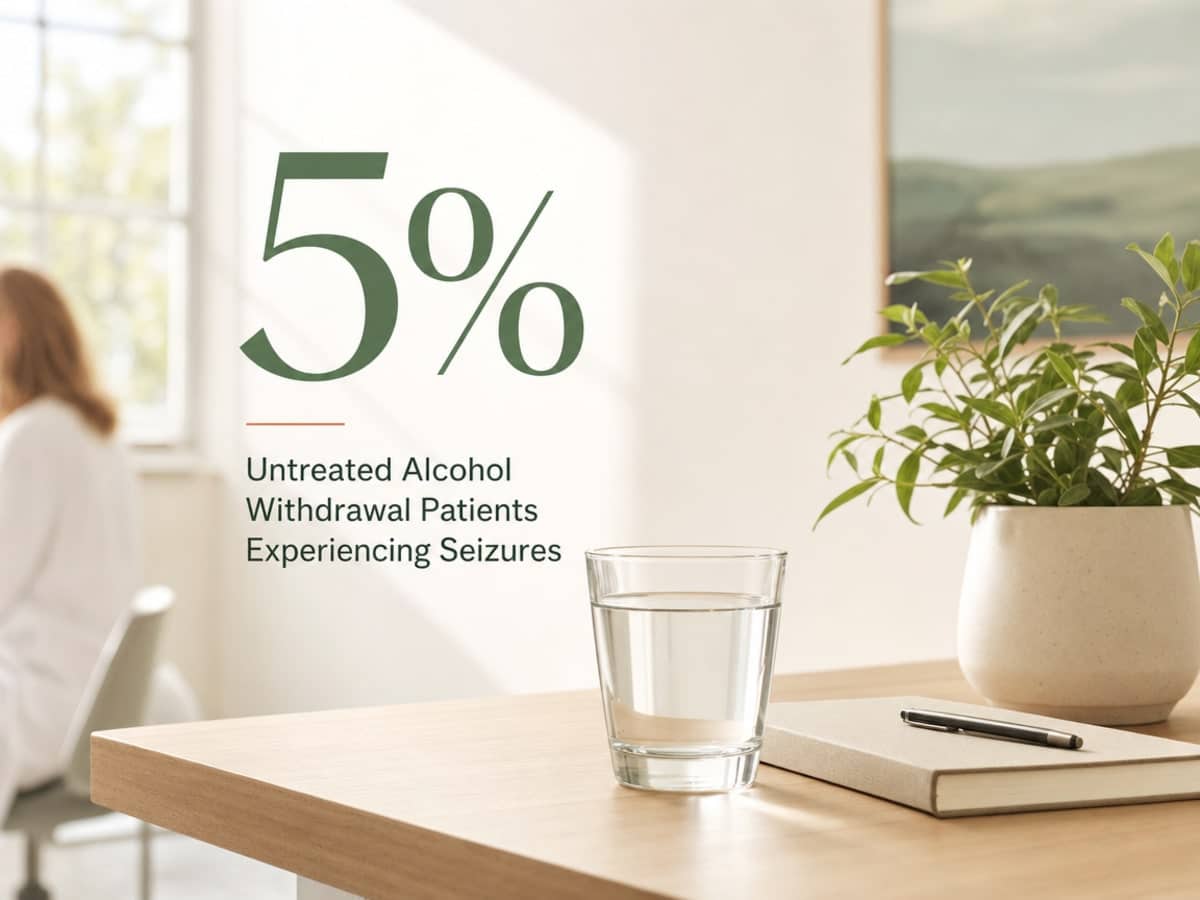
Not always. If he’s been drinking heavily and daily, unsupervised withdrawal can be dangerous. Serious symptoms develop in about 10% of people going through withdrawal, and untreated cases can produce seizures in more than 5% 2. Severe withdrawal can include hallucinations, delirium, and autonomic instability 4. Before he quits cold turkey, he should be evaluated by a physician who can determine whether medically supervised detox is needed.
Should I confront him alone, or wait until someone else is there?
Avoid framing it as a confrontation. Choose a sober, calm moment, not the evening after drinks. If you have concerns about anger or safety, don’t do it alone; involve a therapist, physician, or trusted family member. Family-based approaches work best when they focus on communication and specific behaviors rather than accusation 8. A clinician can help you plan the conversation so you’re not carrying the whole thing yourself.
How do I know if what I’m seeing is a real problem or if I’m overreacting?
If two or more of the patterns in this article show up repeatedly over a twelve-month window, that meets the clinical threshold for alcohol use disorder 23. You’re not diagnosing him, but you’re also not imagining it. Screening tools like the AUDIT-C and the NIAAA single-item screen exist precisely because these patterns are recognizable and measurable 11. Your observations are data, not overreaction.
Can my observations actually be useful to a doctor or clinician?
Yes, and often they’re essential. A positive screen in a primary care visit is only a starting point; a full DSM-5 evaluation depends on collateral information about role obligations, cut-back attempts, and withdrawal symptoms between drinking episodes 1. Family members frequently see the twelve-month pattern that a fifteen-minute appointment can’t capture. Bring specifics: dates, behaviors, timing. That context helps the clinician make an accurate assessment.
Where can I turn for help before he’s ready to admit anything?
You don’t have to wait for him. The SAMHSA National Helpline is free, confidential, and available 24/7 for both individuals and family members seeking guidance 25. A primary care physician or licensed therapist can also help you think through next steps. Family involvement improves treatment entry and long-term outcomes, so the work you do now becomes part of the foundation for his recovery whenever it begins 6, 7.
References
- Alcohol Use Disorder: Screening, Evaluation, and Management. https://www.ncbi.nlm.nih.gov/books/NBK436003/
- Complications of Alcohol Withdrawal. https://pmc.ncbi.nlm.nih.gov/articles/PMC6761825/
- Management of alcohol withdrawal syndrome in patients with alcohol-associated liver disease. https://pmc.ncbi.nlm.nih.gov/articles/PMC10805424/
- Alcohol Withdrawal Syndrome. https://www.ncbi.nlm.nih.gov/books/NBK441882/
- The Role of the Family in Alcohol Use Disorder Recovery for Adults. https://pmc.ncbi.nlm.nih.gov/articles/PMC8104924/
- Executive Summary – Substance Use Disorder Treatment and Family Therapy. https://ncbi.nlm.nih.gov/sites/books/NBK571078/
- Chapter 1—Substance Use Disorder Treatment. https://www.ncbi.nlm.nih.gov/books/NBK571084/
- Chapter 3—Family Counseling Approaches. https://www.ncbi.nlm.nih.gov/books/NBK571088/
- A randomized pilot trial of brief family-involved treatment for alcohol use disorder in an inpatient setting. https://pmc.ncbi.nlm.nih.gov/articles/PMC10504405/
- Quality of Life in Caregivers of Alcohol Use Disorder Patients: Role of Family Functioning and Social Support. https://pmc.ncbi.nlm.nih.gov/articles/PMC11559870/
- Alcohol use disorder: Recognition, testing, and initial management. https://pmc.ncbi.nlm.nih.gov/articles/PMC10378729/
- Management of Alcohol Withdrawal in the Emergency Department: Current Perspectives. https://pmc.ncbi.nlm.nih.gov/articles/PMC7093658/
- Facts About U.S. Deaths from Excessive Alcohol Use. https://www.cdc.gov/alcohol/facts-stats/index.html
- Data on Excessive Alcohol Use. https://www.cdc.gov/alcohol/excessive-drinking-data/index.html
- Alcohol withdrawal syndrome: mechanisms, manifestations, and management. https://pmc.ncbi.nlm.nih.gov/articles/PMC6084325/
- Alcohol Use and Your Health. https://www.cdc.gov/alcohol/about-alcohol-use/index.html
- Understanding Alcohol Use Disorder. https://www.niaaa.nih.gov/publications/brochures-and-fact-sheets/understanding-alcohol-use-disorder
- Warning Signs of Substance and Alcohol Use Disorder. https://www.ihs.gov/asab/familyfriends/warningsignsdrug/
- What are the symptoms of alcohol use disorder (AUD)?. https://rethinkingdrinking.niaaa.nih.gov/how-much-too-much/what-are-symptoms-alcohol-use-disorder-aud
- Alcohol Use Disorder (AUD). https://medlineplus.gov/alcoholusedisorderaud.html
- Health Topics: Alcohol Use Disorder. https://www.niaaa.nih.gov/alcohols-effects-health/alcohol-topics/health-topics-alcohol-use-disorder
- What Is Alcohol Use Disorder (AUD). https://alcoholtreatment.niaaa.nih.gov/what-to-know/alcohol-use-disorder
- Alcohol Use Disorder: From Risk to Diagnosis to Recovery. https://www.niaaa.nih.gov/health-professionals-communities/core-resource-on-alcohol/alcohol-use-disorder-risk-diagnosis-recovery
- Alcohol Use and Your Health. https://www.cdc.gov/alcohol/fact-sheets/alcohol-use.htm
- SAMHSA National Helpline. https://www.samhsa.gov/find-help/national-helpline