
Key Takeaways
- Central Arkansas residential programs in Little Rock, Conway, and Benton can typically complete a phone screen the same day and admit within 24 to 48 hours when a bed is open.
- No medication is FDA-approved for meth use disorder, so evidence-based care relies on contingency management and CBT inside a 30 to 90 day residential structure 1, 3.
- Two Arkansas access points cover most situations: SAMHSA at 1-800-662-HELP for 24/7 referrals 8and Arkansas DHS at 1-844-763-0198 for state-funded providers by catchment area 9.
What the next 24 to 72 hours can actually look like in central Arkansas
You are reading this at 2 a.m., or on a lunch break in a parked car, or after a long night that scared you more than the last one. Whatever brought you here, know this: picking up your phone and searching “meth rehab near me” already counts. That’s step one, and step one is the hardest.
Here is what the next few days can honestly look like if you are in Little Rock, Conway, Benton, or anywhere in central Arkansas.
- Within the first 24 hours, you make one call. That call goes to a facility, the SAMHSA national helpline at 1-800-662-HELP 8, or the Arkansas Department of Human Services provider locator at 1-844-763-0198 9. A clinician asks about your last use, your medical history, medications, and whether you are safe right now. Most residential programs in the state can do a phone screen the same day.
- Between hours 24 and 48, you get assessed in person and, if a bed is available, admitted. A physician reviews your vitals and mental status. You sleep, probably for a long time, because your body has been running on borrowed fuel.
- By hour 72, you are eating, hydrating, and meeting the counselor who will be with you through the behavioral work that actually treats meth use disorder 1. That is not a marketing timeline. That is what evidence-based stabilization looks like when you let it start.
Why meth is different: the treatment map most people never see
There is no FDA-approved medication for meth, and that changes the plan
Here is something most people never hear on the way in: unlike opioid or alcohol use disorder, there is no medication approved specifically to treat methamphetamine dependence 1. No pill you take once a day that quiets the craving. No shot that blocks the high. That is not a failure of your willpower. That is the current state of the science.
A recent network meta-analysis of randomized trials for amphetamine and methamphetamine use disorders found no intervention with moderate- to high-certainty evidence for the outcomes that matter most to patients 6. Researchers have tried antidepressants, stimulant substitutes, and combinations. The results have been modest and mixed.
Arkansas programs, including those funded through the state response framework, treat meth use disorder with a combination of behavioral therapies and, where appropriate, targeted medications for co-occurring conditions like depression, anxiety, or sleep 17. The tools exist. They just do not come in a bottle labeled for meth.
Contingency management and CBT are the evidence base, not a nice-to-have
So what does work? Two things, mostly, and both are behavioral.
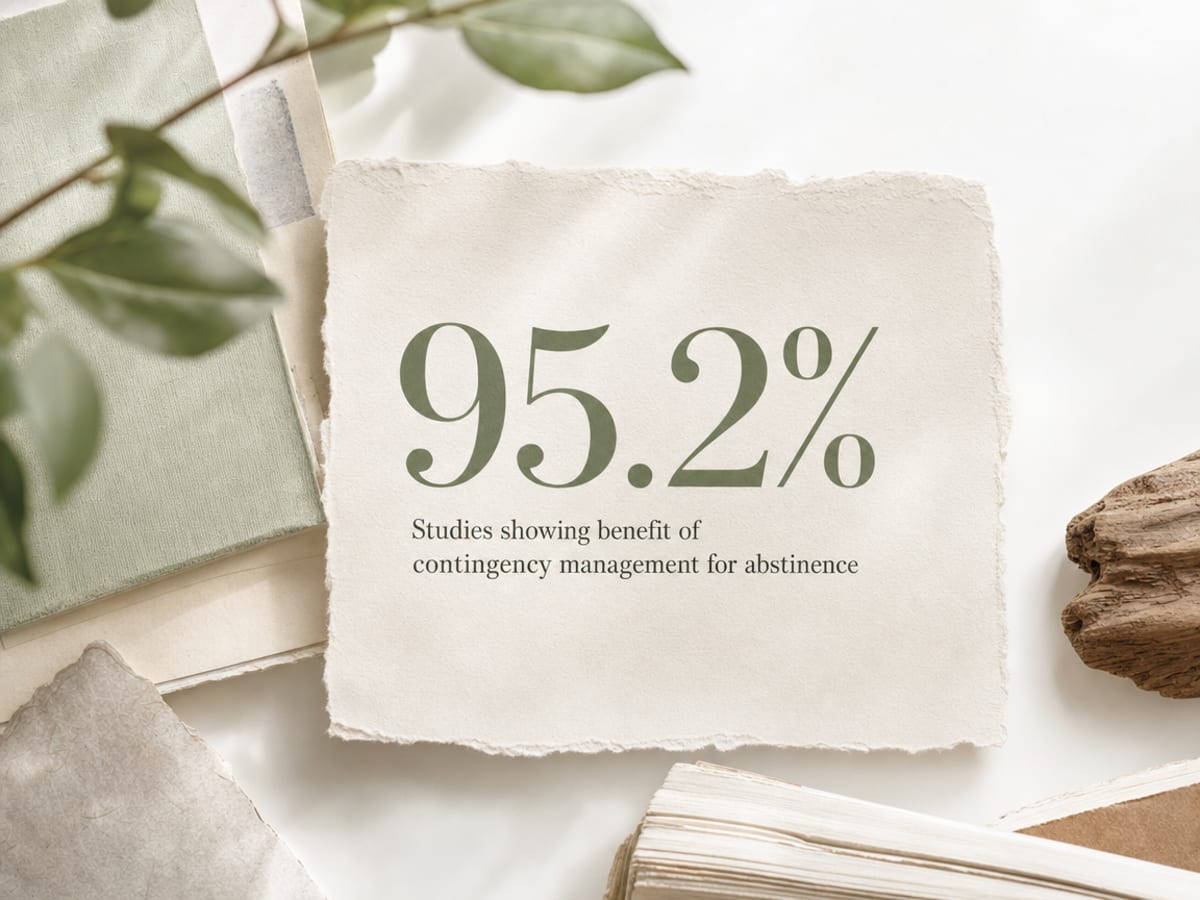
The first is contingency management. It sounds clinical, but the idea is simple: you get concrete rewards, often small vouchers or prizes, for verified drug-free urine tests. That is it. And it is startlingly effective. A systematic review of 27 studies on contingency management for methamphetamine use disorder found that 20 of 21 abstinence studies (95.2%) and 7 of 9 sexual-risk studies showed benefit 3. That is one of the strongest signals in the entire addiction treatment literature.
If you are a professional reader used to weighing evidence, sit with that number. Not a marketing figure. Not a testimonial. A peer-reviewed synthesis where nearly every abstinence trial pointed the same direction.
The second is cognitive behavioral therapy, or CBT. In session, you learn to spot the specific thoughts, places, people, and physical states that push you toward use, and you build responses you can actually run when they hit. A separate systematic review of non-pharmacological interventions concluded that behavioral interventions should be considered the first line of treatment for methamphetamine use disorder 4. First line. Not last resort.
The professional part of your brain may still resist this. Rewards for clean tests can feel childish. Talking through triggers can feel soft. Here is the honest read: these methods work because they retrain a brain that stimulants have wired to chase very fast, very predictable dopamine. You are not weak for needing external structure. You are up against neurochemistry, and the interventions that beat it look, on the surface, deceptively plain.
A good residential program in central Arkansas builds both of these into the daily schedule from week one. You are not waiting for treatment to “start.” It starts the first time a counselor sits across from you and asks what the last week actually looked like.
Why detox alone is not treatment
You might be tempted to think a few days of medical detox is enough. Get the drug out, sleep, eat, drive home. Try again with more discipline this time.
The evidence is blunt about this. Medical detoxification is only the first stage of addiction treatment and by itself does little to change long-term drug use 2. Detox handles the acute physical piece: safe monitoring while your body resets, sleep restoration, treatment of psychiatric symptoms that flare when the stimulant leaves your system. All of that matters. None of it teaches your brain a different response to the next stressful Tuesday.
Real-world data reinforces the point. A study of treatment episodes from 2017 to 2021 found that abstinence outcomes declined over time, with the worsening trends strongest among people using methamphetamine 5. Short, disconnected interventions are not keeping pace with the drug.
That is why the residential model exists. Detox is the door. What happens in the 30, 60, or 90 days after you walk through it is where the actual work of recovery gets done.
This is a Little Rock problem, not just a national one
You might tell yourself meth is somebody else’s problem. A rural problem. A trailer-park problem. Something happening to people who look nothing like you and work nothing like you do. That story is convenient, and it is wrong.
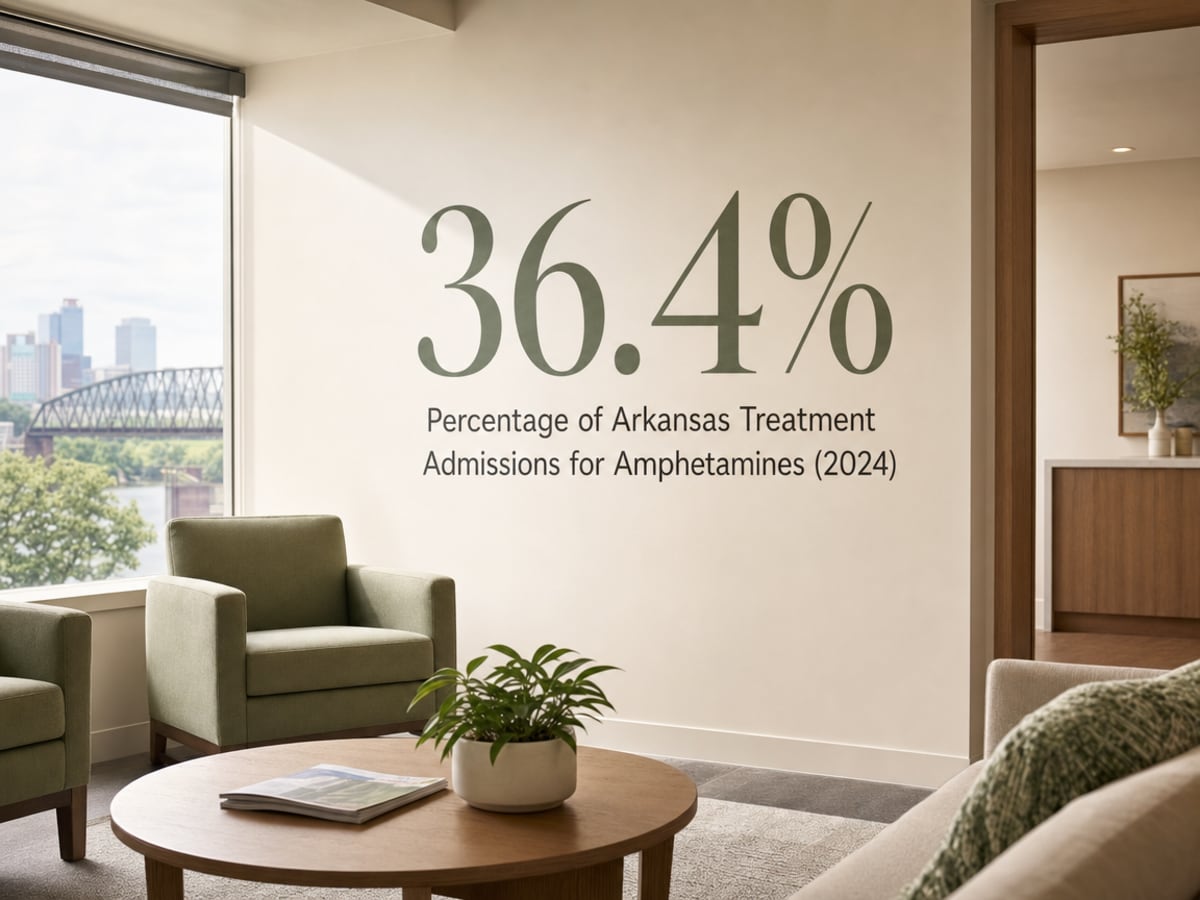
In 2024, Arkansas recorded 14,107 substance use treatment admissions. Of those, 5,141 were for amphetamines, which in this state is overwhelmingly methamphetamine 12. More than one in three people who walked into treatment in Arkansas last year walked in for the same drug you are trying to quit. That is not a fringe cohort. That is the largest single-substance category in the state.
The picture stretches back further than one year of data. Federal reporting on Arkansas identified methamphetamine-related offenses as 33 percent of drug-related federal sentences in the state as far back as FY2001 14. Meth has been embedded in Arkansas for two decades. The supply chain is old. The stigma is old. And the treatment infrastructure, quietly, has grown alongside it.
State-supported programs recently documented 4,709 clients receiving treatment services for stimulant use disorder in a single Arkansas grant period, along with 7,615 overdose reversals across various sources 16. Thousands of your neighbors are already in the system, working the same problem you are looking at right now.
The point is not to normalize the drug. The point is to break the isolation. When you make the call to a Little Rock program this week, you will not be the first professional, the first parent, or the first Arkansan the intake nurse has screened today. You will be somewhere in the middle of a line that has been forming for a long time, staffed by people who know exactly what you are describing.
What a 30 to 90 day residential stay does that outpatient cannot
Stabilization, sleep, and the first CBT session
The first week of residential care does something outpatient treatment structurally cannot: it takes the drug, the phone, the dealer, the stressful client call, and the 3 a.m. spiral out of your environment at the same time. That is not a small thing. Meth use disorder is maintained partly by cues that your outpatient life keeps handing you. Removing those cues for a stretch of days is a clinical intervention, not a vacation.
Here is what the early stretch of a residential program in central Arkansas is actually doing for you.
Days one through three are stabilization. Vitals get monitored. A physician manages the psychiatric symptoms that come roaring in when the stimulant clears, especially anxiety, depression, and paranoid thinking. You sleep, sometimes 14 or 16 hours at a time, because chronic meth use crushes sleep architecture and your brain is trying to rebuild it. You eat real food, often for the first time in weeks.
Somewhere between days three and seven, once you can hold a conversation, the behavioral work starts. That first CBT session is not dramatic. A counselor asks about the last time you used, what happened right before, what you were feeling, who you were with. You map it together. Then you build one small response for the next time that specific pattern shows up. That is the seed of the treatment that the evidence says actually moves the needle for meth 1, 4.
Redefining success: reduced use is a real clinical outcome
You may have quietly avoided treatment because you believe the only acceptable outcome is total, immediate, permanent abstinence, and you are not sure you can promise that yet. Read the next paragraph carefully.
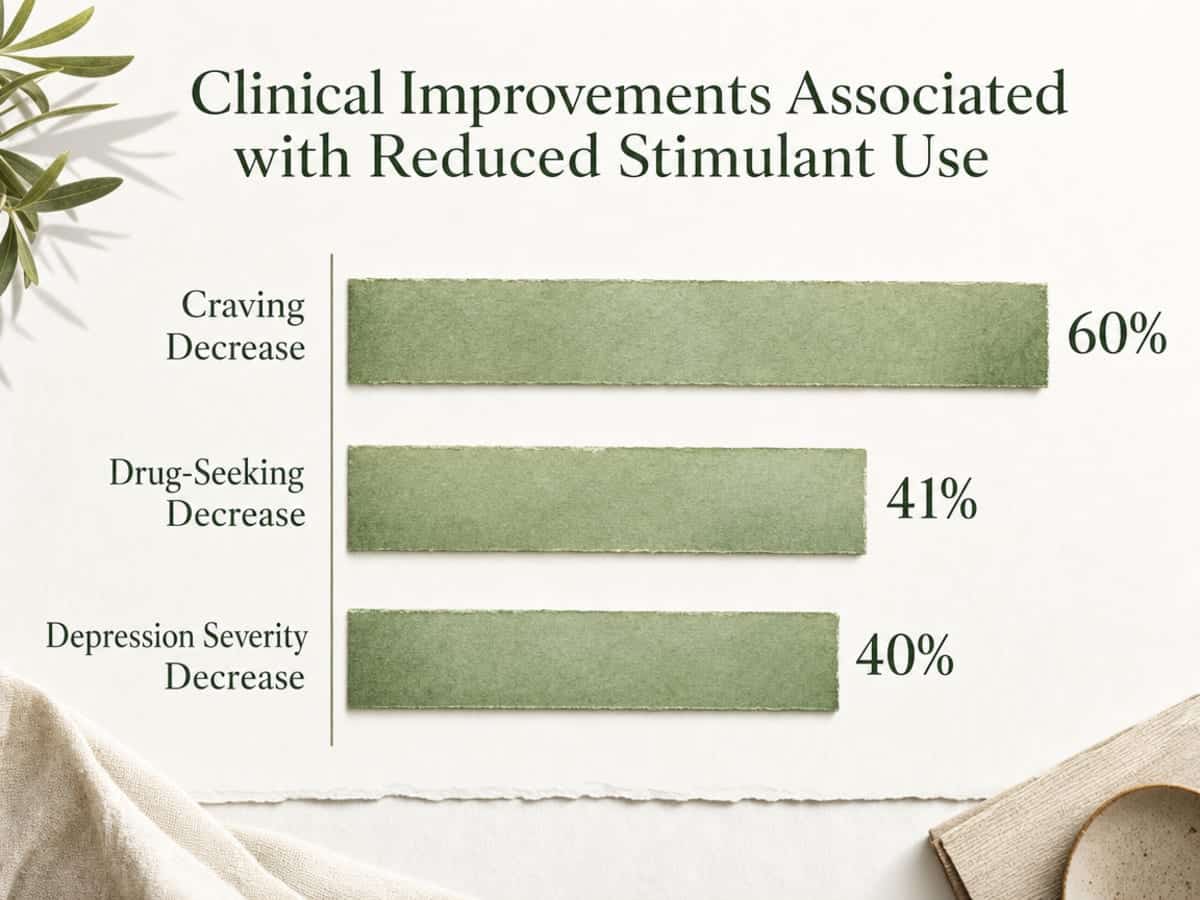
Researchers looking at people with stimulant use disorders who moved from high use to lower use, not to zero, documented a 60% decrease in craving, a 41% decrease in drug-seeking behaviors, and a 40% decrease in depression severity in that same group 7. Those are not soft numbers. Craving down more than half. Drug-seeking behavior cut by more than a third. Depression, the shadow that follows most men who use meth, down 40%.
This matters for the decision you are about to make. If you walk into a program thinking one slip means failure, you will not walk in at all. If you walk in understanding that meaningful clinical change happens along a curve, you can start today.
A residential stay of 30, 60, or 90 days gives that curve room to bend. Outpatient sessions once or twice a week, competing with a full work schedule and every environmental cue you have built your use around, rarely give it the same runway. Real-world data on stimulant treatment episodes from 2017 to 2021 showed abstinence declining over time and the worst trends among people using methamphetamine 5. That is not a reason to despair. It is a reason to pick the setting with the most structure you can commit to.
Reduced use is not the ceiling of what treatment can do for you. It is the floor. And a floor is exactly what you need to stand on right now.
For the professional who cannot afford to be seen walking in
License boards, employer leave, and the FMLA window
The reason you have not called yet is not the drug. It is the calendar on your wall and the license on your desk. You are running through the same loop: if I disappear for 30 days, my partners find out, my board finds out, my clients find out, and everything I built is over.
Slow down. That loop is missing a few real facts.
Most licensed professionals in Arkansas, whether you are a physician, attorney, pharmacist, nurse, or dentist, have access to a professional health program or a confidential monitoring pathway. These programs exist specifically so that clinicians and other regulated professionals can get treatment without an automatic disciplinary event. Self-referral, before a complaint is filed, is almost always treated more favorably than a report that reaches the board first.
On the employer side, the federal Family and Medical Leave Act protects up to 12 weeks of unpaid, job-protected leave for a serious health condition at qualifying employers, and substance use disorder treatment by a health care provider qualifies. Your HR department does not need the diagnosis. They need paperwork from a treating clinician. A residential program handles that documentation as part of admission.
Call an attorney or your PHP coordinator before you call the board. Then call a program 9.
What discretion actually looks like in a small residential program
Discretion is not a promise on a website. It is a set of small operational choices, and you should ask about each one.
In a residential setting built for 20 men at a time, the physical footprint is closer to a private home than a hospital. There is no lobby full of strangers. Admissions happen on an individual schedule, not in group cohorts. Your name goes on a chart, not a whiteboard. Phones are managed, which cuts both ways: you are not scrolling at 1 a.m., and no one on the outside is casually texting the milieu.
Ask directly:
- Who has access to my record?
- What gets billed under what code?
- Is there a private admissions entrance?
- Can my spouse be my only listed contact?
- Will you coordinate with my PHP or attorney if I sign a release?
A serious program answers these in specifics, not slogans.
Small-capacity residential care also means your counselor knows your name, your work, and your triggers by the end of week one. That is the setting where CBT and contingency management actually stick 1, 3. Privacy and clinical rigor are not a tradeoff here. They are the same architecture.
How to get into a bed this week: Arkansas access points
SAMHSA, Arkansas DHS, and the state provider locator
You do not need to know which door to knock on. You need to know two phone numbers.
The first is the SAMHSA National Helpline at 1-800-662-HELP. It is free, confidential, and staffed 24 hours a day, every day of the year, including holidays 8. The person on the other end is not going to sell you a bed. They will ask what state you are in, what you are using, whether you have insurance, and what kind of care you are looking for. Then they hand you referrals. That is the entire call.
The second is the Arkansas Department of Human Services provider locator at 1-844-763-0198 9. Arkansas is divided into eight catchment areas, each with a designated set of state-funded providers who handle assessments and admissions for that region 9. Central Arkansas, which includes Little Rock, Conway, and the surrounding counties, has its own network. State-funded services explicitly include treatment for stimulant use disorder, so meth is not an exception you have to argue for 9.
Call one. If the first number does not get you a bed by end of day, call the other. Two calls, ten minutes each. That is the entire access process most people never realize is available.
A note for veterans in Arkansas
If you served, you have a separate pathway that most civilian intake staff will not mention. The VA directory lists substance use disorder services at Arkansas VA facilities, including 24-hour residential care and intensive outpatient programs 18. Eligibility depends on your service history, but many veterans who assume they do not qualify actually do.
Call your local VA medical center and ask for the SUD program directly. If you are already enrolled, your primary care team can put in the consult the same day. You do not have to walk in through the mental health clinic and hope someone routes you correctly. Ask for substance use by name.
Where Serenity Park fits
Serenity Park Recovery Center sits inside this larger Arkansas landscape as one option, not the only one. It is a men-only residential program in Little Rock built for up to 20 clients at a time. That capacity is the point. Small footprint, individual admissions, counselors who learn your name and your work in the first week. Medically supervised detox happens on-site, and the behavioral core of the program leans on the interventions the evidence actually supports for meth: cognitive behavioral therapy and contingency management, delivered inside a structured 30 to 90 day residential stay 1, 3.
If you are a professional weighing where to go, call and ask the questions from section 5.2. Ask about admissions logistics, release-of-information handling, and coordination with a PHP or attorney. If the answers are specific, you are in the right kind of conversation. If they are not, keep calling. The state provider locator will give you other names 9.
What the first call sounds like, and what to say
You are going to overthink this call for another three days if nobody tells you what it actually sounds like. So here it is.
You dial. Someone picks up, usually within a couple of rings. They will not sound shocked. They have taken this call before, probably three times today. The first thing out of their mouth is some version of, “Thanks for calling. Can I get your first name?” First name only is fine. You are not signing anything yet.
They will ask a short list of questions:
- When did you last use.
- How much.
- Any other substances, including alcohol.
- Any medical conditions or prescriptions.
- Are you safe right now, meaning are you having thoughts of hurting yourself.
- Do you have insurance, and if not, that is okay, because state-funded pathways exist 9.
Frequently Asked Questions
Can I get into meth rehab in Little Rock today?
Often, yes. Most central Arkansas residential programs can complete a phone screen the same day and admit within 24 to 48 hours if a bed is available. Call the SAMHSA helpline at 1-800-662-HELP for immediate referrals 8, or the Arkansas DHS provider locator at 1-844-763-0198 for state-funded options in your catchment area 9. Ask directly about same-day admission when you call.
Is there a medication that treats meth addiction?
No medication is approved specifically for methamphetamine use disorder 1. A network meta-analysis of randomized trials found no drug intervention with moderate- to high-certainty evidence for the outcomes patients care about most 6. Medications can still help with co-occurring depression, anxiety, or sleep problems during recovery. The treatments with the strongest evidence for meth itself are behavioral: contingency management and cognitive behavioral therapy.
How long does residential meth treatment last?
Most residential programs run 30, 60, or 90 days. The longer stays give behavioral treatment room to work, because detox alone does little to change long-term drug use 2. The first week handles stabilization and sleep recovery. Weeks two through twelve are where CBT and contingency management build the skills that hold up after discharge 1, 4. Length depends on your history, insurance, and clinical recommendation.
Will my employer or licensing board find out if I go to rehab?
Not automatically. Treatment records are protected by federal privacy law, and FMLA leave at qualifying employers requires only clinician paperwork, not a diagnosis. Licensed professionals in Arkansas often have a confidential professional health program pathway that treats self-referral more favorably than a board complaint. Call an attorney or PHP coordinator before you notify anyone at work, and ask your program about release-of-information handling.
What if I am not ready to quit meth completely?
Start anyway. Research on people with stimulant use disorders who moved from high use to lower use documented a 60% decrease in craving, 41% decrease in drug-seeking behaviors, and 40% decrease in depression severity 7. Reduced use is a real clinical outcome, not a consolation prize. Waiting until you feel ready for total abstinence often means waiting years. Walking in undecided is still walking in.
What phone numbers should I call first in Arkansas?
Two numbers cover most situations. The SAMHSA National Helpline at 1-800-662-HELP is free, confidential, and staffed 24/7/365 with treatment referrals 8. The Arkansas DHS provider locator at 1-844-763-0198 connects you to state-funded providers in your local catchment area, including services for stimulant use disorder 9. Veterans should also call their local VA medical center and ask for the SUD program directly 18.
References
- Methamphetamine – National Institute on Drug Abuse. https://nida.nih.gov/sites/default/files/methrrs.pdf
- Methamphetamine. https://nida.nih.gov/sites/default/files/e-methamphetamine-slides.pdf
- Contingency management for the treatment of methamphetamine use disorder: A systematic review. https://pubmed.ncbi.nlm.nih.gov/33007699/
- Non-pharmacological interventions for methamphetamine use disorder: A systematic review. https://pubmed.ncbi.nlm.nih.gov/32445927/
- Worsening trends in the frequency of methamphetamine and other stimulant use among treatment clients: 2017-2021. https://pubmed.ncbi.nlm.nih.gov/39084112/
- Management of Amphetamine and Methamphetamine Use Disorders: A Systematic Review and Network Meta-analysis of Randomized Trials. https://pubmed.ncbi.nlm.nih.gov/41394525/
- Reduced drug use is a meaningful treatment outcome for people with stimulant use disorders. https://nida.nih.gov/news-events/news-releases/2024/01/reduced-drug-use-is-a-meaningful-treatment-outcome-for-people-with-stimulant-use-disorders
- National Helpline for Mental Health, Drug, Alcohol Issues. https://www.samhsa.gov/find-help/helplines/national-helpline
- Find Substance Abuse or Mental Health Treatment. https://humanservices.arkansas.gov/divisions-shared-services/shared-services/office-of-substance-abuse-and-mental-health/samh-treatment/
- New Public Opioid Dashboard Serves as Tool to Shine Light on Epidemic. https://humanservices.arkansas.gov/news/new-public-opioid-dashboard-serves-as-tool-to-shine-light-on-epidemic/
- PRESCRIPTION DRUG MONITORING PROGRAM. https://healthy.arkansas.gov/wp-content/uploads/PDMP-Annual-Report-2024_final-112025.pdf
- Quick Statistics Results. https://www.samhsa.gov/data/quick-statistics-results?location_id=152&data_collection_id=1397&year=2024&parent_override_data_collection_id=1011&parent_data_collection_id=1183
- Treatment Episode Data Set (TEDS) 2019. https://www.samhsa.gov/data/sites/default/files/reports/rpt35314/2019_TEDS_Proof.pdf
- Methamphetamine – Arkansas Drug Threat Assessment. https://www.justice.gov/archive/ndic/pubs6/6184/meth.htm
- Arkansas Statewide Collegiate Substance Use Assessment, 2021. https://humanservices.arkansas.gov/wp-content/uploads/wellbeing2021.pdf
- Award Number: 5H79TI085733-02. https://humanservices.arkansas.gov/wp-content/uploads/SOR3-Closeout-Report-9.2024-1.pdf
- 2025 – Arkansas State Opioid Response (SOR) 4. https://humanservices.arkansas.gov/wp-content/uploads/Y1-WYSAC-Eval-AR-SOR-4-Final-Draft.pdf
- VA.gov | Veterans Affairs. https://www.va.gov/directory/guide/state_SUD.cfm?STATE=AR