
Key Takeaways
- Arkansas self-pay pricing spans a wide spectrum, from ADAP’s $1,500 per 30-day residential cap for eligible clients 22up to private residential rates shaped by care level, length, detox, and psychiatric needs.
- State-funded pathways through DHS and OSAMH, block grant dollars 4, faith-based grants 3, and ARPA-funded beds 6serve uninsured Arkansans but rarely surface unless you ask directly.
- Arkansas’s Section 1115 waiver, approved July 22, 2025, brings SUD residential coverage under Medicaid effective January 1, 2026, with up to 90 days contemplated for eligible enrollees 20, 16.
- Call facilities with four specific questions — realistic 30-day total, what moves the price, funding sources for uninsured admissions, and referral options — instead of accepting a daily rate or website estimate.
The most expensive decision is the one you make before calling
You’ve probably already done the math in your head. A month somewhere quiet, medical staff on site, someone actually paying attention to what’s happening in your body and your head — that’s going to cost real money. So you closed the tab. Maybe you told yourself you’d handle it another way. Maybe you told yourself you’d wait until January, until the bonus hit, until the deal closed, until you had a number that felt survivable.
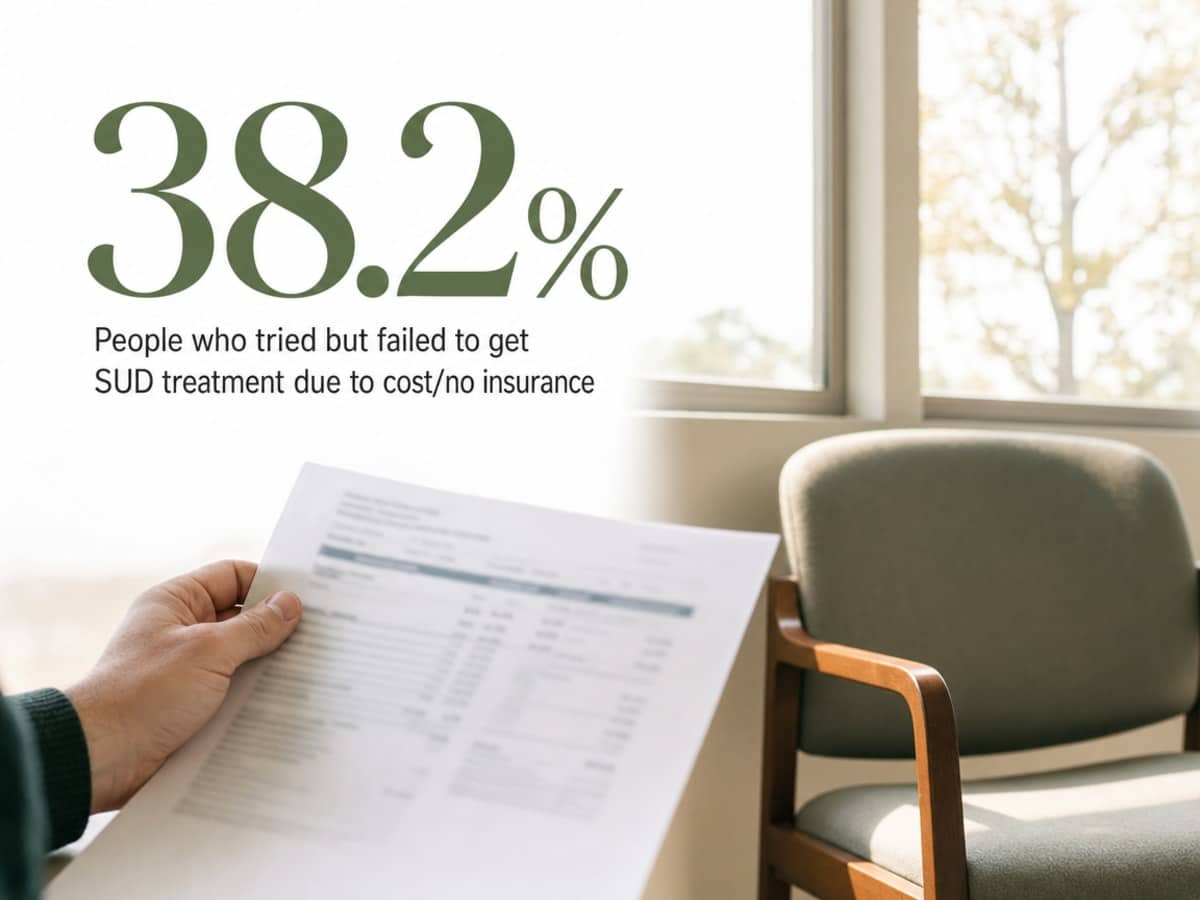
Here’s what the data says about that decision. In SAMHSA’s pre-ACA analysis of adults who recognized they needed substance use treatment and actually tried to get it, 38.2% said the top reason they didn’t receive care was lack of coverage and inability to afford the cost 12. Not stigma. Not readiness. Not time. Money — or more precisely, the assumption about money made before anyone picked up the phone.
That assumption is the most expensive part of this whole equation. Because “cost of rehab without insurance in Arkansas” is not a sticker price. It’s a range shaped by what level of care you actually need, how long you stay, whether you require medical detox, and whether there’s a psychiatric layer to your situation. It’s also shaped by funding streams most self-pay readers never ask about — state-funded beds through Arkansas DHS, faith-based programs running on federal grants, sliding-scale assistance capped by state rule. None of those numbers show up on a website. They show up on a call.
You’ve read this far. That already counts. The next step is the one that changes the number from a guess to a real answer: you ask.
What actually drives the price of residential rehab in Arkansas
The four levers that move your number up or down
When you ask a facility “what does it cost,” you’re really asking four questions at once. Understanding those four questions is what lets you compare quotes honestly instead of getting spooked by the first big number you hear.
Level of care. Residential is not one product. There’s medically-monitored residential with 24-hour nursing, there’s clinically-managed residential without an on-site medical layer, there’s partial hospitalization, and there’s intensive outpatient. Each step up in acuity adds staff, monitoring, and licensure requirements. Each step down cuts the price meaningfully. If your situation is stable enough for a lower level of care, you shouldn’t be paying for a higher one.
Length of stay. Most Arkansas residential programs run 30, 60, or 90 days. A 30-day stay isn’t a third of a 90-day stay in clinical terms — the first two weeks carry the heaviest cost load because of detox, intake assessments, and initial stabilization. Days 15 through 90 are usually less expensive per day. Ask about weekly rates, not just monthly totals.
Medical detox needs. Alcohol, benzodiazepines, and opioids each carry different withdrawal risks and different medication protocols. Medically-supervised detox with MAT costs more than a program that admits you already stabilized. If you’re coming in hot, that’s a real line item. If you can be admitted post-detox, that’s a different conversation.
Psychiatric and dual-diagnosis care. If depression, anxiety, PTSD, or ADHD are part of the picture, you’ll want a program with psychiatric evaluation and medication management built in. That costs more than a program that treats addiction in isolation — and it’s usually the difference between a stay that holds and a stay that doesn’t.
For scale, a 2024 NIDA-cited study of residential addiction programs found the average quoted price of a month’s stay was over $26,000 21. Two caveats before you flinch: that study measured adolescent programs, and it captured quoted list prices, not what families actually paid after discounts, sliding scales, or payment plans. Treat it as a ceiling reference, not your quote.
Why ‘quote me a daily rate’ is the wrong first question
You’re used to pricing things by the unit. Hourly, daily, per seat, per user. It’s a clean way to compare vendors in most parts of your life. It falls apart here.
A daily rate tells you almost nothing about what your stay will actually cost, because your stay isn’t a fixed number of identical days. The first week may include detox, a psychiatric evaluation, lab work, and medication starts. Week three may be group-heavy with lighter medical needs. A program with a lower daily rate might bill separately for detox medications, psychiatric consults, or off-site labs. A program with a higher daily rate might be all-inclusive.
The better first question sounds like this: “For a man in my situation — alcohol, roughly this much per day, no prior detox, some anxiety — what’s a realistic total for 30 days, and what’s included?” Then ask what would push that number up (a longer stay, a rougher detox, added psychiatric care) and what would bring it down (payment plans, sliding-scale eligibility, admitting post-detox).
You wouldn’t buy a house by asking the price per square foot and hanging up. You’d ask what’s inside the walls. Do the same here. The facility that answers that question clearly is the one worth your time.
Arkansas self-pay cost anchors: what the real range looks like
You want a number. Fair. Here’s the honest version: Arkansas self-pay pricing lives on a spectrum, and the useful move is to see the whole spectrum before you decide where your situation lands on it.
At the low end sits the state’s Alcohol and Drug Abuse Program (ADAP) fee schedule, which caps residential charges at $1,500 per 30 days and outpatient at $200 per 30 days for eligible clients, with sliding contributions based on income 22. That is not a private market rate — it’s a state-administered assistance program, and clients whose income exceeds 80% of the ADAP income scale may be charged the full cost. Read it as the floor for people who qualify, not as what a private residential bed costs.
One step up, state-funded treatment through Arkansas DHS and the Office of Substance Abuse and Mental Health (OSAMH) provides SUD care specifically for residents without insurance, with access shaped by catchment areas and program capacity 1, 7. Out-of-pocket costs can be dramatically reduced or eliminated for those who fit the eligibility windows.
Then there’s the faith-based and nonprofit tier — programs operating partly on federal grant dollars. In 2023, Arkansas distributed $2.5 million in federal grants to five statewide faith-based treatment centers to fund substance abuse services 3. In 2024, the state announced $15 million in additional grants, including $1.84 million to Harbor House in Fort Smith and $2.16 million to Lake Point Recovery and Wellness in Russellville, both earmarked to strengthen 30- to 60-day residential programs 2. Those dollars translate into subsidized beds — but you have to ask which programs draw from them.
Private residential self-pay is the tier most professionals in your position are actually pricing. There is no fixed number here because there isn’t one product. Your total will move with length of stay (30, 60, or 90 days), whether you need medically-supervised detox, and whether psychiatric care is layered in. A shorter stay without detox at a program that accepts payment plans looks very different from a 90-day medically-monitored stay with dual-diagnosis care. Serenity Park quotes this range on the phone — with what’s included, what’s optional, and where the flex points are — rather than posting a single sticker rate that wouldn’t apply to your situation anyway.
Between the ADAP floor and that national ceiling is a lot of usable ground. Your job on the first call is to figure out where your specific situation sits — not to guess at the middle.
Public funding paths most self-pay readers never ask about
State-funded treatment through DHS and OSAMH
Here’s the part most professionals skip because it doesn’t feel like it applies to them: Arkansas has a state-funded treatment system built specifically for residents without insurance, and it runs quietly through the Department of Human Services. The Office of Substance Abuse and Mental Health (OSAMH) is the office that actually moves the money — it distributes federal grant funds and contracts with community providers for prevention, treatment, and recovery services across the state 7. DHS itself is direct about the mission: state-funded SUD treatment is available for residents without insurance who are dealing with a drug or alcohol use disorder 1.
You might read that and assume it’s not for you. Maybe you own a company. Maybe you have assets. Fair. Eligibility is real, and access is shaped by catchment areas and available capacity in your part of the state 1. But two things are worth sitting with before you dismiss it. First, “without insurance” is the actual gate — not net worth, not job title. A self-employed man on a lapsed policy is uninsured for this purpose. Second, even when a program isn’t a fit for your full stay, DHS-contracted providers often know the local grant-funded and sliding-scale options that don’t show up on any search result.
The move is simple. Ask. Before you assume a state pathway is beneath your situation or out of reach, let someone at DHS or a contracted provider tell you what you actually qualify for.
Block grant and faith-based dollars already in the system
There’s federal money sitting in Arkansas right now paying for beds you may not know exist. Understanding where it flows tells you which programs to call first.
The largest stream is the federal Substance Abuse Prevention and Treatment Block Grant. Arkansas received $12,676,621 in block grant funding for the 2021–2023 award period, and that money continues to flow through OSAMH into treatment and prevention contracts across the state 4. Nationally, block grant dollars are the reason so many uninsured people get care at all — SAMHSA’s own analysis found the block grant functions as a safety net for exactly the population that would otherwise self-pay or forgo treatment entirely 11. Arkansas is one of the states leaning on it hardest.
Layered on top of that are targeted grant rounds. In 2024, the state announced $15 million more, with specific residential awards including $1.84 million to Harbor House in Fort Smith and $2.16 million to Lake Point Recovery and Wellness in Russellville, both aimed at strengthening 30- to 60-day residential programs 2. ARPA-funded grants of up to $2 million per facility have also gone toward building or renovating adult residential beds 6.
The 2025 Medicaid shift you should know about even if you’re self-pay
You may not qualify for Medicaid today. Read this anyway, because the ground is moving and it affects what beds are open when you call.
On July 22, 2025, CMS approved Arkansas’s Section 1115 demonstration authorizing federal matching funds for SUD treatment services, including care provided in residential and inpatient settings that qualify as institutions for mental diseases (IMDs) 20. Coverage of SUD residential services under the waiver becomes effective January 1, 2026, and the state’s transition strategy contemplates Medicaid coverage of up to 90 days of treatment for eligible enrollees 16. The waiver does not add new copays, and cost sharing stays subject to the standard 5% quarterly out-of-pocket cap 16. On the Medicaid side, inpatient hospital services carry a $0 copay and outpatient behavioral health visits carry a modest flat copay 17.
Two things this means for you. One, if your income or employment situation shifts — or if a family member you’re helping is closer to Medicaid eligibility than you assumed — the residential picture in 2026 looks meaningfully different than it did last year. Two, as more Medicaid dollars flow into residential beds, private self-pay capacity and pricing dynamics shift around it. Ask any facility how the 2026 change affects their admissions calendar and their self-pay slots. It’s a fair, informed question.
Why some professionals choose self-pay even when they have insurance
Here’s a scenario that surprises people outside your world: some men in your position pay cash on purpose. They have insurance. They could file a claim. They don’t. And when you sit down and pencil it out, the math isn’t as strange as it sounds.
The first driver is discretion. A claim generates records — a diagnosis code, a facility name, a date range. Depending on your employer, your board, your licensure, your custody situation, or the industry you operate in, that paper trail carries weight. Self-pay keeps the transaction between you and the facility. That’s not paranoia. That’s risk management applied to your own file.
The second driver is the actual out-of-pocket math on a high-deductible plan. If you carry a $7,000 or $10,000 deductible you haven’t touched this year, triggering it for a residential stay may mean paying a large chunk toward that deductible plus coinsurance — and still ending up with limits on days covered or level of care approved. Coverage for residential SUD care varies significantly across plans, and even insured patients sometimes end up self-paying for the levels of care they actually need 14. When you compare that scenario to a negotiated self-pay rate with a clear total, cash sometimes wins on both privacy and price.
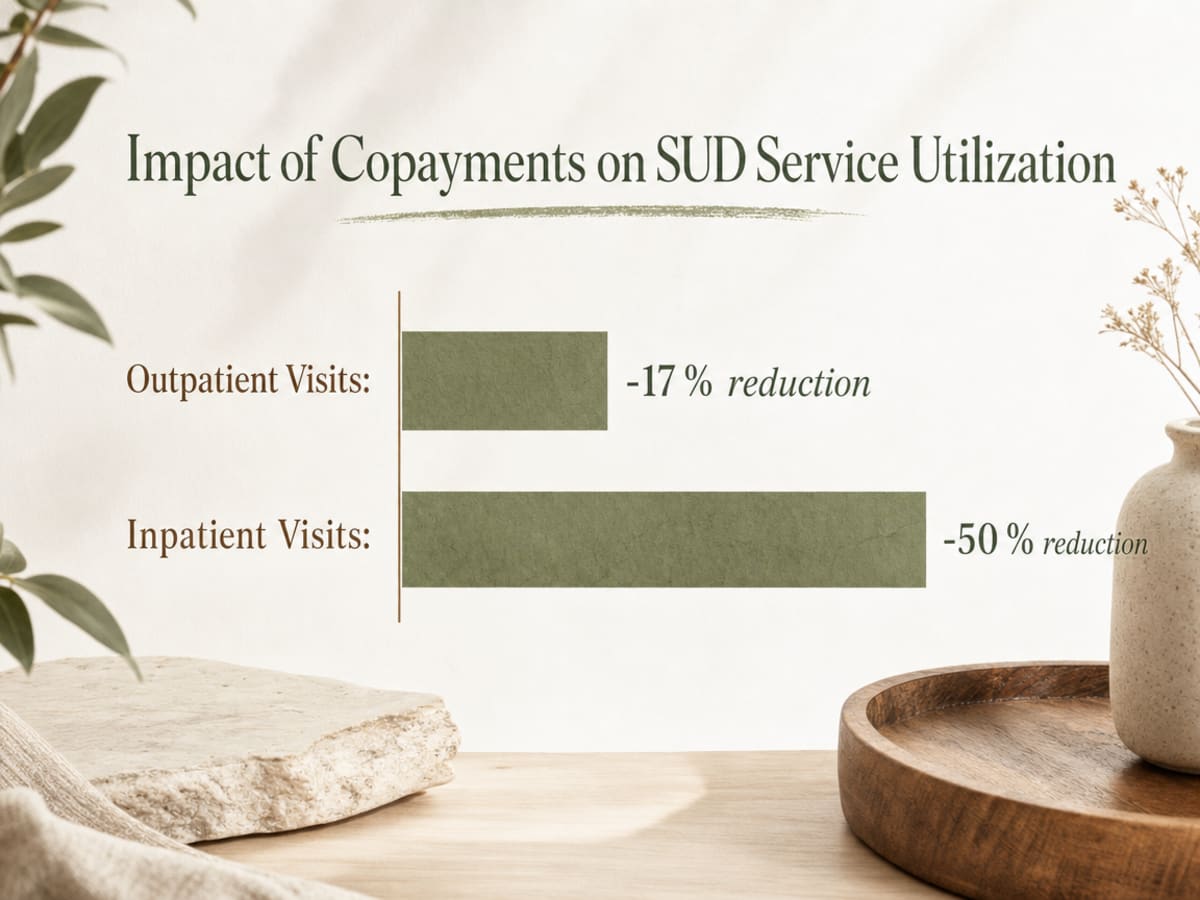
The third driver is behavior. A 2024 study of ACA Marketplace enrollees with behavioral health needs found that adding copayments was associated with roughly a 17% reduction in outpatient visits and a nearly 50% drop in inpatient visits 13. Cost sharing suppresses use — even when people are insured, even when they need care. Paying cash for a defined program can remove the ongoing friction of copay-driven decisions during the stay itself.
None of this makes self-pay the right answer for everyone. But if any of these three pressures apply to you, it deserves an honest side-by-side comparison — not a reflex.
What a transparent self-pay conversation sounds like
The questions to ask any Arkansas facility before you commit
You don’t need a script. You need a short list of questions that make the person on the other end of the line give you real numbers instead of a brochure paragraph. Bring these to every call — Serenity Park, DHS-contracted providers, faith-based programs, anyone.
What’s the realistic total for a 30-day stay for someone in my situation, and what’s included? Force them to describe the person, not the price sheet. Alcohol vs. opioids vs. benzos. Detox needed or not. Any psychiatric layer. Then ask what’s bundled and what gets billed separately — detox medications, psychiatric consults, labs, medication management after detox ends.
What pushes the number up, and what brings it down? A longer stay, a rougher detox, added psychiatric care. Payment plans, sliding-scale eligibility, admitting post-detox, a shorter clinically-appropriate stay.
Do you draw from any state, block grant, faith-based, or ARPA-funded dollars for uninsured admissions? That one question can change the quote entirely 4, 3, 6.
If I don’t qualify for your program, who would you call next? A facility that will refer you elsewhere is telling you the truth about fit. SAMHSA’s National Helpline (1-800-662-HELP) and FindTreatment.gov exist for exactly this kind of triage 15, 8.
How Serenity Park handles the money conversation
Serenity Park is a private, 20-bed men’s residential program in Little Rock. That’s a specific product — small-capacity, medically-supervised, built around evidence-based care with continuous biotech monitoring. It’s not the right answer for every man in Arkansas, and the team on the phone will tell you that.
What they will do on the first call is answer the four questions above with real numbers instead of a range copied off a website. They’ll ask about your situation — what you’re using, how much, whether you’ve detoxed before, what’s going on in your head alongside it, what your work and family calendar looks like. Then they’ll walk through what a stay would actually include, where the flex points are, and what payment plans look like. If a state-funded or grant-supported program is a better fit for your situation, they’ll say so and point you to it 1, 9.
That’s the conversation you’re owed on any call you make. Pick up the phone. You’ve done the hardest math already.
The cost of not going
You’ve been running the price tag in your head. Now run the other one — the one you’ve been avoiding because it doesn’t have a clean number.
What does another six months look like? Another lost weekend, another missed call from your kid, another morning you don’t remember. Another quarter where your team quietly covers for you. A DUI. A hospital visit that hits your deductible anyway and generates the exact paper trail you were trying to avoid. A partner who runs out of patience. A liver panel that stops looking borderline and starts looking urgent.
NIDA’s cost-effectiveness research is direct on this: the dollars spent on addiction treatment are consistently outweighed by reductions in downstream health care use, criminal justice costs, and lost productivity 18, 19. That’s the macro version. The micro version is your life, and you already know the ledger.
The call itself costs nothing. SAMHSA’s National Helpline is free, confidential, and staffed 24/7 at 1-800-662-HELP (4357) 15. A call to a facility that will actually answer your four questions — level of care, length of stay, detox needs, psychiatric layer — costs nothing either. Serenity Park will give you real numbers on a real situation. That’s the point of the call. Pick up the phone.
Frequently Asked Questions
How much does residential rehab actually cost in Arkansas without insurance?
There’s no single number. Your total depends on level of care, length of stay (30, 60, or 90 days), whether you need medically-supervised detox, and whether psychiatric care is layered in. State-assisted programs cap residential fees for eligible clients at $1,500 per 30 days 22, while private residential self-pay sits well above that. Get a real quote for your specific situation on the phone.
Are there free or low-cost rehab options in Arkansas if I can’t afford private self-pay?
Yes. Arkansas DHS provides state-funded SUD treatment for residents without insurance 1, and OSAMH distributes federal grant dollars to community providers across the state 7. Faith-based centers receiving federal grant support 3and ARPA-funded residential programs 6also serve uninsured clients. SAMHSA’s National Helpline at 1-800-662-HELP is free and confidential 24/7 and can point you to local options 15.
Why would someone choose to pay out of pocket if they have insurance?
Three reasons come up most. Discretion — a claim generates records tied to a diagnosis code and facility. Math — a high-deductible plan may cost more triggered than a negotiated self-pay rate. And coverage gaps — residential care isn’t always covered even when you’re insured 14. If any of those pressures apply, do a side-by-side comparison before assuming insurance is the cheaper path.
What questions should I ask an Arkansas facility on the first self-pay call?
Ask four things. What’s the realistic total for 30 days for someone in my situation, and what’s included? What pushes the price up or down? Do you draw from block grant, faith-based, or ARPA-funded dollars for uninsured admissions 4, 6? If I’m not a fit, who would you call next? FindTreatment.gov is a neutral backup for triage 8.
Does Arkansas Medicaid cover residential rehab now?
The picture is shifting. CMS approved Arkansas’s Section 1115 demonstration on July 22, 2025, authorizing federal matching funds for SUD residential treatment in IMDs, with SUD residential coverage effective January 1, 2026, and up to 90 days of treatment contemplated for eligible enrollees 20, 16. Medicaid inpatient hospital services carry a $0 copay 17. If your situation changes, revisit eligibility.
What actually changes the price the most once I’m quoted a number?
Length of stay moves it most — the first two weeks carry the heaviest cost load because of detox and stabilization. Medical detox needs come next; alcohol, benzos, and opioids each carry different protocols and staffing costs. Psychiatric and dual-diagnosis care add a real line item but often make the difference between a stay that holds and one that doesn’t. Ask what’s bundled and what’s billed separately.
References
- Find Substance Abuse or Mental Health Treatment. https://humanservices.arkansas.gov/divisions-shared-services/shared-services/office-of-substance-abuse-and-mental-health/samh-treatment/
- Sanders, DHS Announce $15 Million to Support Arkansans with Substance Use Disorder, Mental Illness, and Intellectual Disabilities. https://governor.arkansas.gov/news_post/sanders-dhs-announce-15-million-to-support-arkansans-with-substance-use-disorder-mental-illness-and-intellectual-disabilities/
- $2.5M in federal grants awarded to fund substance abuse treatments at 5 statewide faith-based treatment centers. https://portal.arkansas.gov/news/2-5m-in-federal-grants-awarded-to-fund-substance-abuse-treatments-at-5-statewide-faith-based-treatment-centers/
- Substance Abuse Block Grant. https://humanservices.arkansas.gov/divisions-shared-services/shared-services/office-of-substance-abuse-and-mental-health/substance-abuse-prevention/substance-abuse-prevention-grants/substance-abuse-block-grant/
- Grant Funding. https://humanservices.arkansas.gov/divisions-shared-services/shared-services/office-of-substance-abuse-and-mental-health/prevention-ar/grant-funding/
- Adult Substance Abuse Residential Treatment Facilities. https://humanservices.arkansas.gov/newsroom/hcbs/arpa-grant-funding-opportunities-for-arkansas-medicaid-providers/adult-substance-abuse-residential-treatment-facilities/
- About OSAMH. https://humanservices.arkansas.gov/divisions-shared-services/shared-services/office-of-substance-abuse-and-mental-health/about-osamh/
- Treatment Locators: Mental Health, Drug, Alcohol Issues. https://www.samhsa.gov/find-help/locators
- Help for mental health, drugs, alcohol: No Insurance. https://www.samhsa.gov/find-support/health-care-or-support/professional-or-program/no-insurance
- Free & Low Cost Treatment Options for Mental Health and Substance Use. https://www.samhsa.gov/find-support/how-to-pay-for-treatment/free-or-low-cost-treatment
- The Substance Abuse Prevention and Treatment Block Grant is still important in paying for specialty substance abuse treatment. https://www.samhsa.gov/data/sites/default/files/report_2080/ShortReport-2080.html
- Substance Abuse Treatment Before the Affordable Care Act. https://www.samhsa.gov/data/sites/default/files/BHSIS-SR166/BHSIS-SR166-AbuseTxACA-2014.htm
- Association of copayments with healthcare utilization and spending among adults with behavioral health needs under the Affordable Care Act Marketplace coverage. https://pubmed.ncbi.nlm.nih.gov/38369244/
- Insurance barriers to substance use disorder treatment: Differences among Medicaid and private insurance programs in three states. https://pubmed.ncbi.nlm.nih.gov/36845978/
- National Helpline for Mental Health, Drug, Alcohol Issues. https://www.samhsa.gov/find-help/helplines/national-helpline
- Arkansas Opportunity Transition Strategy – Supporting Community Reentry from Incarceration and Institutions for Mental Diseases. https://www.medicaid.gov/sites/default/files/2024-02/ar-opport-transi-stratg-supp-comm-incar-instit-mentl-diseas-pa-02282024.pdf
- Arkansas Medicaid – Section I General Policy (Cost Sharing for Mental and Behavioral Health and Substance Abuse). https://codeofarrules.arkansas.gov/Rules/PartDocument?partID=1341
- DrugFacts: Treatment Statistics and Costs (Updated). https://nida.nih.gov/publications/drugfacts/treatment-statistics-costs-updated
- Treatment Statistics and Costs. https://nida.nih.gov/publications/drugfacts/treatment-statistics-costs
- July 22, 2025 approval letter for Arkansas Section 1115 demonstration (SUD/SMI). https://www.medicaid.gov/medicaid/section-1115-demonstrations/downloads/ar-opps-sud-smi-appvl-07222025.pdf
- Residential addiction treatment for adolescents is scarce and expensive. https://nida.nih.gov/news-events/news-releases/2024/01/residential-addiction-treatment-for-adolescents-is-scarce-and-expensive
- Rules of Practice and Procedure (Arkansas ADAP Fee Collection Schedule). https://www.sos.arkansas.gov/uploads/rulesRegs/Arkansas%20Register/2004/jan_2004/016.02.03-002.pdf