
Key Takeaways
- Benzodiazepine withdrawal carries seizure and delirium risks comparable to alcohol withdrawal because GABA rebound leaves the brain without its natural inhibitory brake 2.
- Arkansas flags benzodiazepines among its highest-risk controlled drug classes, and Act 651 of 2021 requires naloxone co-prescription when benzos and opioids overlap 4, 7.
- A safe taper follows roughly 5 to 10 percent dose reductions every 2 to 4 weeks, often stretching six months to a year under clinical monitoring 1.
- Home detox becomes unsafe with long-term use, seizure history, concurrent alcohol or opioids, or psychiatric conditions, making supervised care in Little Rock the appropriate next step.
Why Your Body Fights Back When You Skip a Dose
You missed a dose yesterday, or you tried to stretch a prescription because the refill was still three days away, and by hour eighteen your hands were shaking, your chest felt tight, and sleep was gone. This is not weakness; it is your nervous system signaling its dependence on the medication to function.
Benzodiazepines like Xanax, Klonopin, and Ativan enhance the calming brain chemical GABA. Your brain adapts by reducing its natural GABA activity, relying on the medication. When the medication is absent, this inhibitory system is suddenly disengaged. Anxiety surges, muscles tighten, and heart rate climbs. For long-term or high-dose users, this rebound can escalate to seizures and delirium, which is why clinical guidelines specifically warn against abrupt discontinuation or rapid tapering 1.
Many people attempting to quit alone overlook this critical aspect. You are not merely battling a craving; you are asking a neurologically dependent brain to rebalance itself without medical support. Sedative-hypnotic withdrawal, including from benzodiazepines, shares severe complications with alcohol and barbiturate withdrawal, such as seizures and, in serious cases, death 2.
If you have been on a benzo for months or years, your body has adjusted. Safe withdrawal requires time and medical structure to readjust, which is the foundation of the care available at Serenity Park in Little Rock.
The GABA Rebound: What Makes Benzo Withdrawal Neurologically Different
While opioid withdrawal is intensely uncomfortable, it is typically not life-threatening for an otherwise healthy adult. Benzo withdrawal, however, presents a distinct neurological risk. Opioids affect pain and reward pathways, causing severe discomfort upon cessation, but the brain is not overwhelmed by unregulated excitatory signals. Benzodiazepines, conversely, modulate GABA, the brain’s primary inhibitory system. GABA prevents excessive electrical activity. Abruptly removing this inhibition after prolonged use leaves the brain without its natural brake, allowing excitatory neurotransmitters like glutamate to fire unchecked, creating a high risk for seizures.
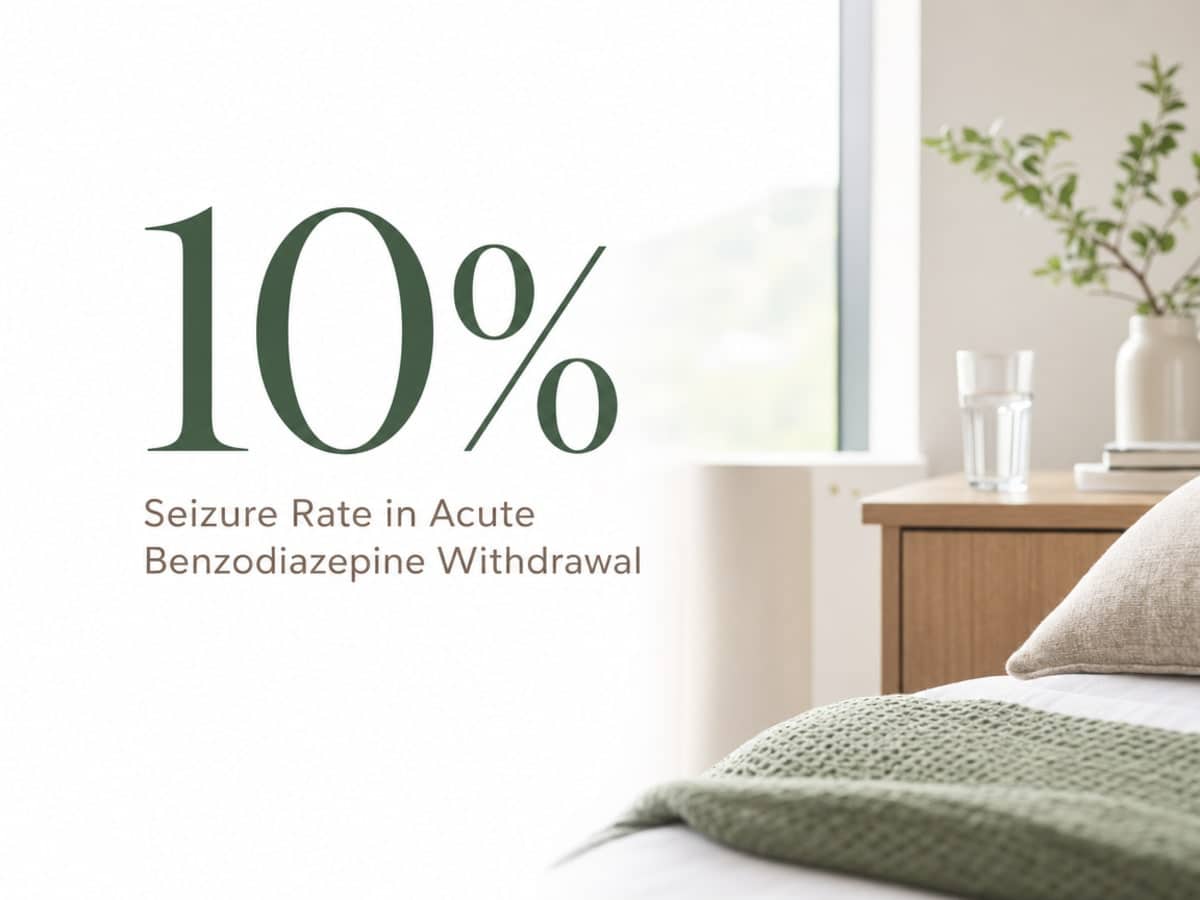
This fundamental difference places sedative-hypnotic withdrawal (from alcohol, barbiturates, or benzos like Xanax, Klonopin, and Ativan) in a higher risk category than opioid withdrawal. StatPearls explicitly states that complications of benzodiazepine and barbiturate withdrawal are comparable to those of alcohol withdrawal, including seizures and death 2. A study of patients undergoing acute benzo withdrawal in a medically supervised hospital setting found seizures in approximately 10% of cases, though no deaths occurred due to the constant monitoring 3. This highlights that the 10% figure represents individuals under continuous clinical observation, where interventions could prevent fatal outcomes. The risks for those attempting withdrawal unsupervised are unknown and likely much higher.
Symptoms You Are Probably Already Feeling
Your body often signals distress long before you consciously acknowledge a problem. Consider how many of the following symptoms you recognize.
Early symptoms can appear within hours of a missed or reduced dose, particularly with short-acting benzos like Xanax or Ativan. Your baseline anxiety returns, often amplified beyond its initial level. Sleep becomes fragmented, perhaps only four hours if you are fortunate, and what sleep you get is light and filled with vivid, unsettling dreams. A fine tremor may develop in your hands, noticeable when signing your name or holding a coffee cup. Your heart rate and blood pressure may increase, and you might experience sweating even when sedentary. Clinicians observing acute benzo withdrawal in hospitalized patients frequently note this cluster of symptoms: tachycardia, hypertension, tremor, and agitation 3.
As withdrawal progresses, sensory changes can occur, leading to concerns about brain function. Lights may seem excessively bright, and ordinary sounds, like a car door or a text notification, can feel jarring. You might experience a buzzing or crawling sensation on your skin. Moments of derealization, where familiar surroundings temporarily appear strange, can happen. Concentration can collapse, making it difficult to process information, such as rereading an email multiple times without comprehension.
Escalated symptoms are qualitatively different and demand immediate medical attention. These include hallucinations (seeing or hearing things that are not present), severe confusion or agitation that you cannot control, or a seizure, which may occur without warning or be preceded by muscle twitching or a metallic taste. Any of these symptoms indicates a medical emergency that cannot wait 1.
If you identify with the initial symptoms described, you are not overreacting by taking this seriously. You are accurately interpreting the signals your nervous system is sending.
Arkansas Prescribing: The Quiet Backdrop to a Growing Problem
If your benzodiazepine prescription originated in Arkansas, you are part of a broader trend. The state’s Prescription Drug Monitoring Program identifies benzodiazepines as one of five controlled drug classes posing the highest risk of negative health impacts from misuse, alongside opioids, stimulants, other sedative-hypnotics, and muscle relaxants 4. This indicates that the Arkansas Department of Health considers benzos a top-tier prescription risk.
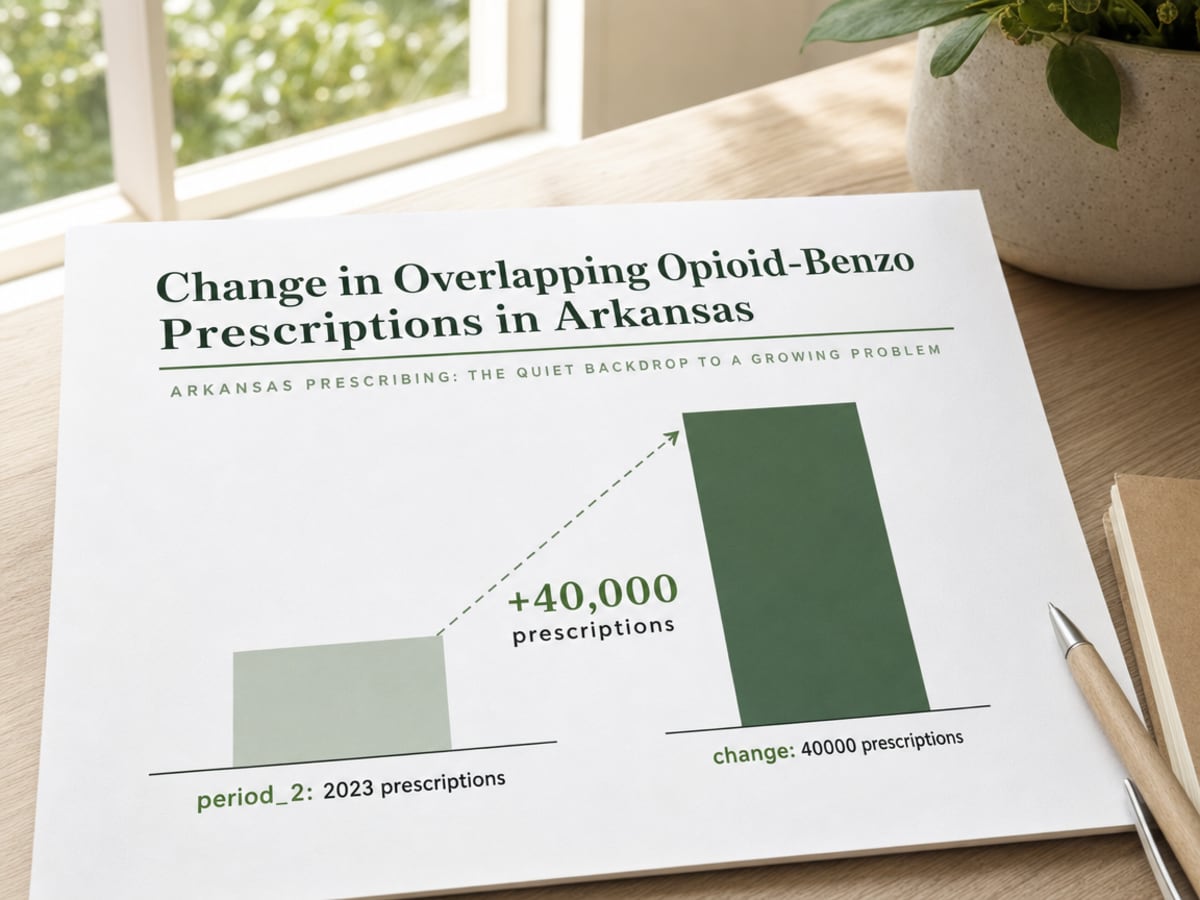
A significant concern is the co-prescription of opioids and benzodiazepines, which remains the most common drug combination in Arkansas. Although peaking in 2022, the number of such prescriptions in 2023 was still nearly 40,000 higher than the 2019-2021 average 4. If you received a benzo for anxiety in the same year as an opioid for post-surgical pain, you were part of this statistic. The risk of this combination is so recognized that state law addresses it directly. Under Act 651 of 2021, Arkansas prescribers must co-prescribe naloxone when an opioid is prescribed to a patient who has received a benzodiazepine in the past year or concurrently 7. The state’s response to opioid-benzo overlap is to ensure an overdose reversal drug is available.
Historically, in 2016, benzodiazepines were mentioned on 132 death certificates in Arkansas overdose fatalities, making them among the most common depressant classes involved 5. This data predates the significant rise in fentanyl-related overdoses, suggesting the current situation is likely no less severe.
These facts do not imply your prescription was a mistake. They highlight that you were prescribed a medication flagged as high-risk by the state, in an environment where risky drug combinations are common enough to warrant specific legislation. Approaching withdrawal from such a medication demands the same level of seriousness as its initial prescription.
What a Safe Taper Actually Looks Like
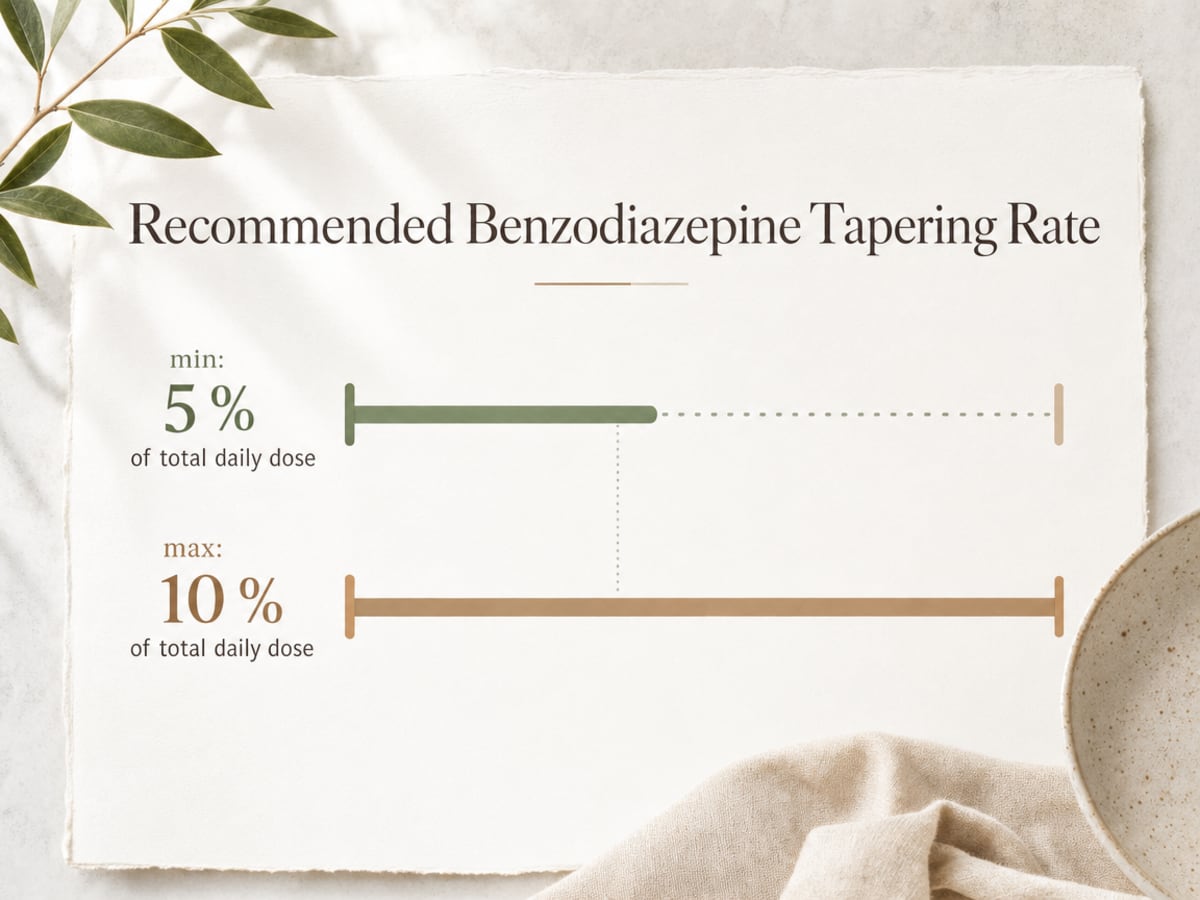
A safe taper is intentionally gradual, designed to allow your GABA system to slowly regain its natural function. The 2025 ASAM-led clinical practice guideline for benzodiazepine tapering recommends reducing the total daily dose by approximately 5 to 10 percent every 2 to 4 weeks, with adjustments based on individual response 1. For example, if you are on 2 mg of Klonopin daily, an initial reduction might be as small as 0.1 to 0.2 mg, not a half tablet or skipping a day. This fractional reduction is maintained long enough for your nervous system to adapt before the next adjustment.
This slow process means that a person on a moderate dose of Xanax or Ativan might face a taper lasting six months to a year, or even longer for high-dose or long-duration users. This extended timeline is not a sign of failure but reflects the evidence-based pace required to prevent seizures and delirium 1. Any promise of a quick two-week fix is unrealistic and potentially dangerous.
A well-managed taper typically involves three overlapping phases.
- Acute stabilization, where a clinician may switch you from a short-acting benzo like Xanax to a longer-acting one such as diazepam or clonazepam to minimize symptom fluctuations. You are then stabilized until sleep, blood pressure, and heart rate reach a manageable baseline.
- The ongoing taper itself: small, patient reductions every few weeks, with pauses if symptoms flare.
- Monitoring for protracted symptoms—low-grade anxiety, insomnia, or cognitive fog—that can persist for weeks or months after the last dose and require their own management plan. This phase is often overlooked in home attempts.
The reality is that a safe taper is too slow for willpower alone to sustain. It requires structure. Medical professionals monitor your vitals, adjust the schedule if your resting heart rate climbs or sleep is consistently disrupted, and identify warning signs before they become emergencies. This is precisely the risk category for which Serenity Park’s medically supervised detox is designed, as continuous monitoring is often the critical difference between a successful taper and an emergency room visit.
When Home Detox Is the Wrong Choice
Attempting to manage benzo withdrawal at home by simply cutting your dose and “toughing it out” can be dangerous. Certain factors make home management unsafe, and acknowledging these honestly now can prevent serious complications later.
Home detox is generally inappropriate under the following conditions:
- You have been on a daily benzodiazepine for over six months, particularly at moderate or high doses.
- You have a history of seizures, head injury, or a family history of seizures, as these factors lower your seizure threshold even before GABA rebound occurs 1.
- You regularly consume alcohol or use opioids concurrently, stacking GABAergic and respiratory depression risks, which is why Arkansas has co-prescribing regulations for these combinations 7.
- You have a psychiatric history, especially panic disorder, PTSD, or bipolar illness, where rapid tapering can destabilize the underlying condition the benzo was masking 1.
The insidious danger lies in the “middle ground” scenario: you are still functioning at work, not seizing, but enduring sleepless nights, hiding tremors, and convincing yourself you can manage because you have not yet been hospitalized. This is precisely the population for whom a supervised setting is crucial. The purpose of medical detox is not merely to intervene in an emergency, but to prevent it from happening. Serenity Park’s medically supervised detox in Little Rock addresses this specific risk, offering clinicians and continuous biotech monitoring to track vital signs that you cannot monitor yourself at 3 a.m.
What Medically Supervised Detox in Little Rock Looks Like
At Serenity Park in Little Rock, “detox” specifically means a clinical environment where tapering is slow, monitoring is continuous, and staff are trained to recognize and manage GABA rebound seizures before they occur. The reality of your first weeks there is often quieter and more clinical than most people imagine.
Upon arrival, you undergo a comprehensive medical intake. A psychiatric provider reviews your prescribing history, current dosage, other medications, alcohol use, medical conditions, and mental health background. If you have been using a short-acting benzo like Xanax or Ativan, you will likely be transitioned to a longer-acting agent such as diazepam or clonazepam early on to stabilize the peaks and valleys of withdrawal 1. From there, the taper proceeds at a pace your body can tolerate, typically a 5 to 10 percent reduction of the total daily dose every 2 to 4 weeks, adjusted based on your vital signs or symptoms 1.
The monitoring at Serenity Park is a key differentiator from home tapering. It combines standard clinical checks with wearable biotech through a partnership with Huml Health, providing real-time data on heart rate, sleep patterns, and stress markers. If your resting heart rate spikes at 2 a.m. or your sleep is disrupted for multiple nights, the clinical team sees this data on a dashboard, rather than relying on self-reports you might forget to give. This data informs clinical decisions, allowing for adjustments to the taper schedule or PRN medications. Autonomic instability, which can precede more serious complications, is caught early.
The setting itself is also important. Serenity Park operates a small residential program, accommodating up to twenty men. This ensures a high ratio of clinical attention, similar to a hospital step-down unit. Group and individual counseling are integrated with the medical work, addressing the underlying anxiety for which the benzo was originally prescribed with strategies beyond medication. This is how supervised detox for benzo withdrawal is structured: a clinically intensive, closely monitored pathway back to a self-regulating nervous system, where the risks outlined earlier are actively managed.
Protecting Your Career, Your License, and Your Privacy
A common unspoken fear is not just the medical challenge, but the potential impact on your career. For professionals in Arkansas—attorneys, physicians, business owners, senior managers—the concern extends beyond surviving the taper to maintaining your professional standing and privacy.
It is important to understand that residential treatment is protected health information under federal law and is not part of any public record. It cannot be accessed by your employer, firm, or clients. Most Arkansas licensing boards, including medical and legal, are generally more concerned with untreated impairment than with a professional who proactively seeks care. Career-ending scenarios typically arise when individuals delay treatment until a crisis, such as a seizure at work, a DUI, or a missed court date, makes the problem undeniable. Proactive, documented treatment is viewed very differently than a crisis intervention.
The small capacity of Serenity Park’s residential program (twenty clients) offers a specific advantage in this regard, ensuring a more discreet environment than larger facilities. FMLA or short-term disability paperwork can often frame leave in clinical terms without disclosing the specific substance. Discharge planning includes discussions about returning to work, as clinicians understand that the taper’s effects extend beyond the discharge date. This emphasis on privacy is not a luxury; it is integral to enabling professionals to seek necessary care and preserve their careers.
After Detox: What Recovery Feels Like at 30, 90, and 180 Days
The taper is not the end of the recovery journey. Your nervous system has relied on medication for months or years, and it takes time to relearn self-regulation. Understanding the typical timeline of recovery can help you differentiate normal healing from perceived setbacks.
At 30 days, you are past the acute withdrawal phase, but residual symptoms persist. Sleep may still be inconsistent. Anxiety can emerge in waves that feel disproportionate to their triggers. Your resting heart rate will be stabilizing but not fully settled. Cognitive fog, making it difficult to concentrate or process information, is common and frustrating, especially for those whose work demands sharp thinking. This period is when guideline authors specifically caution about protracted withdrawal symptoms, emphasizing the importance of a robust discharge plan 1.
By 90 days, most individuals experience a significant improvement. Sleep architecture begins to rebuild, and tremors typically resolve. You can engage in full conversations without losing your train of thought. The remaining anxiety starts to resemble a manageable condition that can be addressed through therapy, rather than the intense biochemical distress of medication withdrawal. This phase is often when intensive psychiatric work, addressing the original condition for which the benzo was prescribed, becomes most impactful.
At 180 days, you will likely feel much more like your former self, often even better than in the years leading up to detox. Some individuals may still experience intermittent sleep issues or low-grade anxiety, which can be managed with non-benzo tools. Continued care, participation in alumni groups, and ongoing psychiatric follow-up are crucial to prevent old patterns from quietly resurfacing after the six-month mark. The recovery runway is longer than a typical detox brochure might suggest, and this honest perspective is empowering, not discouraging.
Frequently Asked Questions
Is benzo withdrawal actually more dangerous than opioid withdrawal?
Yes, in terms of life-threatening complications for an otherwise healthy adult. While opioid withdrawal is extremely unpleasant, it is rarely fatal. Benzodiazepine withdrawal, however, carries a risk of seizures and, in severe cases, death, similar to alcohol and barbiturate withdrawal 2. This neurological distinction necessitates medically supervised tapering for benzodiazepines, unlike the management approach for opioid withdrawal.
Can I taper off Xanax or Klonopin at home if I go slowly?
Home tapering may be possible in very specific, limited circumstances: if your dose is low, use has been short-term, you have no history of seizures, no concurrent alcohol or opioid use, and a prescriber is actively managing your schedule. Outside these conditions, home tapering becomes unsafe. The ASAM guideline recommends 5 to 10 percent reductions every 2 to 4 weeks with close monitoring, as rapid cuts can lead to seizures and delirium 1. Willpower cannot replace professional medical oversight of your vital signs.
How long does a medically supervised benzo taper take?
The process is often longer than anticipated. Following the ASAM benchmark of approximately 5 to 10 percent dose reductions every 2 to 4 weeks, a taper for moderate-dose Xanax or Klonopin typically spans six months to a year, with high-dose or long-duration users requiring more time 1. Residential detox usually covers the acute stabilization and initial reduction phases, with the remaining taper managed through outpatient care post-discharge.
Will going to detox in Arkansas show up on my medical record or affect my professional license?
Residential substance use treatment is protected health information under federal law and is not a public record. Arkansas licensing boards for professions like medicine and law generally prioritize addressing untreated impairment. They are typically more supportive of professionals who voluntarily seek care than those who wait until a crisis, such as a seizure, DUI, or workplace incident, forces the issue. Documented, proactive treatment is viewed favorably.
What symptoms mean I need to get to a supervised setting immediately?
Immediate medical attention in a supervised setting is required for any seizure, hallucinations, severe confusion, chest pain, a resting heart rate consistently above 120 bpm, or continuously rising blood pressure. These symptoms indicate that withdrawal has progressed beyond safe outpatient management 2. Retrospective hospital data on acute benzo withdrawal shows that continuous clinical monitoring in such cases prevented fatalities 3. Do not delay seeking help.
Do symptoms like anxiety, insomnia, and cognitive fog fully resolve after detox?
For most individuals, these symptoms do resolve, though the full recovery period extends beyond the initial discharge date. While acute symptoms subside within weeks, protracted withdrawal, which includes low-grade anxiety, uneven sleep, and cognitive fog, is a recognized part of the recovery process and can linger for weeks to months 1. Continued care, psychiatric follow-up for the original condition treated by the benzo, and non-medication coping strategies are essential for navigating this phase.
References
- Joint Clinical Practice Guideline on Benzodiazepine Tapering. https://pmc.ncbi.nlm.nih.gov/articles/PMC12463801/
- Withdrawal Syndromes – StatPearls (NIH/NCBI Bookshelf). https://www.ncbi.nlm.nih.gov/books/NBK459239/
- A Retrospective Review of Morbidity and Mortality Associated with Acute Benzodiazepine Withdrawal. https://pmc.ncbi.nlm.nih.gov/articles/PMC7984739/
- Prescription Drug Monitoring Program – 2023 Annual Report (Arkansas Department of Health PDF). https://healthy.arkansas.gov/wp-content/uploads/Prescription-Drug-Monitoring-Program-Annual-Report-2023.pdf
- Drug Overdose Deaths in Arkansas – 2000–2016 (Arkansas Department of Health). https://healthy.arkansas.gov/wp-content/uploads/Mortality_Report_-_2017_v3.pdf
- Substance Misuse Education and Prevention (Arkansas Department of Health). https://healthy.arkansas.gov/programs-services/prevention-healthy-living/substance-misuse-education-and-prevention/
- Guidelines for Co-Prescribing an Opioid Antagonist (Arkansas boards, Act 651 of 2021). https://healthy.arkansas.gov/wp-content/uploads/Guidance_on_Narcotics_Use_podiatric.pdf
- Arkansas Opioid Summary (National Institute on Drug Abuse). https://nida.nih.gov/sites/default/files/21948-arkansas-opioid-summary.pdf
- Behavioral Health Barometer: Arkansas, Volume 6. https://catalog.data.gov/dataset/behavioral-health-barometer-arkansas-volume-6
- Management of Alcohol Withdrawal in the Emergency Department. https://pmc.ncbi.nlm.nih.gov/articles/PMC7093658/
- Alcohol Withdrawal Syndrome: Benzodiazepines and Beyond. https://pmc.ncbi.nlm.nih.gov/articles/PMC4606320/