
Key Takeaways
- Co-occurring disorders require integrated care where a single cross-trained team treats substance use and mental health concurrently under one plan, rather than sequential or parallel models 3, 5.
- Integrated residential programs produce measurable gains in both substance use and psychiatric symptoms, with co-occurring patients achieving outcomes comparable to substance-use-only peers 6, 1.
- Genuine integration is revealed by operational details: one unified chart, full-time psychiatric staff, cross-team communication, and shared review of therapy and medication notes 10, 11.
- Sustaining recovery depends on continuing with integrated aftercare, which Arkansas regulations require and which correlates with higher abstinence and psychiatric stability long-term 8, 13.
The Intertwined Nature of Substance Use and Mental Health
For many men, the connection between anxiety, depression, trauma, or ADHD and substance use is a lived reality. Alcohol might temporarily quiet a 3 a.m. spiral, but the substance itself often exacerbates the underlying mental health condition. This cycle, where each problem feeds the other, is clinically known as co-occurring disorders. SAMHSA defines this as a substance use disorder and a mental disorder existing together, each influencing the other’s progression 4.
Historically, treatment often addressed only one side of this equation. A primary care doctor might prescribe medication for anxiety, or an outpatient counselor might focus solely on drinking. Rarely were both conditions treated as a unified clinical picture within the same program. This article explores a different approach: an integrated model of care where psychiatric and substance use issues are managed together, reflecting federal evidence-based practices and Arkansas’s residential regulations 1, 8.
What ‘Integrated’ Means in Practice
True integration goes beyond co-location. SAMHSA specifies that in an integrated program, substance use and mental health conditions are addressed concurrently, often in the same session or series of sessions, by clinicians cross-trained in both areas 3. This means the person providing care can understand how a spike in anxiety during detox relates to a craving, considering withdrawal timelines, sleep patterns, medication dosages, and psychological triggers in a single, cohesive line of questioning. The resulting intervention, whether a medication adjustment or a therapy technique, is unified.
This approach eliminates the need for you to act as a messenger between separate providers. Instead, the entire care team operates from a single, stage-based treatment plan, acknowledging the dynamic interplay between depression and alcohol use week by week 4. This seamless communication ensures that the clinician prescribing your medication is fully aware of your progress in group therapy, fostering a comprehensive and responsive treatment environment. This is not a premium add-on but the recommended baseline for co-occurring care 1, 5.
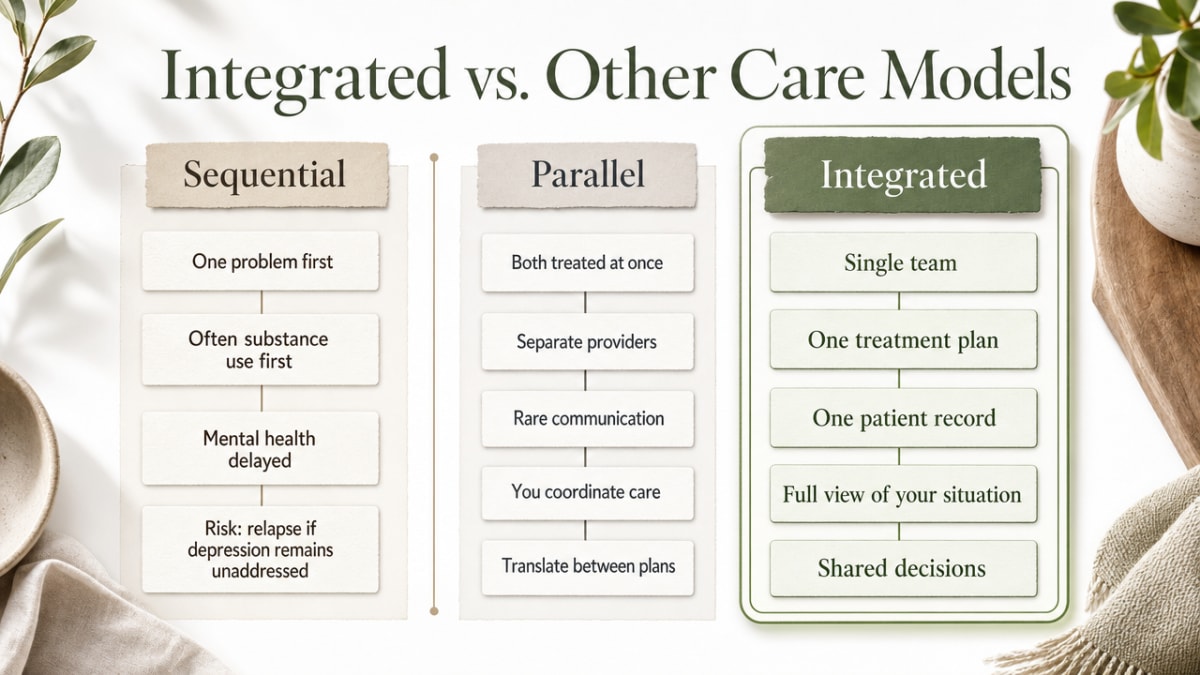
Integrated vs. Other Care Models
There are three primary models for treating co-occurring disorders, but only one truly unifies care:
- Sequential care addresses one problem, typically substance use, before the other. This often means delaying mental health treatment until sobriety is established, which can lead to relapse if underlying conditions like depression remain unaddressed.
- Parallel care involves treating both conditions simultaneously but through separate providers who rarely communicate. This forces the patient to coordinate their own care, translating information between different clinicians and treatment plans.
- Integrated care places both conditions under the purview of a single team, operating with one treatment plan and one comprehensive patient record. This ensures that all decisions are made with a complete understanding of your situation. For example, the medication prescriber has access to notes from your trauma-focused therapy sessions, and your counselor is aware of your sleep data and medication adjustments.
Outcomes of Integrated Residential Care
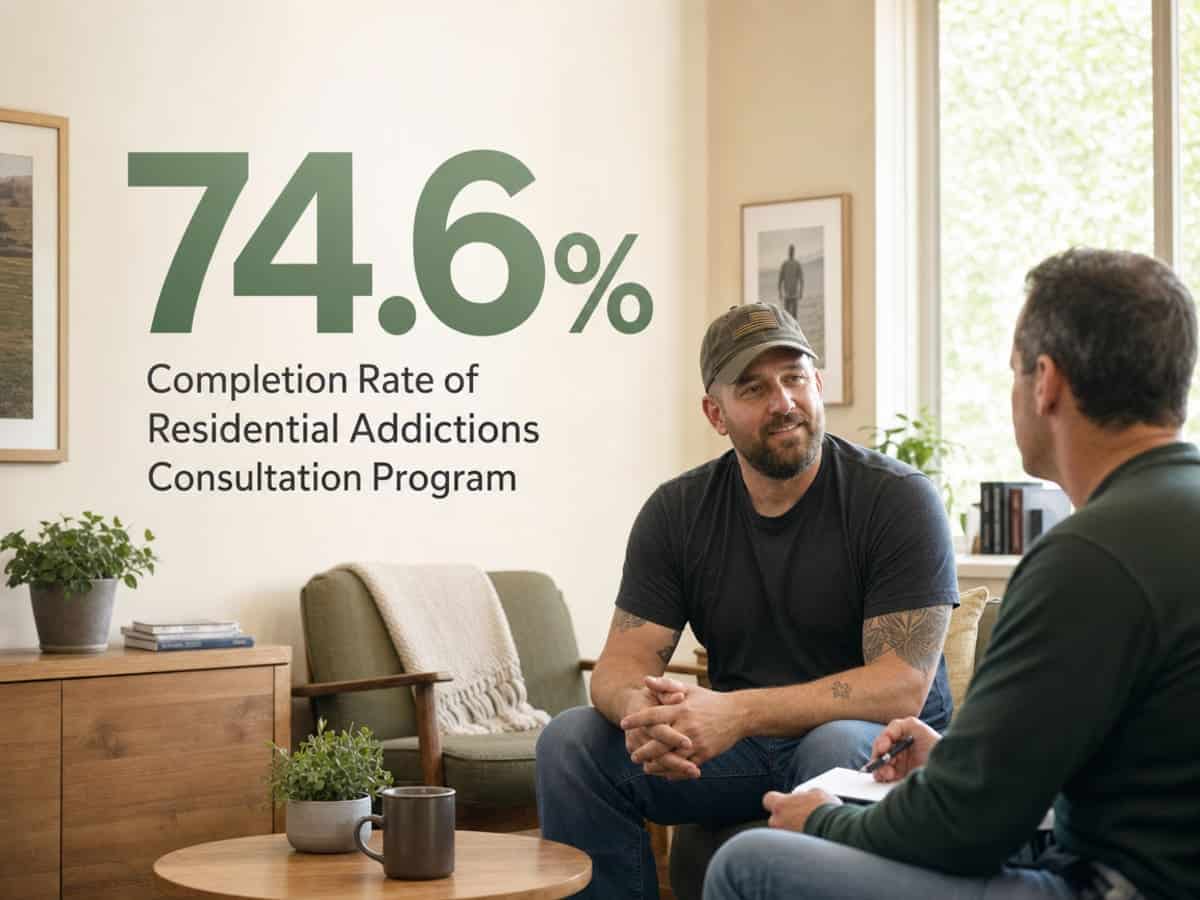
Integrated residential care demonstrates tangible benefits. A study of the Individualized Addictions Consultation Team (I-ACT) program, which provided integrated psychiatric and addiction care to veterans, showed significant reductions in both substance use and depression scores from admission to discharge. Notably, men with co-occurring mental health diagnoses achieved substance use improvements comparable to those with substance use disorder alone, and their depression scores were lower at discharge than the SUD-only group 6. This suggests that integrated care effectively closes the gap often seen in other models, where co-occurring conditions can hinder substance use recovery.
While the I-ACT study focused on veterans and had a specific duration, the broader federal evidence base supports the effectiveness of integrated programs. SAMHSA’s research indicates that integrated care leads to reduced substance use, improved psychiatric symptoms, decreased hospitalizations, better housing stability, fewer arrests, and an overall improved quality of life 1. While some reviews note that implementation quality significantly impacts outcomes 10, the overall picture is clear: integrated residential care can reliably improve both substance use and mental health within a relatively short period.
Upon discharge from an integrated program, men are typically stabilized on appropriate medication, experiencing improved sleep, and equipped with therapeutic tools to manage trauma or anxiety. This provides a solid foundation for the next phase of recovery, built by a unified team.
A Glimpse into an Integrated Men’s Program
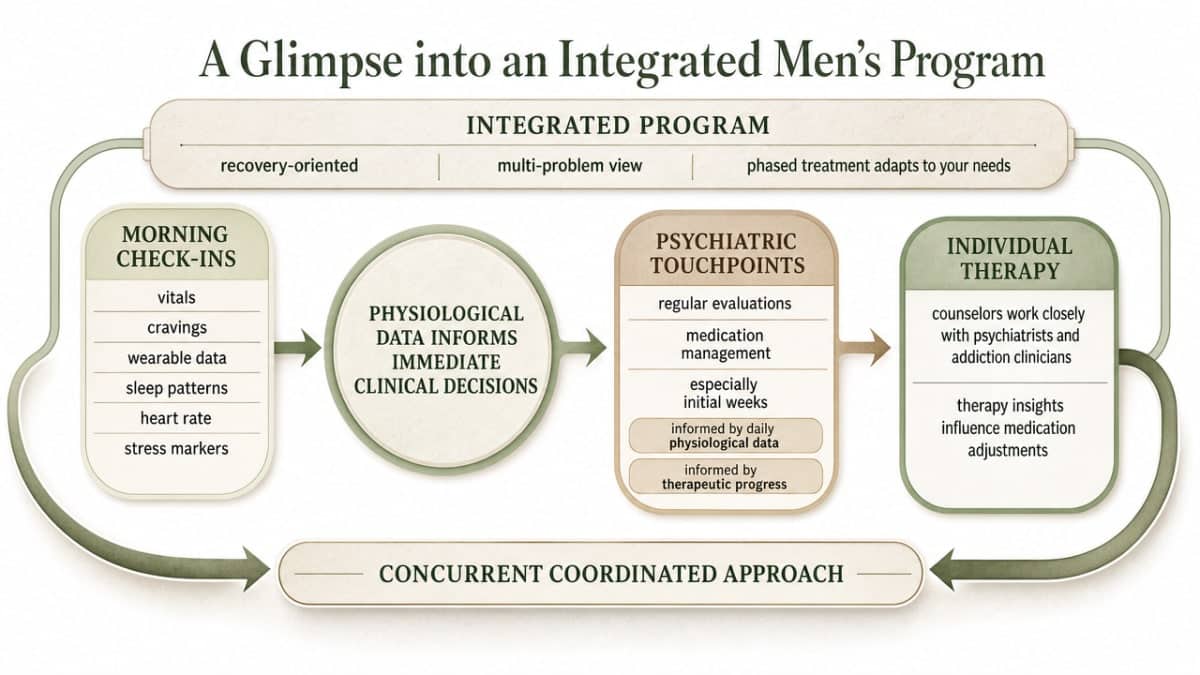
An integrated program operates with a recovery-oriented, multi-problem view of the individual, offering phased treatment that adapts to your needs 2.
- Morning Check-ins: Begin with vitals and a comprehensive check-in that includes not just cravings but also data from wearable devices, such as sleep patterns, heart rate, and stress markers. This physiological data informs immediate clinical decisions.
- Psychiatric Touchpoints: Regular psychiatric evaluations and medication management are integral, especially in the initial weeks. These conversations are informed by your daily physiological data and therapeutic progress.
- Individual Therapy: Counselors work closely with psychiatrists and addiction clinicians. Insights from therapy sessions can directly influence medication adjustments, ensuring a truly concurrent and coordinated approach 3.
- Group Therapy: Afternoon group sessions are designed to address both mental health and substance use issues simultaneously. Men managing panic attacks and those managing alcohol cravings participate in the same groups, working through shared material at their own pace.
- Evenings: Lighter activities like recreation, fitness, meals, and 12-step meetings are incorporated. Wearable devices continue to collect data, providing the team with continuous physiological information that feeds into your unified chart.
The strength of this model lies not in dramatic individual events, but in the continuous flow of information and coordinated decision-making across the entire team, all contributing to a single, evolving treatment plan from admission to discharge 2.
Beyond the Label: The Practice of Integration
The term “integrated” can be used broadly, but true integration is defined by the operational coordination between clinicians. Research indicates that successful integrated programs are characterized by strong organizational readiness, comprehensive staff cross-training, and robust communication channels between psychiatric and addiction teams 11. These factors, rather than a program’s self-description, predict better retention and outcomes. The quality of implementation is a critical driver of success 10.
To discern genuine integration, consider asking specific questions:
- Is there one unified treatment plan or separate ones?
- How frequently does the entire clinical team meet to discuss your progress?
- Is the psychiatrist a full-time staff member or an infrequent consultant?
- Does your psychiatrist review your therapy notes before medication adjustments, and vice versa?
The answers to these questions reveal whether a program’s practice aligns with its integrated label.
Integrated Care as the Arkansas Standard
In Arkansas, integrated care is not merely a marketing term; it is a regulatory expectation for residential behavioral health units. State standards mandate that aftercare plans include recommendations for follow-up on co-occurring disorders and that certain units provide medically supervised, co-occurring disorder-capable detoxification and trauma-informed services 8. This means programs are expected to manage mental health conditions from the moment of admission, not just refer them out.
For individuals seeking treatment in Arkansas, this regulatory framework means that a residential program that treats anxiety or depression as outside its scope is falling short of state expectations. The requirement for aftercare plans to address co-occurring issues ensures that the psychiatric component remains central to your discharge planning 8. Therefore, a men’s residential program in Little Rock that offers integrated psychiatric care alongside addiction treatment is meeting, not exceeding, the established state standard, providing a crucial reassurance for those making treatment decisions.
Career Protection: Streamlined Records and Privacy
A significant concern for many men is the administrative burden and potential privacy implications of seeking treatment. Engaging with multiple providers often means managing multiple intakes, release-of-information forms, billing streams, clinical notes, and discharge summaries. Each handoff creates a new entry point for your information into different systems.
Integrated residential care significantly reduces this footprint. A single team maintains one comprehensive chart, ensuring that all clinicians, from psychiatrists to counselors, document within the same record. Upon discharge, a single plan addresses both substance use and mental health conditions, rather than separate documents circulating through different networks. Arkansas’s residential framework supports this by requiring aftercare plans to include follow-up recommendations for co-occurring disorders within a single discharge document 8.
This streamlined approach simplifies coordination for ongoing care, allowing you to continue with one prescriber and one therapist, maintaining a consistent clinical narrative. Furthermore, integrated treatment has been shown to be cost-effective by reducing future hospitalizations and emergency room visits 12. These events are often the most visible to employers, disability carriers, or credentialing boards. By minimizing fragmented care and potential crises, an integrated program helps protect your professional privacy by keeping your clinical footprint as contained as possible.
Sustaining Recovery Post-Residential Care
Residential treatment is a crucial step, but sustained recovery depends on continued engagement with integrated services. Long-term data on dual-diagnosis treatment indicates that men who maintain contact with integrated care after residential treatment achieve higher rates of sustained abstinence and better psychiatric stability compared to those who disengage early 13. This highlights the importance of continuity with a team that understands both aspects of your condition.
The goal is to avoid recreating the fragmentation that residential care was designed to fix. Arkansas’s residential framework supports this by requiring aftercare plans to include follow-up recommendations for co-occurring disorders, ensuring that the psychiatric and addiction components remain linked as you transition to the next phase 8. This means continuing medication management with a prescriber who has access to your residential notes, maintaining a therapy relationship that builds on previous work, and engaging with alumni or peer support networks. This approach fosters a cohesive continuation of care, allowing you to sustain the gains made during residential treatment by addressing both problems as a unified whole.
References
- Integrated Treatment for Co-Occurring Disorders Evidence-Based Practices (EBP) KIT. https://library.samhsa.gov/product/integrated-treatment-co-occurring-disorders-evidence-based-practices-ebp-kit/sma08-4366
- Integrated Treatment for Co-Occurring Disorders: Building Your Program. https://library.samhsa.gov/sites/default/files/ebp-kit-building-your-program-10112019.pdf
- Substance Use Disorder Treatment for People with Co-Occurring Disorders (Advisory). https://library.samhsa.gov/sites/default/files/pep20-06-04-006.pdf
- Substance Use Disorder Treatment for People With Co-Occurring Disorders (TIP 42 Update Excerpt). https://library.samhsa.gov/sites/default/files/SAMHSA_Digital_Download/PEP20-02-01_004.pdf
- Chapter 7—Treatment Models and Settings for People With Co-Occurring Disorders (TIP 42, NCBI Bookshelf). https://www.ncbi.nlm.nih.gov/books/NBK571024/
- The Individualized Addictions Consultation Team Residential Program. https://pubmed.ncbi.nlm.nih.gov/33583351/
- Substance Abuse Treatment for Persons With Co-Occurring Disorders: TIP Series 42 (original edition). https://files.eric.ed.gov/fulltext/ED491572.pdf
- Arkansas Summary – State Residential Treatment for Behavioral Health Conditions. https://aspe.hhs.gov/sites/default/files/2021-08/StateBHCond-Arkansas.pdf
- Integrated Treatment of Substance Use and Psychiatric Disorders. https://www.ncbi.nlm.nih.gov/pmc/articles/PMC3775646/
- Integrated Treatment for Co-Occurring Disorders: A Review of the Evidence. https://pubmed.ncbi.nlm.nih.gov/25747906/
- Integrated treatment for co-occurring disorders: Organizational factors and outcomes. https://pubmed.ncbi.nlm.nih.gov/23136211/
- Cost-effectiveness of integrated treatment for co-occurring disorders. https://pubmed.ncbi.nlm.nih.gov/24938394/
- Long-term outcomes of integrated dual diagnosis treatment. https://pubmed.ncbi.nlm.nih.gov/29557628/