
Key Takeaways
- Alcohol withdrawal risk peaks between 12 and 72 hours after the last drink, with seizures affecting up to 15% and delirium tremens carrying mortality as high as 50% untreated.9
- Arkansas DHS regulates detox as a three-phase process — evaluation, stabilization, readiness — and requires vital-sign monitoring every six hours for at least 72 hours in licensed programs.11,18
- Choosing between Arkansas programs comes down to setting size, privacy protections under 42 CFR Part 2, whether the facility exceeds the 28-hour weekly residential minimum, and how discharge planning starts.18
- Before attempting to quit heavy daily drinking alone, place one confidential call — to a licensed Arkansas program or SAMHSA’s 24/7 National Helpline — to get risk-stratified first.12
What Heavy Drinking Actually Does to Your Body Before You Ever Try to Stop
You’ve probably already tried to stop on your own. Maybe a dry weekend that ended by Sunday afternoon. Maybe two good weeks in January before a work dinner undid it. That’s not a character flaw. It’s biology catching up with a nervous system that has quietly rewired itself around alcohol.
Here’s what’s been happening inside your body while you kept showing up for meetings, closings, or rounds. Alcohol is a central nervous system depressant. When you drink heavily most days for months or years, your brain compensates by cranking up its excitatory chemistry and dialing back the calming signals. Your body has learned to run at a higher baseline just to feel level. That adaptation is why the second drink stopped hitting like it used to, and why skipping a night now brings tremors, sweating, poor sleep, or a racing heart by morning.14
Men, on average, drink more and drink harder than women, and carry a larger share of severe alcohol-related harms. That’s not a moral scoreboard. It’s a clinical pattern that shapes how withdrawal shows up in a 45-year-old attorney or a surgeon who’s been finishing most nights with four or five bourbons.13
The problem is what happens when you finally decide you’re done. If your body has been running on alcohol daily, pulling it out abruptly doesn’t just make you uncomfortable. It removes the depressant your nervous system has been counting on, and the accelerator you built up over the years has nothing left to push against.7
That’s the setup. What comes next in the next 6 to 72 hours is where the real risk lives.
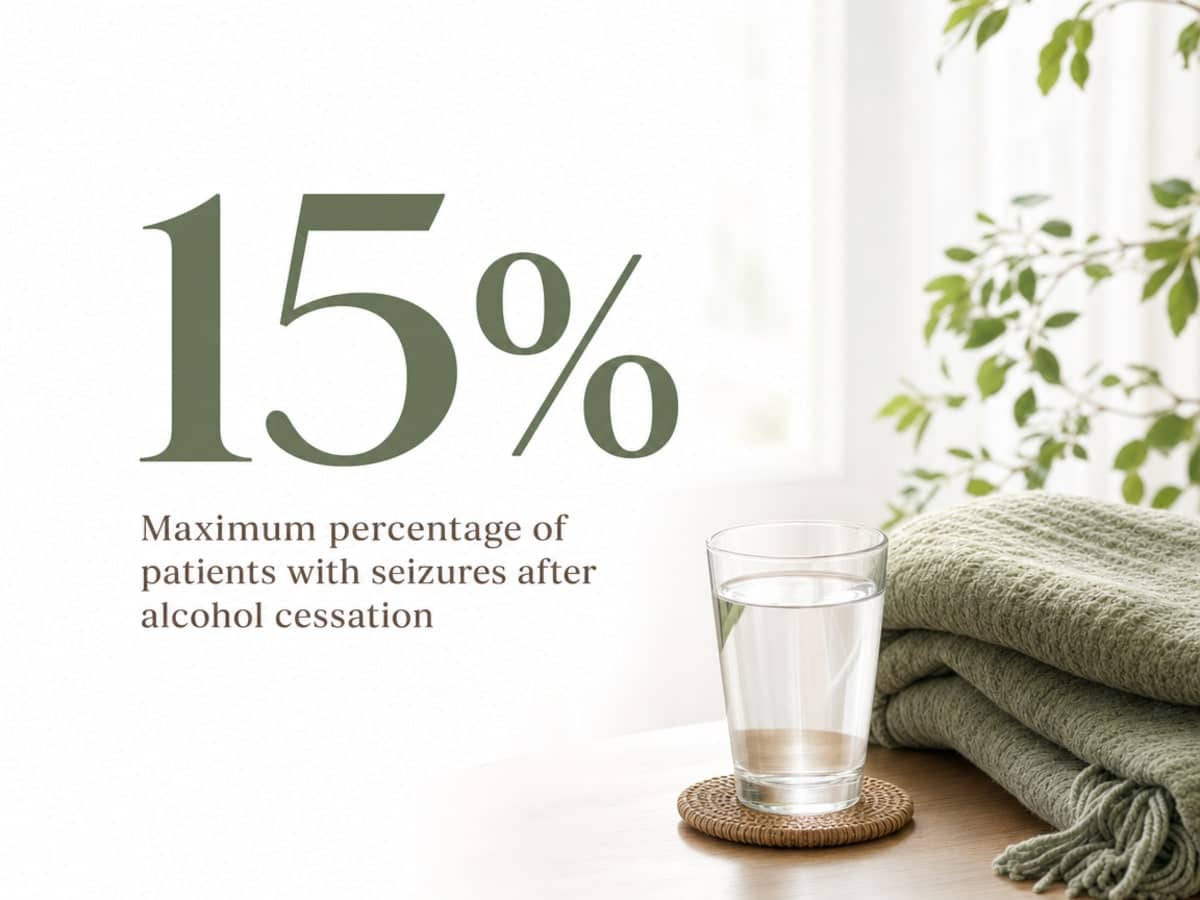
Maximum percentage of patients with seizures after alcohol cessation
Why Quitting Cold Turkey at Home Is the Most Dangerous Option
The 6-Hour to 72-Hour Window Nobody Warns You About
Here’s the part most people get wrong: they think the worst of quitting is the first night. It isn’t. The first night is usually the easiest.
For a man who has been drinking heavily most days, symptoms typically start 6 to 12 hours after the last drink. You’ll feel it as anxiety, shakes, sweating, nausea, a fast pulse, and sleep that refuses to happen. Uncomfortable, but manageable enough that you might tell yourself you’re getting through it.7
Then comes the window that home detox misjudges.
Between roughly 12 and 48 hours after your last drink, the risk of a withdrawal seizure peaks. Over 90% of alcohol withdrawal seizures occur within the first 48 hours after the last drink. These aren’t warning tremors. They’re tonic-clonic seizures — the kind that drop a man to the kitchen floor without preamble. If you’re alone in the house, or your spouse is asleep upstairs, there is nobody to turn your head so you don’t aspirate, nobody to call 911, nobody to note the time it started.5
The next window is worse. Delirium tremens — DTs — typically begins 48 to 72 hours after cessation. This is not a rough hangover. It’s severe confusion, hallucinations, high fever, blood pressure spikes, and autonomic collapse. Men who have made it through 36 hours at home, feeling like they’ve cleared the hard part, are exactly the men who walk into DTs unprepared.8
The timeline matters because it explains why willpower isn’t the variable. You can be the most disciplined man in your firm and still be unconscious on your bathroom tile at hour 30. The nervous system doesn’t consult your calendar.
This is the window a medically supervised setting is built for.
Seizures, DTs, and the Numbers That Should End the ‘Just Power Through It’ Conversation
You’re a man who runs on data. So here it is, plainly.
In patients who withdraw from alcohol without treatment, more than 5% will have a seizure. Broaden that to all patients going through withdrawal, and seizures show up in up to 15%. Delirium tremens develops in roughly 3 to 5% of patients. Those percentages sound small until you sit inside them. If you’re the man on the wrong side of that 5%, the statistic is 100%.5,9
Your individual risk climbs if you’ve had prior withdrawal episodes, if you’ve had a seizure during a previous attempt to quit, or if you’re managing coexisting medical conditions — hypertension, liver disease, cardiac history. Most professional men who have been drinking heavily for a decade or more check at least one of those boxes without realizing it counts.16
The uncomfortable truth is that you cannot predict, from the inside of your own body, which category you’ll fall into. Two men with nearly identical drinking histories can have completely different withdrawals. One shakes for three days and sleeps it off. The other has a seizure on day two.
This is why the phrase “just power through it” belongs to a different medical era. Alcohol withdrawal is a supervised event now — not because clinicians are cautious, but because the numbers earned that policy. A short call before you try this alone is the cheapest insurance you’ll ever buy against becoming one of them.
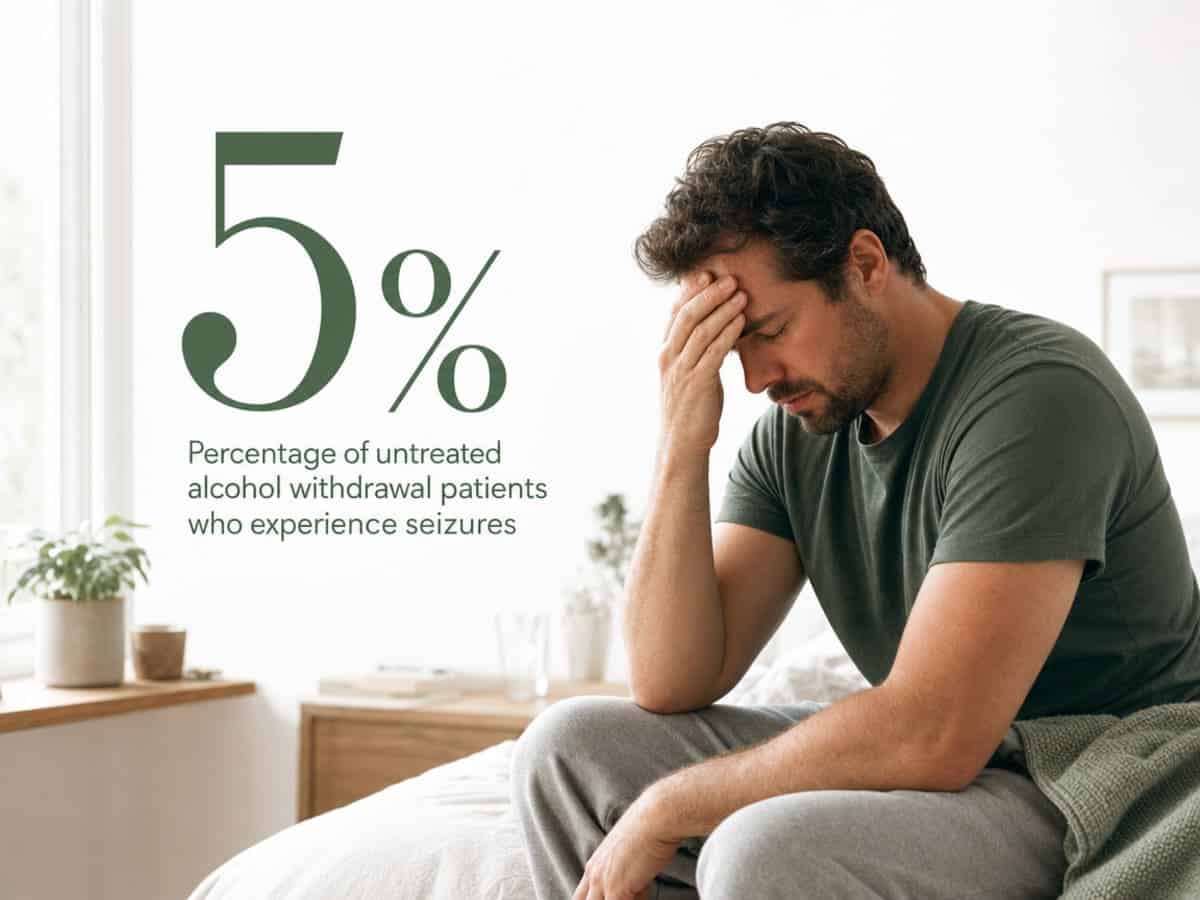
What Medically Supervised Detox Looks Like Hour by Hour
Intake, CIWA-Ar Scoring, and the First Dose of Benzodiazepines
The first hour of a supervised detox looks nothing like a hospital drama. There’s no gurney, no fluorescent panic. For most men, it looks like a private intake room, a clinician with a clipboard, and a set of questions that seem almost mundane. When was your last drink? How much, how often, for how long? Any prior seizures? Any prior withdrawals that got scary? Any blood pressure, liver, or heart history?
That intake is not paperwork. It’s risk stratification. Arkansas DHS defines detox as three linked phases — evaluation, stabilization, and fostering readiness for treatment — and the evaluation is where a licensed program decides whether you belong in observational detox, medical detox, or a higher level of care.11
Then comes the CIWA-Ar. The Clinical Institute Withdrawal Assessment for Alcohol, revised, is a ten-item score that a nurse walks through with you every few hours. Nausea. Tremor. Sweats. Anxiety. Agitation. Tactile, auditory, and visual disturbances. Headache. Orientation. Each item is scored, and the total drives the medication plan. A score between 8 and 15 signals moderate withdrawal. Anything above 15 is severe and usually points toward inpatient management.3
Benzodiazepines are the first-line medication, dosed on a symptom-triggered schedule keyed to your CIWA-Ar score rather than a fixed clock. Translated: you get medication when your body tells the nurse you need it, not when a chart says to hand it out. The goal is to quiet the overactive nervous system enough to prevent seizures and blunt the slide toward DTs — without oversedating you.1
You’ll feel the first dose within about 30 minutes. Most men describe it as the first real exhale in months.
Thiamine, Electrolytes, and Continuous Monitoring Through the Danger Zone
Alongside the benzodiazepine plan, you’ll get thiamine. Heavy, sustained drinking depletes B1, and low thiamine is what turns a bad withdrawal into permanent neurological damage — Wernicke’s encephalopathy, then Korsakoff’s if it goes unaddressed. Standard protocol is thiamine replacement plus correction of magnesium, potassium, and other electrolytes that heavy drinking quietly runs down.3
This is unglamorous medicine. An IV or oral dose. A basic metabolic panel. Fluids if you’re dehydrated. It’s also the part you cannot replicate at home with a multivitamin and Gatorade, which is what most men try.
Then the monitoring. In a licensed Arkansas detox setting, vital signs and intake checks happen a minimum of every six hours for at least 72 hours. Blood pressure. Pulse. Temperature. Respiration. Mental status. Your CIWA-Ar gets reassessed on that same rhythm, and your medication is adjusted up or down accordingly. Staff are trained to recognize the early signals that withdrawal is escalating — the rising heart rate at hour 30, the confusion creeping in at hour 50 — and to intervene before those signals turn into a seizure or DTs.18
At Serenity Park in Little Rock, that monitoring is layered with wearable biotech through a partnership with Huml Health, which streams heart rate, sleep, and stress data to clinicians in real time. It’s one more set of eyes on your nervous system during the window when it matters most.
Five to seven days later, your body has cleared the pharmacologic storm. That’s when the actual work of recovery begins.
How Arkansas Regulates Detox — and Why That Matters for Your Safety
Most men researching detox assume every licensed facility runs on the same clock. In Arkansas, it’s a little more specific than that — and the specifics are worth knowing before you walk into an intake room.
The Arkansas Department of Human Services defines detoxification as three linked phases: evaluation, stabilization, and fostering the patient’s readiness for and entry into ongoing treatment. That framing matters. It means a licensed program is not allowed to treat detox as a standalone event — a place you go, dry out, and leave. The state’s own manual treats those five to seven days as the front end of recovery, not the whole of it.11
The licensure standards go further. Any facility performing medically supervised detoxification in Arkansas must document vital-sign and intake monitoring a minimum of one time every six hours for at least 72 hours. Blood pressure, pulse, temperature, respiration, mental status — logged, reviewed, and escalated if something moves the wrong direction. That cadence is designed to catch the exact window when withdrawal seizures peak and delirium tremens can begin, so a rising heart rate at 3 a.m. becomes a clinical decision rather than a missed signal.18
Once you step down from detox into residential care, the same regulatory framework requires programs to deliver at least 28 hours per week of structured treatment. That’s roughly four hours a day of clinical work — therapy, groups, education, planning — not a bed to rest in between meals. Arkansas also places all adult residential substance use disorder facilities under DHS’s Office of Alcohol and Drug Abuse Prevention, which means a licensed program has agreed to be measured against these minimums.18,19
For you, the practical read is simple. When you’re evaluating a program, you’re not choosing between styles of care. You’re checking whether the facility meets a floor the state already set — and asking what they do above it.
What Residential Rehab Adds After the Physical Withdrawal Ends
Five to seven days in, the tremors are gone. You’re sleeping. You can eat again. It’s tempting to think the hard part is over and you can go home and handle the rest with willpower and a good therapist on Wednesdays.
That’s the exit ramp that puts most men back in a bourbon glass by month three.
Detox clears the pharmacologic storm. It does not touch the wiring that got you drinking heavily in the first place — the client dinners that became five drinks, the sleep you couldn’t find without a nightcap, the anxiety you learned to sedate before board meetings. Residential rehab is where that wiring gets pulled apart and rebuilt, in a setting where you can’t drink on it.
Studies of residential treatment for substance use disorders consistently show improved abstinence rates and better psychosocial functioning compared with no treatment or brief interventions. The reason is unglamorous: time and structure. You cannot outthink a two-decade drinking habit in a 50-minute outpatient session while your calendar is still running you.15
Arkansas licensure requires residential programs to deliver at least 28 hours of structured treatment per week — roughly four hours a day of clinical work. In practice, that means individual counseling, group therapy, psychiatric evaluation for the anxiety or depression that alcohol was self-medicating, medication management, 12-step facilitation, and discharge planning that starts on week one rather than the day you leave.18
The other thing residential adds is separation. Not punishment — separation. Thirty days away from the bar three blocks from your office, the wine cellar in your dining room, the client who always orders the second bottle. Long enough for a new default to take hold before you walk back into the old triggers.
The Fears You Haven’t Said Out Loud: Job, Family, Privacy
Discretion, Small-Capacity Settings, and Who Actually Knows You’re There
You’ve probably already run the scenarios in your head. What happens if a client calls and the receptionist says you’re out for a month. What happens if a partner drives past a parking lot with 200 cars and sees yours. What happens if the guy from your Rotary chapter is standing in the same intake line.
Those aren’t paranoid thoughts. They’re the reason a lot of Arkansas men keep drinking for another year.
Here’s what the reality looks like in practice. Federal law — 42 CFR Part 2, layered on top of HIPAA — treats substance use treatment records as more protected than almost any other kind of medical information. Your employer cannot pull your treatment record. Your insurer can see that a claim was paid, not the therapy notes. A licensed Arkansas facility is bound to both federal privacy rules and the state’s own licensure standards on confidentiality.18
Then there’s the setting itself. A 200-bed hospital detox unit is a different privacy calculation than a small residential program. Serenity Park in Little Rock caps at 20 men at a time. Twenty. That means the parking lot isn’t a landmark, the intake isn’t a waiting-room crowd, and the men you’ll see at breakfast are a small, closed group in the same situation you’re in.
You are not on a public roster. You are not a listing. You’re one of a small number of men who quietly decided this year was the one.
Insurance, Time Off, and the Practical Paperwork of Getting Care
The other question you haven’t asked out loud: how does this actually get paid for, and how do you disappear from the office for a month without setting off alarms.
On insurance, most commercial plans cover medically supervised detox and residential treatment for alcohol use disorder as a medical benefit. A single call to your carrier — or a benefits verification handled by the facility on your behalf — will tell you what your plan pays and what your out-of-pocket looks like. Private-pay is also a straightforward conversation if you’d rather keep the claim off a shared family plan.
On time off, the Family and Medical Leave Act protects up to 12 weeks of job-protected leave for a serious health condition at employers with 50 or more employees. Alcohol use disorder qualifies. Your HR department is required to hold the reason confidential; “medical leave” is the extent of what your team needs to know.
For men who need a neutral, no-pressure first call, SAMHSA’s National Helpline offers free, confidential referral 24/7. A call to Serenity Park does the same thing with an Arkansas-specific answer on the other end. Either way, you get information before you commit to anything.12
Serenity Park in Little Rock: What a 20-Bed Men’s Program Looks Like
Most detox conversations happen in the abstract. Here’s what one specific option looks like on the ground in Arkansas.
Serenity Park is a privately-owned men’s residential facility in Little Rock. Twenty beds, all men, one small program running at any given time. That size is a deliberate clinical choice, not a marketing line — it’s what makes the intake private, the staff-to-client ratio meaningful, and the daily rhythm feel less like a hospital wing and more like a residence with clinicians on-site.
The clinical stack is what you’d expect from a licensed Arkansas program that takes the state’s standards seriously: medically supervised detox with benzodiazepine protocols and CIWA-Ar–guided dosing, thiamine and electrolyte correction, and vital-sign checks on the cadence Arkansas licensure requires — at minimum every six hours through the 72-hour danger window. Once physical withdrawal ends, the residential program layers in individual counseling, group therapy, psychiatric evaluation, medication management, 12-step facilitation, and discharge planning that starts early.18
Two details worth naming. First, every client wears a Huml Health device during their stay, streaming heart rate, sleep, and stress data to clinicians in real time — a second layer of monitoring on top of the manual checks. Second, the program is built specifically for men, which changes what group therapy sounds like when the client dinners, the marriages, the fatherhood, and the work identity are on the table.
It’s one option among several licensed programs in Arkansas. It’s a specific answer to the question of where a professional man can go quietly, get clinically sound care, and come out with a plan.
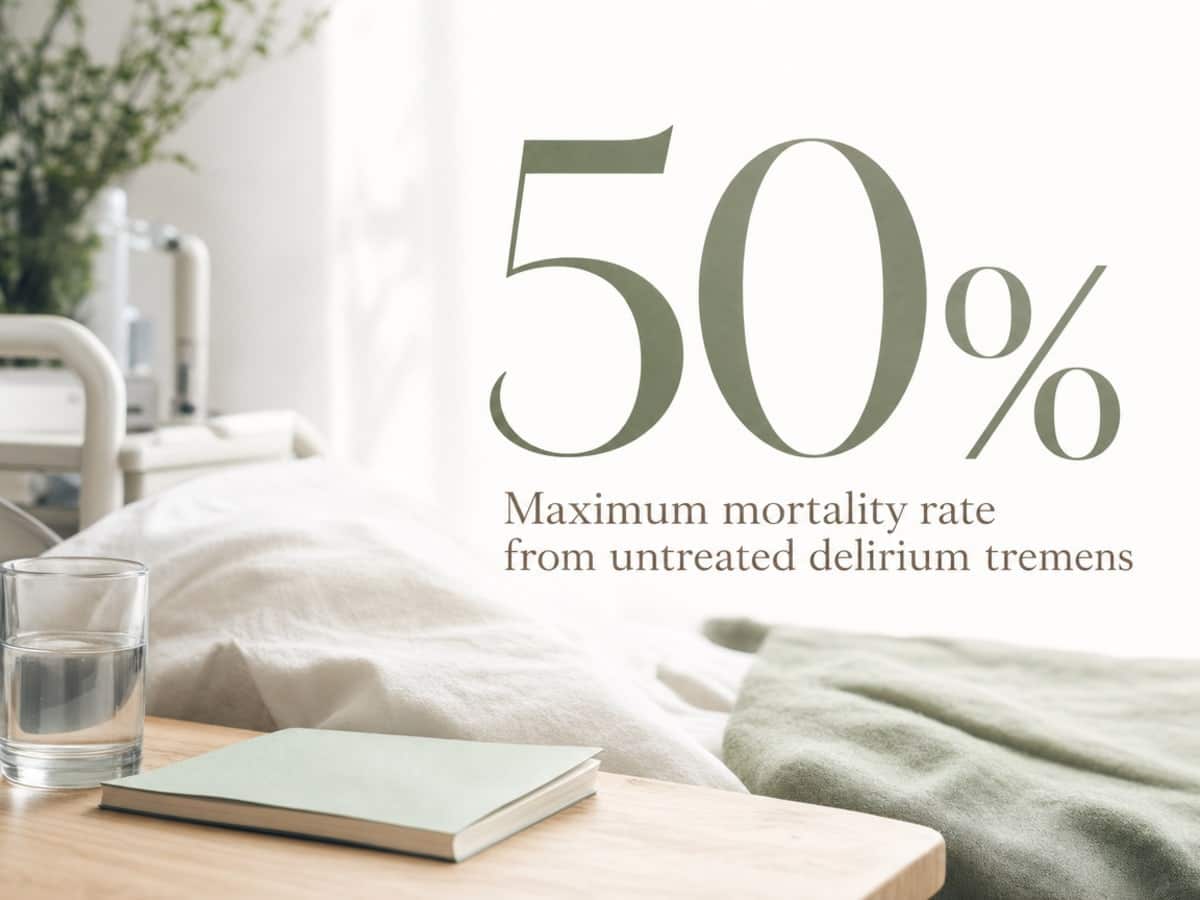
Call Before You Try This Alone
You’ve read enough now to know the shape of what you’re facing. The 6-to-72-hour window. The seizure risk that doesn’t ask permission. The DTs that show up on day three when you thought you’d cleared the worst of it. You also know the alternative isn’t a hospital gown and a public roster — it’s a small, licensed program with a nurse checking your vitals through the night.
Here’s the ask. Before you pour out the bottles this weekend, before you tell yourself Monday morning is the day, make one call. Not to commit. Just to talk to someone who does this every week and can tell you honestly what your withdrawal is likely to look like.
Serenity Park in Little Rock takes that call directly. SAMHSA’s National Helpline is another confidential option, 24/7. Either way, you get information before you get into trouble.12
The bravest thing you can do right now isn’t quitting. It’s calling first.
Frequently Asked Questions
How long does alcohol detox take for a man who’s been drinking heavily every day?
For most men with heavy daily use, the acute physical withdrawal runs about 5 to 7 days. Symptoms usually start 6 to 12 hours after your last drink, peak in the 24 to 72 hour window, and taper after that. Sleep, appetite, and mood take longer to settle — often weeks — which is why detox alone rarely holds without residential care behind it.7
Can I detox from alcohol at home if I take it slow and taper myself?
For a man drinking heavily most days, no — not safely. A self-taper can’t prevent the seizures or delirium tremens that peak between 12 and 72 hours after cessation. Ambulatory detox is only considered for milder cases with a reliable support person and no risk factors, and even then under a clinician’s plan. If you’ve been drinking every day for years, that’s not your category.3,8
Will my employer or insurance company find out I went to detox and rehab?
Your employer won’t, unless you tell them. Substance use treatment records are protected under federal law (42 CFR Part 2) beyond standard HIPAA rules. Your insurer sees that a claim was paid — not your therapy notes. FMLA leave at qualifying employers is logged as “medical leave,” nothing more. For a fully off-the-record option, private pay keeps the visit off any shared insurance record entirely.
What’s the difference between medical detox and residential rehab in Arkansas?
Medical detox is the 5–7 day phase where clinicians manage physical withdrawal with benzodiazepines, thiamine, and vital-sign monitoring. Arkansas defines it as evaluation, stabilization, and readiness for treatment. Residential rehab is what follows: at least 28 hours a week of structured counseling, group work, psychiatric care, and discharge planning. Detox clears your body. Residential rebuilds the patterns that put you there.11,18
How do I know if I need inpatient detox versus outpatient care?
Inpatient is the safer call if you’ve been drinking heavily daily for months or years, had a prior withdrawal seizure, have hypertension or liver or heart disease, or live alone. Clinically, a CIWA-Ar score above 15 signals severe withdrawal that needs inpatient management. If you’re unsure, one intake call answers it — a licensed program will risk-stratify you before you commit to anything.3,16
What happens after the 5–7 days of physical withdrawal are over?
The tremors stop, but the work starts. Residential rehab addresses the patterns underneath the drinking — anxiety, sleep, client dinners, marriage strain — through counseling, groups, and psychiatric evaluation. Studies show residential treatment improves abstinence and functioning versus brief interventions. Discharge planning maps out outpatient therapy, medication management if indicated, and alumni support so the gains from detox don’t quietly erode in month three.15
References
- 2020 American Society of Addiction Medicine clinical practice guideline on alcohol withdrawal management. https://pubmed.ncbi.nlm.nih.gov/34910619/
- The ASAM Clinical Practice Guideline on Alcohol Withdrawal Management – Pocket Guide. https://www.samhsa.gov/resource/ebp/asam-clinical-practice-guideline-alcohol-withdrawal-management-pocket-guide
- Alcohol Withdrawal Syndrome – StatPearls. https://www.ncbi.nlm.nih.gov/books/NBK441882/
- Delirium Tremens – StatPearls. https://www.ncbi.nlm.nih.gov/books/NBK482134/?report=printable
- Complications of Alcohol Withdrawal. https://pmc.ncbi.nlm.nih.gov/articles/PMC6761825/
- Treatment of Alcohol Withdrawal. https://pmc.ncbi.nlm.nih.gov/articles/PMC6761817/
- Delirium Tremens: A Review of Clinical Studies. https://pmc.ncbi.nlm.nih.gov/articles/PMC11069634/
- Acute Alcohol Withdrawal. https://www.ncbi.nlm.nih.gov/books/NBK65581/
- Alcohol Withdrawal. https://pubmed.ncbi.nlm.nih.gov/39926251/
- National Survey of Substance Abuse Treatment Services (N-SSATS): 2019 Data on Substance Abuse Treatment Facilities – Arkansas. https://www.samhsa.gov/data/sites/default/files/quick_statistics/state_profiles/NSSATS-AR19.pdf
- Residential Alcohol and Drug Detoxification (RADD) Manual – Arkansas Department of Human Services. https://humanservices.arkansas.gov/wp-content/uploads/RADD_Manual_2020_FINAL.pdf
- SAMHSA National Helpline. https://www.samhsa.gov/find-help/national-helpline
- Gender Differences in Alcohol Use and Alcohol Use Disorders. https://pubmed.ncbi.nlm.nih.gov/32191197/
- Alcohol Use Disorder: Clinical and Epidemiological Aspects. https://pubmed.ncbi.nlm.nih.gov/30869957/
- Residential Treatment for Substance Use Disorders: Evidence and Outcomes. https://pubmed.ncbi.nlm.nih.gov/31378410/
- Hospitalization for Alcohol Withdrawal: Patterns and Predictors. https://pubmed.ncbi.nlm.nih.gov/30554578/
- Diagnosis and management of alcohol withdrawal. https://pmc.ncbi.nlm.nih.gov/articles/PMC1230114/pdf/cmaj_160_5_675.pdf
- Licensure Standards for Alcohol and Other Drug Abuse Treatment Programs. https://humanservices.arkansas.gov/wp-content/uploads/Licensure_Standards_for_Alcohol_and_Other_Drug_Abuse_Treatment_Programs.pdf
- Arkansas Summary – State Residential Treatment for Behavioral Health Conditions. https://aspe.hhs.gov/sites/default/files/2021-08/StateBHCond-Arkansas.pdf
- 2023 Arkansas State Report: Underage Drinking Prevention and Enforcement. https://library.samhsa.gov/sites/default/files/arkansas-iccpud-state-report-2023.pdf
- Arkansas Statewide Collegiate Substance Use Assessment, 2023. https://ualr.edu/publicaffairs/wp-content/uploads/sites/203/2024/03/2023-ACSUA-final.pdf