
Key Takeaways
- Arkansas offers behavioral therapy across four levels of care—outpatient, IOP, residential SUD, and PRTFs—each governed by separate rules under the OBH manual and OLTC licensing 18, 12.
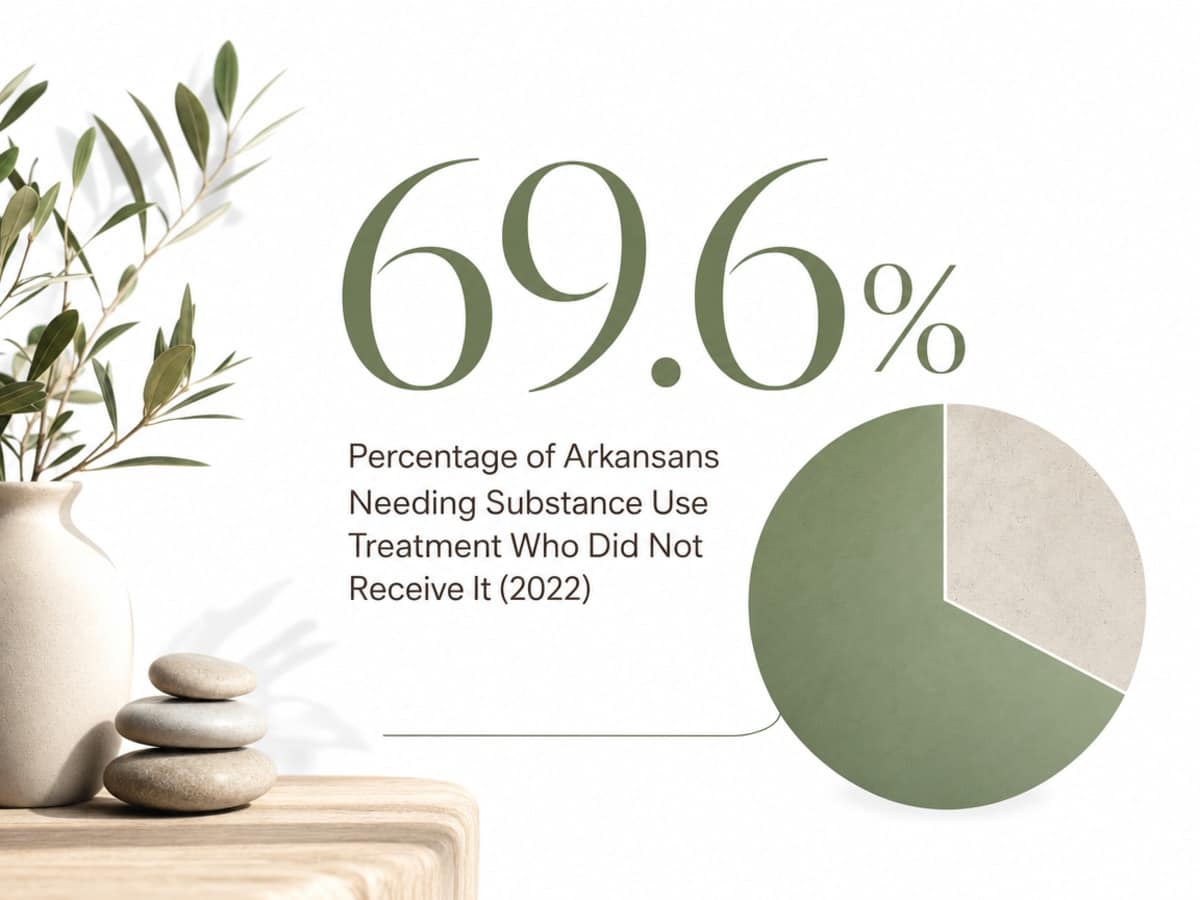
- Roughly seven in ten Arkansans who needed substance use treatment in 2022 didn’t receive it, making in-state placement critical for family involvement and continuity of care 1.
- With amphetamines driving 40.9% of Arkansas admissions, programs lean on CBT and contingency management, while MOUD paired with counseling remains the standard for opioid use disorder 3, 17.
- Before admission, call two or three Arkansas programs and ask directly about MOUD support, family session schedules, PASSE coordination, and the outpatient handoff plan 17, 21.
What behavioral therapy actually means when you’re looking for it in Arkansas
If you typed “behavioral therapy AR” into a search bar, you’re probably not looking for a textbook definition. You’re looking for help—for yourself, a husband, a son, a brother—and you want to know what actually happens inside an Arkansas program before you pick up the phone. That’s fair. This is a lot to sort through.
Here’s the honest shape of it. Behavioral therapy isn’t one service you buy. In Arkansas, it’s a set of talk-based, skill-based treatments—things like cognitive behavioral therapy (CBT), dialectical behavior therapy (DBT), motivational interviewing, contingency management, and trauma-informed group work—delivered inside four different levels of care. Those levels run from weekly outpatient counseling, to intensive outpatient (IOP), to residential substance use programs, up to psychiatric residential treatment facilities (PRTFs) for the most acute mental health needs 18, 12.
Each level answers to different rules, different funding, and often different regulators. That’s why two “behavioral therapy” programs an hour apart can feel like different worlds. The rest of this guide walks you through what each door actually looks like in Arkansas, so you can match your situation to the right one without leaving the state.
The Arkansas treatment gap and why staying in-state matters
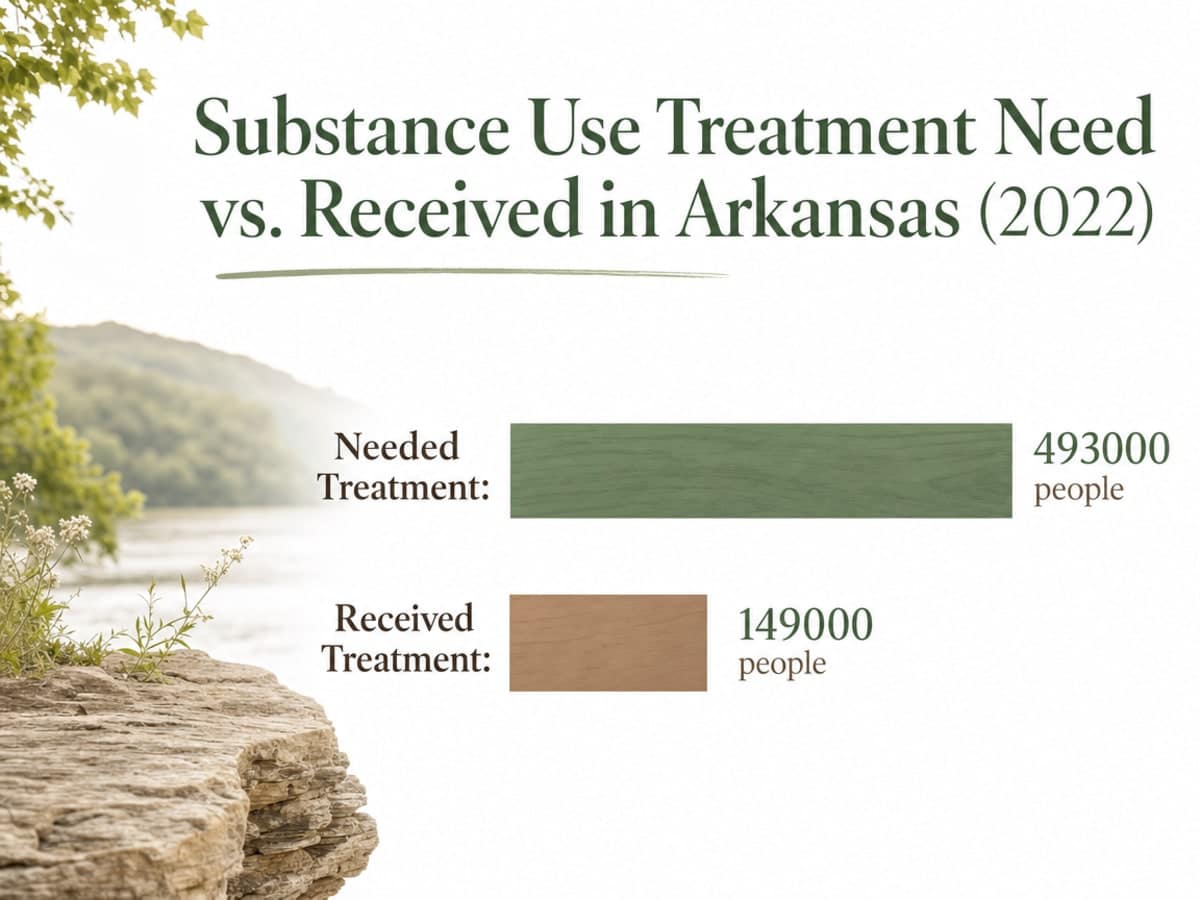
Here’s the number that should sit with you for a minute. In 2022, about 493,000 Arkansans aged 12 and older were classified as needing substance use treatment. Only 149,000 got it 1. That’s roughly seven out of ten people who needed help and didn’t receive it.
If you’re reading this for yourself or someone you love, that gap probably feels less like a statistic and more like the reason you can’t get a call back, or the reason the closest program with an open bed is three hours away. Both of those experiences are common here, and neither is a sign that you’re doing something wrong.
The gap is why staying in Arkansas for care matters more than a lot of families realize. When beds are scarce, out-of-state placement gets pitched as the fast option. It’s often faster on the front end and harder on everything after. Behavioral therapy works best when the people around you—spouse, kids, sponsor, primary care doctor—can stay part of the process. A residential program in Little Rock or somewhere else in-state keeps family visits realistic on a weeknight, keeps your outpatient handoff inside the same Medicaid or commercial network, and keeps your alumni meetings within driving distance a year from now.
There’s also a practical piece. Arkansas providers know Arkansas rules—the OBH manual, PASSE coordination, the local sober-living and 12-step landscape. That continuity is quiet, but it’s what turns a 30-day admission into a five-year recovery. The treatment gap is real. It doesn’t mean the door isn’t open. It means picking the right one, close to home, matters more.
Who’s actually in Arkansas treatment right now
It helps to know who else walks through these doors, because it changes what a program is actually built for. Arkansas isn’t treating a national average—it’s treating its own people, and the profile is specific.
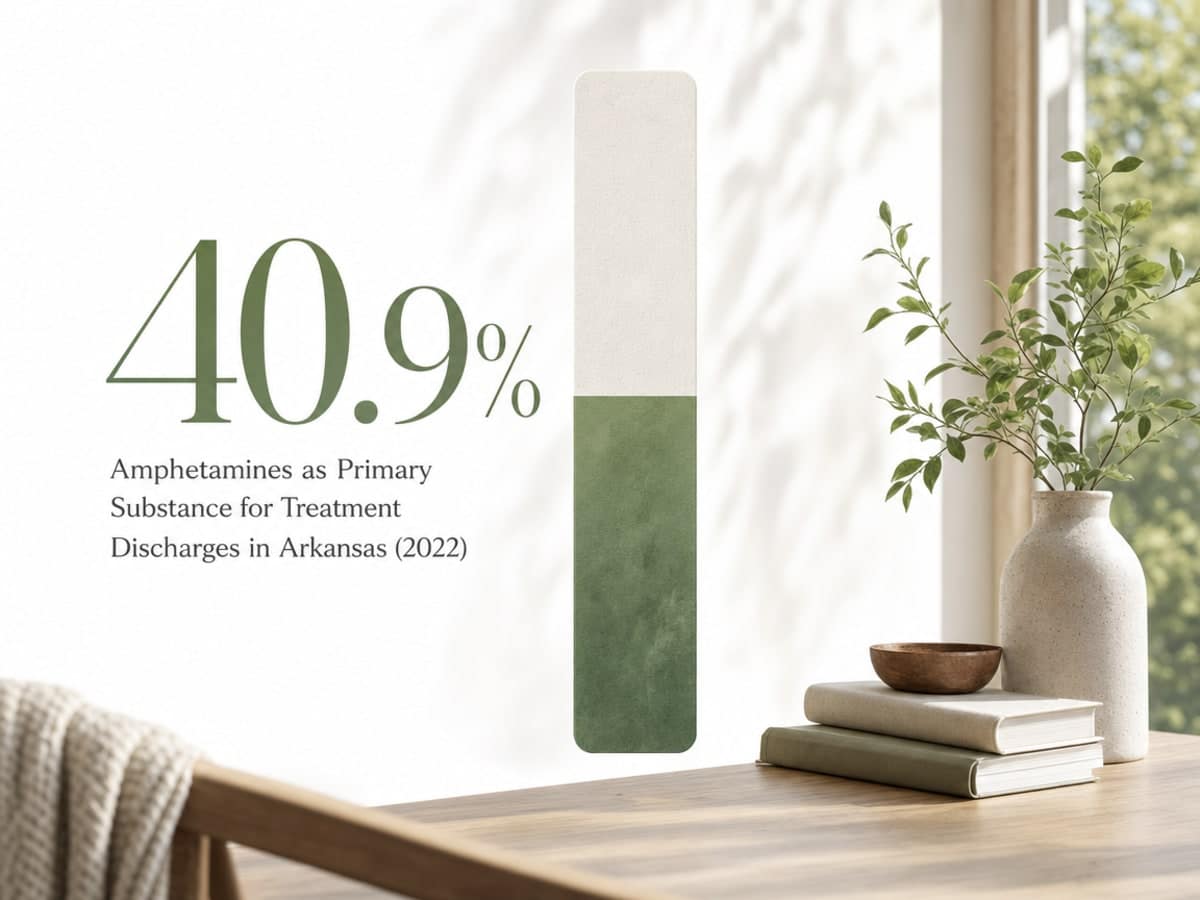
In 2022, roughly 9,470 substance use treatment admissions were recorded for Arkansans aged 12 and older. Men made up 62.4% of them. The primary substance breakdown looked like this: amphetamines led at 40.9%, marijuana at 14.4%, with alcohol and opioids filling out most of the remainder 3. That’s a stimulant-heavy, male-heavy caseload—closer to a rural methamphetamine story than the East Coast opioid picture you see on national news.
Why this matters for behavioral therapy: the modalities that work best for stimulant use disorder aren’t identical to those built around opioid dependence. Contingency management and cognitive behavioral therapy have the strongest evidence for methamphetamine, because there’s no FDA-approved medication for it the way there is for opioids or alcohol. So an Arkansas residential program that knows its population is going to lean hard on structured behavioral work, relapse-prevention planning, and skill-building groups—not just detox and medication handoffs.
The men’s-heavy skew also shapes what the day feels like. Group therapy with other men in similar shoes—working, married, kids at home, a job they’re trying to hold—tends to open up differently than a mixed group. That’s not a slight to co-ed programs. It’s just why single-gender residential settings exist in Arkansas and why they often fit men who’ve been quiet about this for years.
If you or the person you love is somewhere in that 9,470—or somewhere in the much larger group who hasn’t shown up in the data yet—you’re not an outlier. You’re the majority of who Arkansas treatment is designed for.
The four levels of care Arkansas actually runs
Outpatient counseling and IOP under the OBH manual
The lightest touch is outpatient. In Arkansas, most of what you’d call “talk therapy” for addiction or a co-occurring mental health issue runs through the Outpatient Behavioral Health Services (OBH) program, defined in the Medicaid provider manual. OBH has tiers: counseling (individual, group, family), rehabilitative services, intensive services like IOP, and crisis response. Only providers certified by the state can bill this program, which is why the counselor at a licensed clinic looks different on paper than a life coach or a pastoral counselor 18.
If you’re working a job and only need a few hours a week, that’s outpatient counseling—usually one to three sessions across the week. If you need more structure—say you just finished detox, or the drinking has cost you a job and a marriage but a hospital bed isn’t the right call—intensive outpatient (IOP) is the middle gear. IOP typically runs three hours a day, three to five days a week, and shows up in the OBH manual under code H0015.
Residential SUD care and detox
Residential is what most people picture when they hear “rehab.” You live at the facility. Your day is built around groups, individual counseling, medical check-ins, meals, sleep, and often 12-step meetings on-site or nearby. Length of stay in Arkansas programs typically runs 20 to 90 days, depending on what you came in with and how the treatment plan evolves.
Detox is usually the first step if alcohol, benzodiazepines, or opioids are in the picture. Medically supervised detox is not something to attempt at home with those substances—alcohol and benzo withdrawal can be dangerous, and opioid withdrawal, while rarely fatal, is severe enough that most people relapse within days without medical support. In Arkansas Medicaid billing, substance abuse detoxification appears under H0014, and therapeutic community and residential reintegration services appear under H0019 and H2020 respectively 18.
Inside a residential SUD program, behavioral therapy is the engine. Group therapy runs several hours a day. Individual counseling happens once or twice a week. Psychiatric care handles co-occurring depression, anxiety, PTSD, or bipolar diagnoses. That intensity is the point—you’re compressing a lot of clinical contact into a short window while you’re safely away from the triggers that made outpatient hard.
Psychiatric residential treatment facilities (PRTFs) are not the same thing
This is where the language trips a lot of families up. A psychiatric residential treatment facility, or PRTF, is a different animal from a residential SUD program. PRTFs are licensed by the Arkansas Office of Long-Term Care and serve people—often youth—with severe psychiatric conditions that need 24-hour clinical supervision beyond what a general residential program provides. Arkansas has been explicit: it is unlawful to operate a PRTF without a current, valid license from OLTC 12. And as of January 1, 2025, bed changes at PRTFs require Legislative Council approval, which tells you how tightly the state controls that capacity 13.
The scale gap matters. The Arkansas Division of Aging, Adult, and Behavioral Health Services (DAABHS) oversees around 215 treatment providers across the state, while the state-run psychiatric hospital in Little Rock has 220 beds 6. That’s a wide provider network for behavioral health and SUD services sitting next to a much smaller pool of intensive psychiatric capacity.
Practically, if the primary problem is substance use—even severe substance use—a residential SUD program is almost always the right door. PRTF-level care is for acute psychiatric presentations. If you’re unsure which side you’re on, ask directly during the intake call.
Home and community-based supports after discharge
The fourth level isn’t a step up—it’s what holds everything together after residential ends. Arkansas runs home and community-based services (HCBS) for adults with behavioral health needs through a mix of 1915(i) State Plan Amendment authority and 1915(c) waivers, coordinated for many members through a PASSE (Provider-led Arkansas Shared Savings Entity) 21. If you’re not enrolled in a PASSE, HCBS behavioral health services can be reimbursed on a fee-for-service basis by Medicaid 21.
What this looks like in real life: peer support specialists who’ve lived through recovery themselves, community-based counseling that meets you at home or a familiar clinic, help with housing stability, transportation to appointments, and the kind of check-ins that catch a slide before it becomes a full relapse.
This is the level most families underestimate. Residential gets the drama and the discharge photo. HCBS is what makes month four look like month one. When you’re touring or calling programs, ask specifically how they connect to PASSE coordination and to community-based supports in your county—that handoff is where a lot of good residential stays quietly fall apart.
The therapies you’ll actually sit in
CBT, DBT, and motivational interviewing in Arkansas programs
You’ll hear these initials a lot on intake calls, so it helps to know what they mean when a chair is in front of you.
Cognitive behavioral therapy (CBT) is the workhorse. A counselor helps you spot the thought that shows up right before the drink, the pipe, or the pill—then rewires the response. In Arkansas residential programs, CBT usually anchors the morning group and shows up again in your one-on-ones. It has the strongest evidence base for stimulant use disorder, which matters when 40.9% of Arkansas treatment admissions list amphetamines as the primary substance 3.
Dialectical behavior therapy (DBT) borrows from CBT but adds skills for emotional regulation, distress tolerance, and staying present. If depression, self-harm history, or big mood swings are part of the picture, DBT groups do heavy lifting. Motivational interviewing (MI) isn’t a group format—it’s how good counselors talk to you. Instead of arguing you into recovery, they ask questions that let you find your own reasons. It sounds simple. It changes what the first week feels like.
Contingency management, less famous but proven, rewards clean drug screens with small incentives and pairs well with stimulant treatment.
Trauma-informed care and why it shows up in residential settings
If you’ve wondered why an intake counselor asked about your childhood when you came in for drinking—this is why. Trauma and substance use travel together more often than not. SAMHSA’s guidance for behavioral health providers names safety, trust, empowerment, and culturally and gender-responsive services as core principles of trauma-informed care 15, 16.
In practice, that means a residential program should feel predictable. Staff explain what’s about to happen before it happens. Doors aren’t slammed. You’re not surprised by a body search or a room change. Groups don’t demand that you tell your worst story on day two. For men who’ve spent years keeping hard things buried—combat, a childhood no one talked about, an accident, a loss—that predictability is what makes talking possible at all.
Gender-responsive matters here too. A men’s residential setting can build in what a mixed group sometimes can’t: permission to be quiet, permission to cry, permission to talk about shame without performing. None of that is soft. It’s the clinical scaffolding trauma work actually needs.
Medication for opioid use disorder paired with counseling
If opioids are your reason for reading this, one thing to know up front: behavioral therapy alone is rarely the right plan. Medication for opioid use disorder (MOUD)—buprenorphine, methadone, or naltrexone—is the federal clinical standard, and SAMHSA’s TIP 63 is clear that these medications work best when paired with recovery-support services and counseling, not replaced by them 17.
A good Arkansas residential program will not make you choose. You can be on buprenorphine and still sit in CBT group every morning. You can start naltrexone before discharge and continue it with an outpatient prescriber your program helps you line up. The counseling piece—relapse prevention, trigger mapping, family sessions—does work medication can’t do. Medication does work counseling can’t do. Together they hold.
How Arkansas pays for behavioral therapy
The money question isn’t rude. It’s the first thing most families need answered, and Arkansas has a few distinct pathways worth knowing before you start calling.
Medicaid is the biggest one. If you or your loved one is enrolled, outpatient counseling, IOP, rehabilitative services, and crisis response all fall under the OBH program, billed by state-certified providers 18. Residential SUD services, detox (H0014), and therapeutic community stays (H0019, H2020) also route through Medicaid billing codes when the program is enrolled and the level of care is authorized 18. If a PASSE manages the member’s care, coordination runs through them; if not, HCBS behavioral health services are reimbursed fee-for-service by Medicaid 21.
Commercial insurance is the second lane, and this is where mental health parity matters. Arkansas has adopted parity requirements meaning insurers can’t apply harsher limits to behavioral health and SUD benefits than they do to medical or surgical ones 10, 11. That doesn’t mean coverage is automatic—prior authorization and network rules still apply—but it does mean you can push back if a plan tries to cap residential days more tightly than it caps other medical stays.
One quiet pressure worth naming: Arkansas DHS has been rebasing Medicaid counseling rates, with a draft manual for updated payment structures posted in 2024 14. Rate changes shape which providers keep taking Medicaid and which pull back. When you call, ask directly whether the program accepts your specific plan today—not last year.
Keeping family close: proximity, visitation, and continuity
Recovery is rarely a solo project. The people who love the person in treatment—wife, kids, mom, a best friend who’s been the phone call at 2 a.m.—are part of what got someone here and part of what will hold the work afterward. Distance changes what they can do.
An Arkansas program lets a spouse drop by on a Sunday without booking a flight. It lets a teenager come to a family session on a Wednesday evening and be home for school Thursday. It lets a sponsor from your home group visit during the last week of a stay and hand off to the same meeting room you’ll walk into after discharge. Trauma-informed care depends on that kind of continuity—safety, trust, and predictable relationships aren’t abstract principles, they’re the people in the parking lot when visiting hours open 15.
Ask any program you call three specific questions:
- When are family sessions offered, and are they in-person or virtual?
- What’s the visitation schedule after the first week?
- Who on staff coordinates your outpatient handoff to a counselor near your home, whether that’s through PASSE or a fee-for-service Medicaid provider 21?
The answers tell you whether family is treated as central to the plan or as a scheduling problem.
How to choose the right door in Arkansas
You’ve read a lot by this point, and the honest truth is that picking a level of care isn’t a quiz you can score. It’s a conversation, usually a hard one, between what’s happening at home and what the clinician on the other end of the intake line hears.
A few questions cut through the noise:
- Is withdrawal likely to be dangerous—alcohol, benzos, or opioids in daily use? If yes, medically supervised detox comes first, and residential is the natural next step 18.
- Has outpatient been tried and slipped? That’s a signal residential structure is worth the disruption.
- Is there a co-occurring psychiatric crisis—active suicidality, psychosis, or a mental health condition that’s the primary driver? That’s when PRTF-level care enters the conversation, not standard SUD residential 12.
Call two or three programs. Ask about MOUD support, family sessions, PASSE coordination, and how they handle the outpatient handoff 17, 21. You’ll hear the difference within ten minutes. Trust that. Choosing well doesn’t mean choosing perfectly—it means choosing a door close enough to home that your people can walk through it with you.
Frequently Asked Questions
What’s the difference between a PRTF and a residential SUD program in Arkansas?
A psychiatric residential treatment facility (PRTF) is licensed by the Arkansas Office of Long-Term Care and treats acute psychiatric conditions—often in youth—that need 24-hour clinical supervision 12. A residential substance use program treats addiction as the primary diagnosis, even when depression or anxiety ride alongside. If substance use is the main problem, a residential SUD program is almost always the right door.
Does Arkansas Medicaid cover behavioral therapy for substance use?
Yes. Outpatient counseling, intensive outpatient, rehabilitative services, and crisis response fall under the Outpatient Behavioral Health Services program, billed by state-certified providers 18. Residential detox and therapeutic community stays route through separate Medicaid billing codes when the level of care is authorized 18. Ask any program directly whether they accept your specific plan today—rate rebasing has shifted which providers still participate 14.
What kinds of behavioral therapy will I actually receive in an Arkansas program?
Most residential and outpatient programs anchor the day around cognitive behavioral therapy (CBT) groups, individual counseling using motivational interviewing, and skill-building work drawn from dialectical behavior therapy (DBT). Contingency management often pairs with stimulant treatment, which matters when amphetamines are the primary substance for 40.9% of Arkansas admissions 3. Trauma-informed practices thread through all of it 15.
Can I stay on medication for opioid use disorder while in residential care?
You should be able to. SAMHSA’s federal clinical guidance is clear that buprenorphine, methadone, and naltrexone work best when paired with counseling and recovery supports, not replaced by them 17. A good Arkansas program will continue your MOUD, adjust dosing with a prescriber, and coordinate a handoff to outpatient care at discharge. If a program frames MOUD as disqualifying, keep calling.
How involved can my family be during residential treatment in Arkansas?
That depends on the program, and it’s a fair question to ask on the first call. Most Arkansas residential programs offer scheduled family sessions, in-person visitation after an initial stabilization period, and virtual options when driving isn’t practical. Trauma-informed care leans on trust and predictable relationships 15, and staying in-state is what makes weeknight sessions and Sunday visits realistic.
What happens after residential care ends?
Discharge isn’t the finish line—it’s the handoff. Most people step down to outpatient counseling or IOP under the OBH program 18, often paired with home and community-based services coordinated through a PASSE or reimbursed fee-for-service by Medicaid 21. Peer support, 12-step meetings, and continued MOUD prescribing round it out. Ask your residential program who owns that handoff before you’re admitted.
References
- ARKANSAS – National Survey on Drug Use and Health. https://www.samhsa.gov/data/sites/default/files/reports/rpt44486/2022-nsduh-sae-state-tables/NSDUHsaeArkansas2022.pdf
- ARKANSAS – National Survey on Drug Use and Health. https://www.samhsa.gov/data/sites/default/files/reports/rpt56188/2023-nsduh-sae-state-tables_0/2023-nsduh-sae-state-tabs-arkansas.pdf
- Treatment Episode Data Set–Admissions (TEDS‑D), Arkansas, 2022. https://www.samhsa.gov/data/node/51427
- Behavioral Health Barometer: Arkansas, Volume 6. https://www.samhsa.gov/data/sites/default/files/reports/rpt32820/Arkansas-BH-Barometer_Volume6.pdf
- NSDUH Behavioral Health Barometer: Arkansas, Volume 8. https://www.samhsa.gov/data/report/nsduh-behavioral-health-barometer-arkansas-volume-8
- Arkansas 2022 State Report – Underage Drinking Prevention and Enforcement. https://library.samhsa.gov/sites/default/files/arkansas-iccpud-state-report-2022.pdf
- Award Number: 5H79TI085733-02. https://humanservices.arkansas.gov/wp-content/uploads/SOR3-Closeout-Report-9.2024-1.pdf
- Substance Misuse Education and Prevention – Arkansas Department of Health. https://healthy.arkansas.gov/programs-services/prevention-healthy-living/substance-misuse-education-and-prevention/
- Drug Overdose Mortality | Stats of the States. https://www.cdc.gov/nchs/state-stats/deaths/drug-overdose.html
- Arkansas AR-19-0011 – Medicaid. https://www.medicaid.gov/medicaid/spa/downloads/AR-19-0011.pdf
- Part 114. Mental Health Parity – Code of Arkansas Rules. https://codeofarrules.arkansas.gov/Rules/Rule?levelType=part&titleID=23&chapterID=39&subChapterID=51&partID=851&subPartID=null§ionID=null
- Psychiatric Residential Treatment Facilities (PRTF) – Arkansas DHS. https://humanservices.arkansas.gov/divisions-shared-services/provider-services-quality-assurance/occupational-licensing/psychiatric-residential-treatment-facilities-prtf/
- 20 CAR § 417‑202 – Licensing Application Process for Psychiatric Residential Treatment Facilities. https://codeofarrules.arkansas.gov/Rules/Rule?levelType=section&titleID=20&chapterID=38&subChapterID=50&partID=1448&subPartID=9423§ionID=63384
- Behavioral Health Services and Support Payment Rate – AR Medicaid Counseling Rates Rebasing. https://humanservices.arkansas.gov/u/bhrate/
- Trauma-Informed Care in Behavioral Health Services. https://library.samhsa.gov/sites/default/files/sma15-4420.pdf
- TIP 57: Trauma-informed Care in Behavioral Health Services. https://www.samhsa.gov/resource/dbhis/tip-57-trauma-informed-care-behavioral-health-services
- TIP 63: Medications for Opioid Use Disorder. https://library.samhsa.gov/sites/default/files/pep21-02-01-002.pdf
- Outpatient Behavioral Health Services – Arkansas Medicaid Provider Manual (Section II). https://humanservices.arkansas.gov/wp-content/uploads/SP-19-0054_Attachment_S_-_Arkansas_Medicaid_Outpatient_Behavioral_Health_Manual.pdf
- Applied Behavior Analysis Therapy – Arkansas Medicaid Manual Section (Code of Arkansas Rules). https://codeofarrules.arkansas.gov/Rules/PartDocument?partID=1405
- Applied Behavior Analysis (ABA) Therapy – Arkansas Medicaid Provider Manual Page. https://humanservices.arkansas.gov/divisions-shared-services/medical-services/helpful-information-for-providers/manuals/abatherapy-prov/
- Home and Community‑Based Services – Behavioral Health Adults (1915(i)/1915(c) Manual Section). https://codeofarrules.arkansas.gov/Rules/PartDocument?partID=1361