
Key Takeaways
- Chronic relapse often reflects treatment plans built around one substance while others went unaddressed, not personal failure or lack of willpower.
- Specific substance combinations and their timing matter more than drug count, with pretreatment sedative use linked to higher opioid relapse odds.1
- Integrated residential care that concurrently treats every substance use disorder, psychiatric conditions, and trauma outperforms sequential approaches, with 69% versus 55% abstinence at six months.18
- Evaluate programs on whether intake maps every substance, medication is offered for each disorder, positive screens trigger clinical response rather than discharge, and aftercare fits your specific pattern.12,13
When One Treatment Plan Was Built for One Drug
If you’ve been to treatment before and it didn’t hold, that’s information, not a verdict. Often, one substance is identified as the primary problem, and the detox protocol, medication, and relapse-prevention strategies are built around it. However, many individuals use multiple substances simultaneously, such as alcohol, benzodiazepines, stimulants, or cannabis, which complicates a single-substance treatment approach.
This mismatch frequently contributes to chronic relapse. Federal researchers now recognize polysubstance overdose and combination use as a defining feature of the current crisis, not an isolated incident. They acknowledge that drug combinations make overdoses harder to reverse and complicate the treatment of opioid use disorder and other substance use disorders. While clinical guidelines are evolving, many programs have yet to adapt.8
This article is for adults familiar with recovery concepts. It aims to clarify why previous plans might have failed, what the current drug supply entails, and what integrated care looks like when tailored to the specific combination of substances you’ve been using, rather than a simplified version.
What Polysubstance Use Actually Means in 2025
Pattern and Timing Matter More Than Drug Count
The number of substances detected in a urine screen is not, by itself, a reliable predictor of recovery success. What matters more are the specific substances, their combinations, and when they appear during the treatment episode.
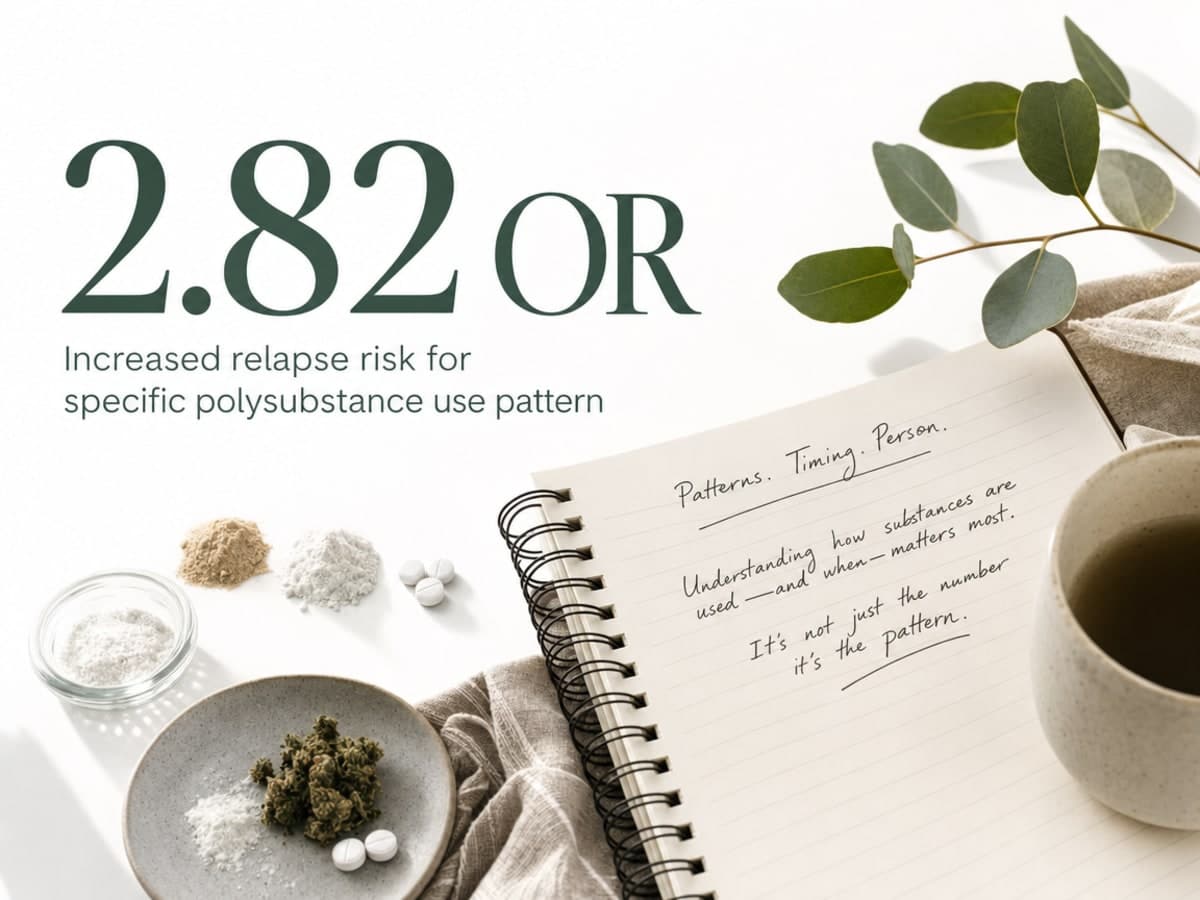
A 2022 machine-learning analysis of an opioid use disorder trial found that individuals co-using cocaine, heroin, prescription opioids, and cannabis had a relapse risk with an odds ratio of 2.82 (95% CI 1.13–7.03) compared to other patterns. This specific four-substance combination from one OUD study indicates a significant risk, but it is not a universal law implying that any polysubstance use universally doubles or triples relapse odds.2
Conversely, global polysubstance use frequency was only marginally associated with 24-week opioid outcomes in a related analysis. Some multi-substance patterns even showed lower relapse odds under certain definitions. Consistently, specific substances and timing were crucial: pretreatment sedative use increased the odds of opioid relapse, and sedative use during the first four weeks of treatment was linked to increased opioid craving.1,16,17
This means that if a previous program treated your case as “opioid use disorder, complicated by other stuff” without mapping your specific combinations or their timing, they were working with an incomplete picture. Effective assessment requires understanding which substances are used, in what order, at what times of day, and in response to what triggers. This level of detail is essential for an effective treatment plan.
The Supply Has Changed: Fentanyl, Xylazine, and What’s Actually in the Bag
If your last treatment experience was several years ago, the current drug supply is significantly different. This has clinical implications and affects safety considerations.
Fentanyl is now commonly found in non-opioid drugs. NIDA reports that since approximately 2017, overdose deaths frequently involve multiple drugs, with fentanyl often mixed into cocaine and methamphetamine. This means someone using a stimulant, with no intention of using an opioid, can experience an opioid overdose. Federal researchers characterize combination overdoses as a defining feature of the current period.7,8
Xylazine, an animal sedative, represents another significant change. CDC surveillance indicates an increasing presence of xylazine in illicitly manufactured fentanyl, with a documented rise in fentanyl-involved deaths where xylazine was detected. Xylazine is not an opioid, and naloxone will not reverse its effects. In an overdose involving xylazine, naloxone should still be administered because xylazine is almost always found with opioids like fentanyl. However, breathing support, proper positioning, and calling 911 remain necessary even if the person appears to respond. The individual may remain sedated longer than expected due to xylazine, not a failure of naloxone.4,5,6
Four Clinical Decision Points Your Last Program Probably Missed
Did Anyone Medically Manage Withdrawal From All of It?
Consider your last detox experience. Was every substance in your system actively managed, or was one prioritized while others were left unaddressed?
This is a common point of failure in treatment plans. If you were using opioids and heavily drinking, or combining benzodiazepines with stimulants, withdrawing from all substances simultaneously is a different clinical event than withdrawing from a single substance. Withdrawal timelines vary; alcohol and benzodiazepine withdrawal carry seizure risks not present with opioid withdrawal. Stimulant crash symptoms can also overlap with opioid symptoms, masking the true clinical picture. AHRQ guidance states that withdrawal from multiple substances is challenging to manage in an outpatient setting and is often best handled inpatient, with appropriate medications for each substance use disorder.12
An ideal approach involves a clinician thoroughly documenting every substance used, including quantity and frequency, then developing a medically supervised taper or stabilization plan that accounts for each one. This includes round-the-clock vital sign monitoring, pharmacological treatment for benzodiazepine or alcohol withdrawal, and addressing opioid withdrawal with buprenorphine or methadone as clinically appropriate.
If your previous detox involved only comfort medications for a few days and a quick discharge, it was likely insufficient for a complex polysubstance use pattern. An inadequate detox can make early recovery feel precarious, hindering your brain’s ability to achieve a stable reset.
Did Anyone Prescribe Medication for Each Substance Use Disorder?
Reflect on this question: when you completed your last program, how many of your substance use disorders had a corresponding medication prescribed?
For opioid use disorder, this should have included buprenorphine, methadone, or extended-release naltrexone. For alcohol use disorder, naltrexone, acamprosate, or disulfiram. For tobacco, nicotine replacement or varenicline. AHRQ’s polysubstance guidance explicitly recommends that clinicians offer medications for each substance use disorder as appropriate, rather than focusing on one and hoping others resolve.12
Two common issues arise. First, a program might prescribe buprenorphine for opioids but neglect alcohol use, or treat alcohol use without initiating OUD medication because opioid use was not daily. Second, and more detrimental for individuals with chronic relapse, is being denied OUD treatment due to a positive stimulant screen. AHRQ’s stimulant brief clearly states that practices should not require patients with co-occurring OUD to be abstinent from stimulants to receive OUD treatment. If a program discharged you for a positive cocaine or methamphetamine screen while you were trying to maintain buprenorphine treatment, that reflects a policy failure of the program, not a personal failure.13
Medication for each disorder is not a cure-all, but a foundational element. It provides stability for therapy and skills development. If prior care focused solely on therapy without appropriate pharmacology, the potential for sustained recovery was limited from the outset.
Did Anyone Treat the Psychiatric and Trauma Picture at the Same Time?
Many individuals in treatment carry not only substance use issues but also co-occurring mental health conditions such as depression, anxiety, or PTSD. When one condition is treated while another is deferred, both tend to relapse.
SAMHSA’s guidance advocates for integrated care as the preferred model for individuals with co-occurring disorders. Simply put, someone with both a mental health problem and a substance use disorder must address both simultaneously, not sequentially. Integrated care has been shown to reduce substance use, improve psychiatric symptoms, and decrease hospitalization rates. The complexity of this clinical picture is highlighted by a 2024 review, which described it as a “complex intersection” requiring multi-disciplinary approaches.3,9,11,22
Trauma requires specific attention. The outdated approach suggested delaying trauma work until sobriety was established. Current VA guidance, however, states the opposite: PTSD should not be a barrier to receiving SUD treatment, and vice versa. Both conditions should be treated concurrently.14
Evidence supports this approach. A review of interventions for adults with co-occurring addictive and psychiatric disorders found that psychosocial treatments, particularly contingency management, can reduce substance use in patients with addiction and severe mental illness. If your previous program provided a mental health referral for after discharge, or advised you to “get clean first,” that sequential approach worked against your recovery. Concurrent treatment does not mean maximum intensity on day one, but rather that both conditions are included in the treatment plan, with clear accountability for each.15
Did Aftercare Account for Your Specific Combination?
Aftercare is often where effective inpatient work can unravel. You might leave stabilized, on medication, with resources, but the plan may not align with the realities of your daily life.
Generic aftercare often assumes a single substance and a single set of triggers. If your pattern involved opioids and stimulants, your relapse-prevention plan needs to address both, including which substance typically appears first and the sequence of use. If sedatives were part of your history, the plan should acknowledge that pretreatment sedative use is associated with higher opioid relapse odds, and sedative use in early treatment correlates with increased opioid craving. This is not a scare tactic, but a clinical instruction: sedative risk requires specific monitoring and support during the first month, beyond general check-ins.1
An effective aftercare plan for a polysubstance pattern specifies the substances, their typical order of appearance, high-risk settings and times, ongoing medications and their prescribers, the mental health clinician involved, appropriate peer support, and a response plan if one substance reappears. AHRQ’s guidance is clear: ongoing treatment for a known substance use problem should continue even if a second substance is detected. A positive screen should trigger a clinical response, not a discharge.12

Why Integrated Residential Care Holds When Sequential Care Doesn’t
Sequential care, which addresses one problem at a time (e.g., opioids first, then alcohol, then depression), often fails in practice. Each untreated condition can undermine progress on the one being addressed. For example, drinking can trigger opioid cravings, untreated anxiety can drive drinking, and depression can hinder attendance at buprenorphine appointments. This creates a cycle of chasing symptoms without resolving underlying issues.
Integrated care addresses all issues concurrently. All aspects of an individual’s health—opioid use, alcohol use, stimulant use, depression, PTSD, sleep, chronic pain—receive a plan and dedicated support simultaneously. The outcome difference is significant. A review comparing integrated and non-integrated approaches found that patients receiving integrated medical and addiction care were more likely to be abstinent at six months (69% versus 55%). This 14-point difference highlights the impact of care organization, not just new treatments.18
Residential settings facilitate this integration more effectively than outpatient care, where integrated care often means referrals to different providers. In a residential program designed for polysubstance complexity, the addiction physician, psychiatric prescriber, therapist, nursing staff, and case manager work collaboratively from the same chart within the same facility. This allows for rapid medication adjustments, real-time response to cravings, and immediate follow-up by psychiatric clinicians after a trauma response in a group session.
For individuals with a history of chronic relapse, this concentrated approach is vital. It removes the burden of coordinating multiple appointments while the nervous system is recalibrating, allowing the treatment structure to support recovery.

Reading Your Own Relapse History as Data, Not Verdict
If you’ve undergone treatment multiple times, you might have developed a narrative of personal failure. Instead, view each relapse as a clinical event that provides valuable information about what was missing in previous plans.
Examine the sequence of events. Which substance reappeared first? For many with a history of opioid and sedative use, sedatives or alcohol may resurface weeks before opioids. This is not a sign of weakness; it aligns with research indicating that sedative use in early treatment correlates with increased opioid craving later. If this pattern was overlooked, the treatment plan had a blind spot where problems often begin.1
Next, assess what was included and excluded from your previous plans. Was medication prescribed for each substance use disorder, or only one? Were depression or PTSD addressed concurrently with substance use, or were they deferred? Was aftercare tailored to your specific combination of substances, or was it a generic schedule of meetings? SAMHSA guidance emphasizes that both mental health and substance use conditions require concurrent treatment for sustained recovery, and integrated care consistently improves both substance use and psychiatric symptoms.9,11
Viewed this way, chronic relapse is not a judgment of your character, but a record of the gaps in previous treatment approaches. This record is precisely what a comprehensive assessment uses to design a plan with a greater chance of success.
What a Program Built for This Complexity Looks Like
A program capable of effectively treating polysubstance use will have specific characteristics. When evaluating options for yourself or a loved one, look for these features:
Intake should thoroughly inquire about every substance used, including quantity, timing, and combination sequences, not just a “drug of choice.” Medically supervised inpatient withdrawal is crucial when multiple substances are involved, with medications tailored to each as clinically appropriate. This includes buprenorphine or methadone for opioids, naltrexone or acamprosate for alcohol, nicotine replacement for tobacco, and a plan for benzodiazepine or sedative tapering if applicable. No substance should be excluded from the medication list simply because it wasn’t the primary diagnosis.12
Psychiatric care and trauma work should be integrated into the same treatment plan, within the same facility, from the initial weeks, rather than being delayed until sobriety is achieved. Evidence-based psychosocial approaches, such as contingency management, should be utilized for comorbid presentations, where they have proven most effective. A positive screen for one substance while being treated for another should trigger a plan adjustment, not a discharge.3,12,13,14,15
Aftercare plans should be customized to your specific pattern: the substances, their sequence, high-risk settings, ongoing medications, continuing clinicians, and a clear response plan if a substance reappears. Family and peer support should be integrated, not merely added on.
Serenity Park Recovery Center is designed with this level of specificity for men who require it. If your previous treatment plan did not match your actual clinical picture, a new, tailored approach is possible.
Frequently Asked Questions
Does using more than one substance always mean recovery will be harder?
Not automatically. Research indicates that specific combinations and timing are more critical than the sheer number of substances used. While some multi-substance patterns carry higher relapse risk, others show only marginal effects on outcomes. Your particular pattern requires a specific assessment, not a general assumption that any polysubstance use guarantees a harder recovery.1,16
Why didn’t my last treatment program work if I completed it?
Completing a program and achieving lasting recovery are distinct. If your plan addressed only one substance while others were ignored, or if addiction was treated while depression or PTSD were deferred, the potential for sustained recovery was limited from the start. SAMHSA emphasizes that both mental health and substance use conditions require concurrent treatment for recovery to be stable. This indicates a flaw in the program’s design, not a personal failing.11
Can I get treatment for opioid use if I’m still using stimulants or other substances?
Yes. Any program that states otherwise is not following current guidelines. AHRQ explicitly states that patients with co-occurring opioid use disorder should not be required to be abstinent from stimulants to receive OUD treatment. Ongoing treatment for a known substance use problem should continue even if a second substance is detected on a screen. A positive result is a clinical event to be managed, not a reason for discharge.12,13
Do I need to be sober before I can address trauma or mental health issues?
No. The outdated approach of achieving sobriety before addressing trauma is not recommended by current guidelines. The VA directly states that having PTSD should not prevent someone from receiving SUD treatment, and vice versa. Integrated care, which treats both conditions simultaneously, reduces substance use and improves psychiatric symptoms. Both issues should be addressed concurrently.9,14
Why is inpatient or residential care recommended for withdrawal from multiple substances?
This is due to varying timelines and risks. Alcohol and benzodiazepine withdrawal carry seizure risks not associated with opioid withdrawal, and stimulant crash symptoms can obscure other underlying issues. AHRQ guidance suggests that withdrawal from multiple substances is difficult to manage in an outpatient setting and is often best handled inpatient, with appropriate medications for each substance use disorder. A residential setting ensures all clinical needs are managed under one roof.12
Does naloxone still work if fentanyl is mixed with xylazine or other drugs?
Naloxone remains effective for the opioid component and should always be administered, as xylazine is almost always found alongside opioids like fentanyl. However, the subsequent care changes. Xylazine is not an opioid, so naloxone will not reverse its sedative effects. Rescue breathing, proper positioning, and calling 911 are still necessary even if the person appears to respond. Expect prolonged sedation, which is due to the xylazine, not a failed naloxone reversal.4,5
References
- Polysubstance use before and during treatment with medication for opioid use disorder: Prevalence and association with treatment outcomes. https://pubmed.ncbi.nlm.nih.gov/35773113/
- Specific polysubstance use patterns predict relapse among patients in opioid use disorder treatment: Machine learning results from a randomized clinical trial. https://pubmed.ncbi.nlm.nih.gov/36644227/
- Substance Use Disorder Treatment for People with Co-Occurring Disorders. https://library.samhsa.gov/sites/default/files/pep20-06-04-006.pdf
- Polysubstance Overdose. https://www.cdc.gov/overdose-prevention/about/polysubstance-overdose.html
- Xylazine | Overdose Prevention. https://www.cdc.gov/overdose-prevention/about/what-you-should-know-about-xylazine.html
- Illicitly Manufactured Fentanyl–Involved Overdose Deaths with Xylazine in 2022. https://www.cdc.gov/mmwr/volumes/72/wr/mm7226a4.htm
- Fentanyl. https://nida.nih.gov/research-topics/fentanyl
- NIDA HEAL Opioid Use Disorder and Overdose Strategic Plan FY 2025. https://nida.nih.gov/publications/2022-2026-nida-strategic-plan/heal-opioid-use-disorder-overdose-strategic-plan/nida-heal-opioid-use-disorder-overdose-strategic-plan-fy-2025
- Managing Life with Co-Occurring Disorders. https://www.samhsa.gov/mental-health/serious-mental-illness/co-occurring-disorders
- Co-Occurring Disorders and Other Health Conditions. https://www.samhsa.gov/substance-use/treatment/co-occurring-disorders
- What are Co-Occurring Disorders?. https://www.samhsa.gov/mental-health/what-is-mental-health/conditions/co-occurring-disorders
- Polysubstance Use & Integrated Behavioral Health. https://integrationacademy.ahrq.gov/products/topic-briefs/polysubstance-use
- Stimulant Use Disorders and IBH. https://integrationacademy.ahrq.gov/products/topic-briefs/stimulant-use-disorders-and-behavioral-health-integration
- Treatment of Co-Occurring PTSD and Substance Use Disorders in VA. https://www.ptsd.va.gov/professional/treat/cooccurring/tx_sud_va.asp
- Interventions for adults with co-occurring addictive and psychiatric disorders. https://www.ncbi.nlm.nih.gov/books/NBK618688/
- Polysubstance use before and during treatment with medication for opioid use disorder: patterns and impact on treatment outcomes. https://pmc.ncbi.nlm.nih.gov/articles/PMC10012431/
- Specific polysubstance use patterns predict relapse among patients in opioid use disorder treatment: Machine learning results from a randomized clinical trial. https://pmc.ncbi.nlm.nih.gov/articles/PMC9838120/
- Integrating Care for People With Co-Occurring Alcohol and Other Drug, Medical, and Mental Health Conditions. https://pmc.ncbi.nlm.nih.gov/articles/PMC3625993/
- Polysubstance Use and Heroin Relapse Among Adolescents Following Treatment. https://www.ojp.gov/ncjrs/virtual-library/abstracts/polysubstance-use-and-heroin-relapse-among-adolescents-following
- Factors Associated with Relapses in Alcohol and Substance Use Disorders: A Narrative Review. https://pmc.ncbi.nlm.nih.gov/articles/PMC11075040/
- Relapse prevention for addictive behaviors. https://pmc.ncbi.nlm.nih.gov/articles/PMC3163190/
- Navigating the Complex Intersection of Substance Use and Co-Occurring Conditions. https://pmc.ncbi.nlm.nih.gov/articles/PMC10889170/