
Key Takeaways
- Evaluate residential alcohol programs on four axes: the evidence-based therapies filling the day, how progress is measured, how family is built into clinical work, and what the technology actually does.
- Serious programs track outcomes across three domains together — substance use, treatment process like retention and adherence, and quality of life including sleep and mental health 1.
- Family involvement is a clinical variable tied to engagement, retention, and long-term abstinence, so look for structured therapy sessions and inclusion in aftercare planning, not weekend visits 2.
- On admissions calls, press for specifics on counseling hours, standardized patient-reported outcomes, family session structure, what monitoring devices actually measure, and the week-one continuing care handoff.
What to Listen For on the First Phone Call
You already know something is wrong. You are the one making the call, probably with a notepad open and a list of questions you have rewritten three times. That is not a sign you are overreacting. It is a sign you have become the person doing the research, and the intake staff on the other end of the line should treat you that way.
What you are listening for in those first fifteen minutes is not warmth, though warmth is welcome. You are listening for specificity. A good admissions conversation names the therapies used, the length of stay they typically recommend, how they handle medical detox, and what happens on day one, day fourteen, and the week after he comes home. Vague language about “personalized care” and “holistic healing” without any actual practice behind it is a signal to keep asking questions.
You are also listening for how the program talks about you. Family involvement is not a courtesy call once a week. Federal guidance is clear that involving family members in treatment positively affects engagement, retention, and outcomes 2. If the person on the phone treats your participation as optional or scripted, that tells you how the clinical team will treat it later.
The rest of this piece gives you four axes to judge programs against, and the exact questions to ask on that next call.
The Four Axes of a Program Worth Considering
Once you get past the marketing language, a residential alcohol program can be judged on four things. Not five, not twelve. Four.
- The first is what therapies actually run the day — the clinical work he will spend most of his time doing, and whether those methods have research behind them.
- The second is how the program measures whether he is getting better, using more than a discharge handshake. A 2025 NIH-linked review synthesizing outcome research across substance use disorder treatments defines three domains worth tracking together: substance use itself (abstinence, relapse), the treatment process (retention, adherence, readmission, dropout), and general well-being or quality of life (physical health, mental health, sleep) 1. If a program only talks about one of those, they are showing you a slice and calling it the picture.
- The third axis is how the family — meaning you — is built into the clinical work, not tacked on as a Sunday visit.
- The fourth is what any technology in the program is actually doing: whether the breathalyzers, apps, or wearables have evidence behind them or are simply decoration on the brochure.
Each axis gets its own section below, with the questions you can ask on a call. Take the ones that fit your situation and leave the rest.
Axis One: The Therapies Doing the Actual Work
Ask what fills the hours between wake-up and lights out. That is where the real program lives. A residential day for alcohol use disorder should be built around therapies with actual research behind them: cognitive behavioral therapy, motivational interviewing, relapse-prevention groups, individual counseling, and structured 12-step facilitation. If the intake coordinator cannot tell you which of those his day includes, and roughly how many hours of each, you are looking at a program that has not thought this through, or is not being straight with you.
Medication matters here too. For alcohol, that means medically supervised detox on the front end when it is needed, and a conversation about naltrexone, acamprosate, or disulfiram where clinically appropriate. Not every man needs medication for maintenance, but every program should be able to explain who they prescribe for, who they do not, and why.
Length and dose of therapy also count as therapy. Research on community residential programs for alcohol use disorders found that longer stays, more counseling contact, supportive peer relationships during treatment, and continuing outpatient care with self-help participation afterward all predicted better outcomes across age groups 3. Read that list again. Four of those five ingredients are things a program controls directly: how long he stays, how much counseling he actually receives, whether the peer environment is structured or left to chance, and whether they hand him a real continuing care plan or a discharge folder.
Concrete questions to ask on the call: How many hours of individual counseling per week, not group? Who runs the CBT and relapse-prevention sessions, and what is their license? What is the typical length of stay for someone with his drinking history, and what triggers a recommendation to extend? What is the ratio of clinical hours to unstructured time? If the answers come back specific, you are talking to a real clinical program. If they come back in adjectives, keep looking.
Axis Two: How a Program Measures Whether He Is Getting Better
The Three Outcome Domains to Ask About
When you ask a program “how do you know he is getting better,” you are trying to hear whether they measure anything at all, and whether that measurement matches what “better” actually means to your family.
The 2025 NIH-linked outcomes review lays out the three domains a serious program should be able to speak to 1:
- First, substance use itself: abstinence, relapse, days of use, quantity when use happens.
- Second, the treatment process: whether he stays enrolled, attends sessions, completes the recommended length of stay, and returns for the next level of care. Retention and adherence sound like administrative language, but they are the strongest early signal you have that the clinical work is landing.
- Third, quality of life: sleep, physical health, mental health, ability to function, negative affect, craving.
A program that only quotes you completion rates is telling you about their business. A program that only talks about “sobriety” is showing you one lane. What you want is a team that tracks all three, revisits them during the stay, and can describe how change in one domain shows up in another. When his sleep improves and his craving drops in week three, that is quality of life pulling substance use with it. Ask them to walk you through an example.
Patient-Reported Outcomes During a Residential Stay
Patient-reported outcomes, or PROs, are short standardized questionnaires he fills out at intake and again at set intervals. They cover sleep, mood, physical symptoms, craving, quality of life, sometimes negative affect. They are boring to administer and quietly revolutionary in what they reveal.
A study of embedding PROs into routine residential care for alcohol and substance use disorder found that patients arriving with recent alcohol use reported worse physical and mental health, worse sleep, lower quality of life, and higher craving and negative affect at admission — and that those domains improved measurably during the stay 4. This is what “getting better” looks like when you write it down instead of guessing. It is also a language you can use with him. Instead of asking “are you okay,” you can ask about the numbers his clinician just reviewed with him.
Ask the program directly: Do you use standardized patient-reported outcome measures? Which ones? How often are they collected? Does he see his own results, and does his counselor use them to adjust his plan? If they can name the instrument, describe the cadence, and tell you how the data changes what they do clinically, they are running a measured program. If PROs come up as a checkbox on a form nobody looks at, that is a different signal entirely.
Why Objective Measures Change the Conversation
Self-report has a ceiling. It is not that men lie on purpose — although sometimes they do — it is that memory softens, shame edits, and “I had a couple” starts to mean something different at month six than it did at month one. This matters most in outpatient and continuing care, where the clinical team is not watching him around the clock.
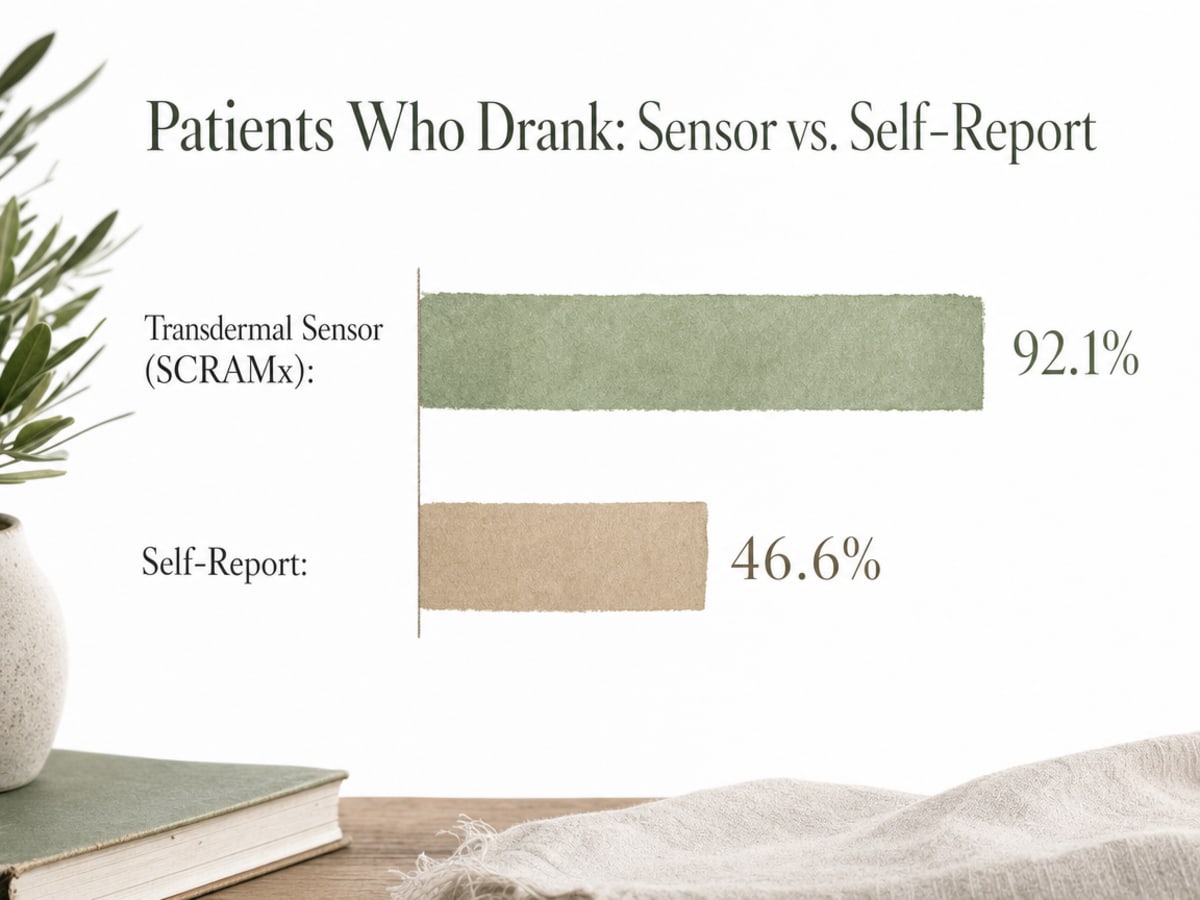
A study using SCRAMx transdermal alcohol monitors on outpatients in usual care put numbers on that gap. During treatment, 92.1% of patients drank according to the ankle sensor, while only 46.6% reported drinking on self-report. Drinking was detected on 16.5% of monitored days, versus 0.0% by self-report 6. Same patients, same weeks, two very different pictures.
The question to ask is not “do you drug test.” It is: how do you verify progress when he is out of your sight, and how is that data used clinically rather than as a gotcha? A program that can answer that has thought about what happens after discharge, which is when the measurement matters most.
Axis Three: Family Involvement as an Outcome Driver, Not an Amenity
Somewhere in the intake pamphlet, there is probably a page on “family programming.” A Saturday session, a weekend workshop, maybe a phone call with his counselor once his phase level allows it. That is the amenity version of family involvement. It is not what the research is talking about.
SAMHSA’s advisory on family therapy in substance use disorder treatment is direct: involving family members positively affects client engagement, retention, and outcomes, and positive social and family support is linked to long-term abstinence, while negative or conflictual dynamics raise the risk of relapse 2. Read that carefully. Your involvement is not a nice-to-have that helps him feel loved. It is a clinical variable the program should be actively working with, because what happens between the two of you when he comes home will either hold the gains or unwind them.
That reframes what you are looking for. A program taking family seriously will schedule structured family therapy sessions with a licensed clinician, not just “family visits.” They will assess the relationship early — including whether joint work is safe and appropriate, because sometimes it is not — and build a plan around what they find. They will teach you the vocabulary his counselors are using, so when he says he is working on “urges” or “cognitive distortions,” you are not guessing what that means. And they will pull you into aftercare planning before discharge, not on the drive home.
Ask specifically: How many family therapy sessions are built into a typical stay, and who leads them? Can I speak with his primary counselor on a regular schedule, with his consent, or only in a crisis? What is the training you offer partners on how to respond to a slip without collapsing the whole plan? Do you include me in the continuing care conversation, and when?
You are not looking for a program that hands you a role you have to earn. You are looking for one that treats you as part of the environment he is returning to — because you are, and the clinical team either works with that fact or works around it. The ones that work with it tend to be the ones that measure what they do.
Axis Four: What the Technology Actually Does (and Does Not)
Where the Evidence Is Strongest: Breathalyzers and Smartphones
If a program shows you a dashboard on the intake call, ask what device is generating the data and what study backs it up. That question sorts serious clinical tech from lobby decoration in about thirty seconds.
The strongest current evidence for tech-enhanced alcohol care sits with two unglamorous tools: remote breathalyzers and smartphone-based check-ins. A systematic review of 58 studies of remote monitoring technologies in alcohol use disorder concluded exactly this — that smartphones, mobile phones, and breathalyzers have the deepest evidence base, while wearables and passive sensing remain exploratory 7. Not equally proven. Not “all promising.” Uneven, with the older tools ahead.
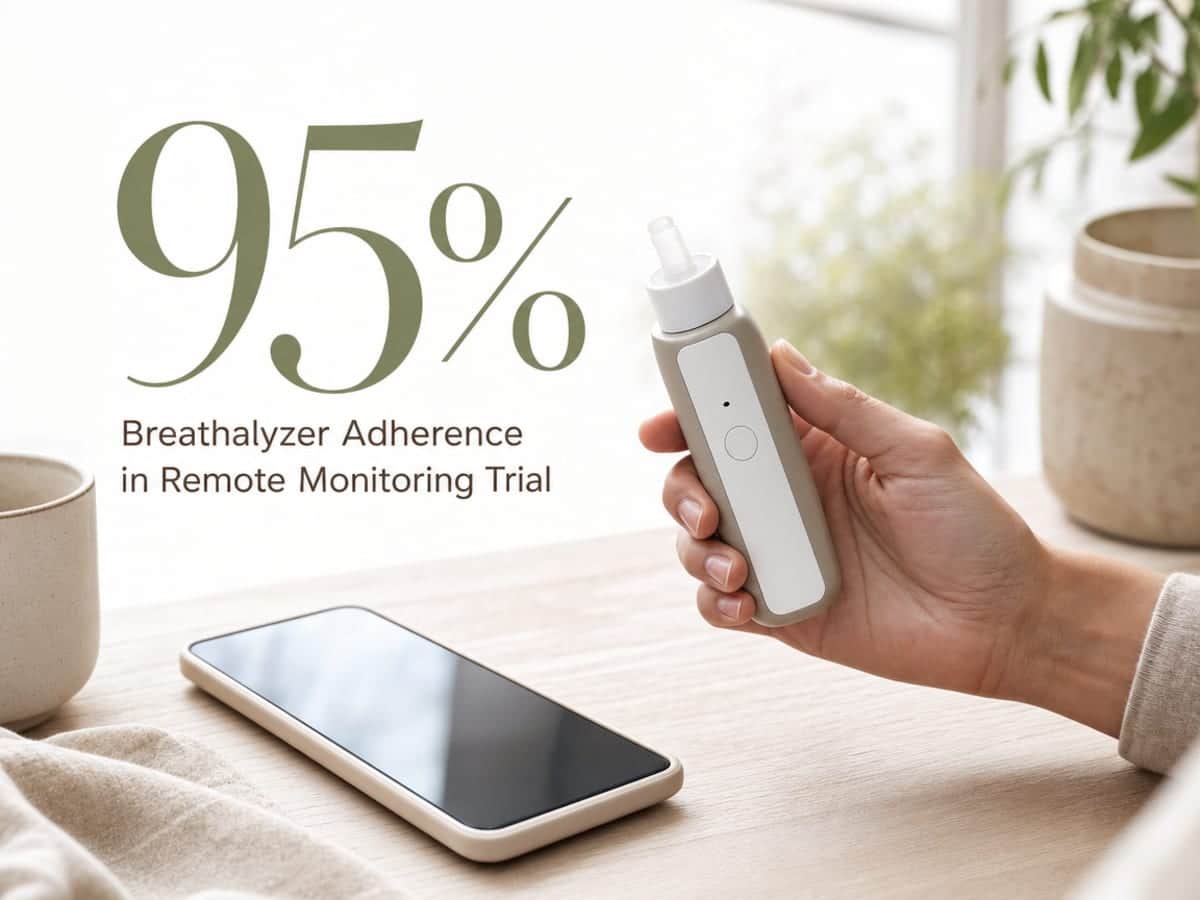
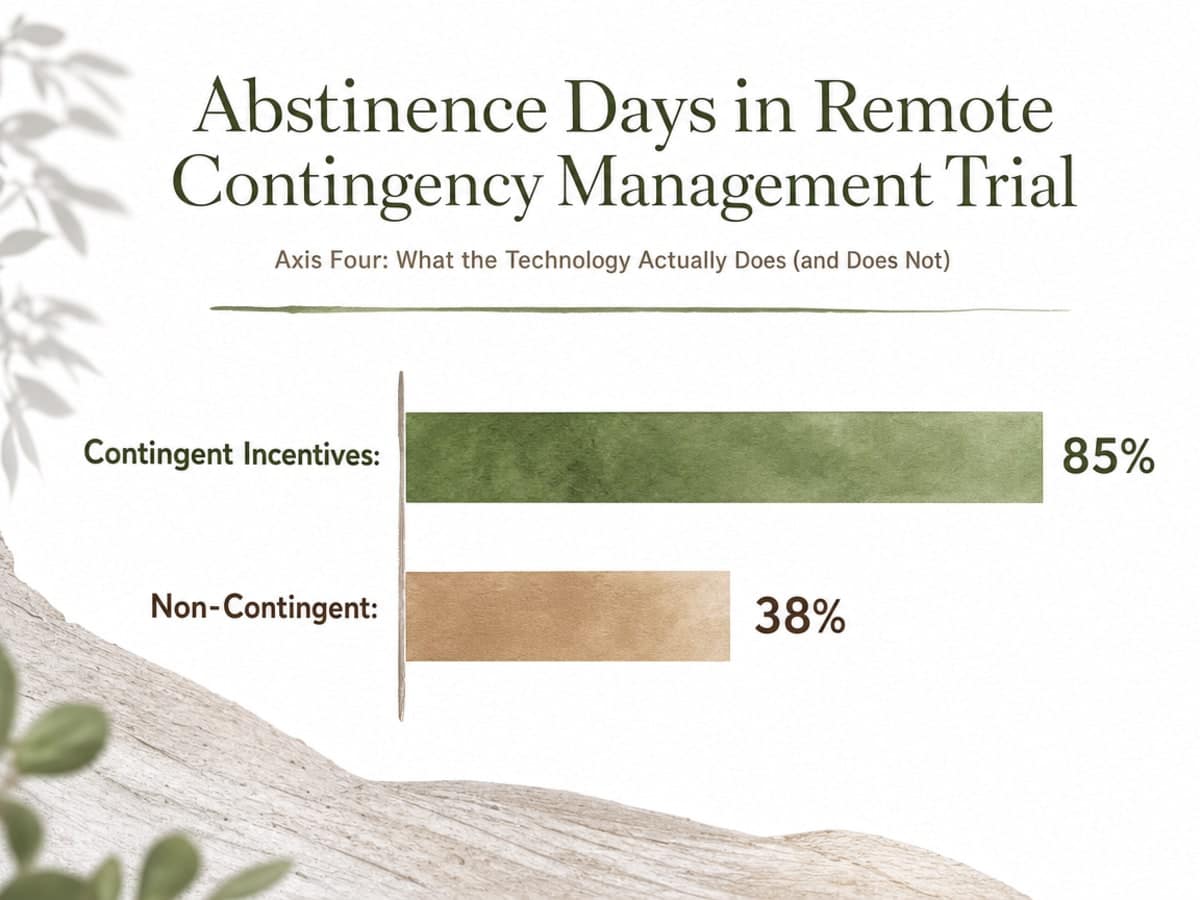
The clearest example comes from a randomized trial that paired a remote breathalyzer with contingency management — small financial incentives delivered by debit card and text message when a scheduled reading came back clean. The contingent group hit abstinent readings on 85% of days, versus 38% in the non-contingent group, with breathalyzer adherence above 95% 5. Read that carefully before you carry it anywhere. It is a controlled trial of a specific intervention — remote breathalyzer plus paid incentives — not a general benchmark for programs that hand out a device at discharge. The device did not create the outcome. The incentive structure wrapped around it did.
What that means for your call: if a program uses breathalyzers or a smartphone app, ask what the reading triggers. Does a clean check-in reinforce something? Does a missed one bring a counselor call within the hour, or just a note in a file? The tool without the clinical response is a piece of plastic.
Where the Evidence Is Still Exploratory: Wearables and Passive Sensing
Wearables are the shiny end of the brochure. Rings, watches, patches, ankle sensors — devices that promise to read his body in the background and tell someone if something is off. Some of that is real. Most of it is early.
A 2025 randomized controlled trial tested an Oura Ring paired with a daily diary as a feedback intervention for young adults with risky drinking. It combined sleep, heart rate variability, and resting heart rate with self-monitoring of alcohol use. The study reported moderate effects and high acceptability, and the researchers were careful about what they were claiming: the ring is a feedback tool, not an abstinence monitor 8. It nudges awareness. It does not detect drinking directly the way a breathalyzer or a transdermal sensor does. Those are different jobs.
The direction of research is easy to see in the pipeline. A mobile-phone RCT protocol has been published to test app-based ecological momentary assessment and intervention as an adjunct to therapy 9, and a telemedicine trial is evaluating multi-sensor mobile and wearable data in patients with co-occurring anxiety and alcohol use disorder 10. Both are worth watching. Neither is settled science yet.
Here is how to hold this on the call. If a program mentions wearables, ask two questions. First, what specifically does the device measure — physiology like sleep and heart rate, or alcohol itself? Second, who reads the data, how often, and what changes because of it? A program using a ring to track sleep recovery during detox and flagging poor sleep to a clinician is doing something useful and honest about it. A program implying that a wristband proves he is sober is selling you a story the research does not support. The distinction is not academic. It is the difference between a tool that supports his clinicians and a talking point that makes the website look modern.
What Residential Can Promise, and What Continuing Care Must Carry
Residential is a container. Inside that container, a program can control almost everything: how many hours of therapy he receives, who he sleeps near, what he eats, whether he sees a psychiatrist, how his sleep and mood are tracked week over week. That is a real thing to promise, and a good program will describe it plainly. Patient-reported outcomes collected during a residential stay show measurable improvement in physical health, mental health, sleep, and quality of life for patients admitted with recent alcohol use 4. Those gains are earned inside the container.
The container opens on discharge day. Whatever holds after that is continuing care, and the research is clear that it is not optional weight. The community residential outcomes study found that better long-term results were predicted not only by longer stays and more counseling during treatment, but by continuing outpatient care and self-help participation afterward 3. Read that as a division of labor. Residential builds the floor. Continuing care keeps him standing on it.
So when you evaluate the discharge plan, treat it as a clinical document, not paperwork. Ask what the outpatient schedule looks like in week one, week four, and month three. Ask which mutual-help meetings they connect him to before he leaves, and whether there is a warm handoff or just a phone number. Ask what objective check-ins, if any, follow him home, and who reviews the results. Ask when the family sessions continue, because SAMHSA’s advisory names positive family support as a predictor of long-term abstinence 2— and that support has to be structured after discharge, not assumed.
A Working Script for the Admissions Call
You are going to make this call, and you are going to have twenty minutes before someone needs something from you. Here is a script you can hold in one hand.
Open with what you need. “I am his wife. He has been drinking heavily for [length of time]. He has tried [what he has tried]. I need to understand how your program works before we go further.” That sentence positions you as the researcher, not a lead to be closed.
- On therapies: How many hours of individual counseling per week? Which evidence-based methods run the day — CBT, motivational interviewing, relapse prevention, 12-step facilitation? Who is licensed to deliver them?
- On measurement: Do you use standardized patient-reported outcomes for sleep, mental health, craving, and quality of life? How often, and does his counselor use them to adjust his plan 4? How do you track substance use, retention, and well-being together 1?
- On family: How many structured family therapy sessions are built in, and who leads them? When am I included in aftercare planning 2?
- On technology: What device, what does it measure, who reads the data, and what changes clinically when it flags something?
- On continuing care: What does week one at home look like, and who owns the handoff?
If the answers come back specific, you are talking to a program. If they come back in adjectives, thank them and dial the next number.
Frequently Asked Questions
How long should a residential alcohol treatment program last to be effective?
There is no single magic number, but the pattern in the research is consistent: longer stays paired with more counseling contact predict better outcomes across age groups 3. Most residential programs recommend 30, 60, or 90 days depending on drinking history and co-occurring conditions. Ask what triggers a recommendation to extend, and whether the length is clinical or insurance-driven.
What evidence-based therapies should a good alcohol treatment program offer?
Look for cognitive behavioral therapy, motivational interviewing, relapse-prevention groups, individual counseling, and structured 12-step facilitation, delivered by licensed clinicians. Medically supervised detox should be available on the front end when needed, and the program should be able to explain when medications like naltrexone or acamprosate are considered. If the intake staff cannot name the methods and hours specifically, keep asking.
How much should family be involved in his treatment, and what does that actually look like?
Family involvement is a clinical variable, not a courtesy. Federal guidance links family participation to better engagement, retention, and outcomes, with positive family support tied to long-term abstinence 2. That looks like structured family therapy sessions with a licensed clinician, regular counselor updates with his consent, coaching on how to respond to a slip, and your inclusion in aftercare planning before discharge.
Are wearables and monitoring apps a sign of a better program, or just marketing?
Depends on what the device does and who reads the data. A systematic review found smartphones and breathalyzers have the strongest evidence in alcohol care, while wearables and passive sensing remain exploratory 7. Rings and watches measure physiology like sleep and heart rate — useful feedback, not proof of sobriety 8. Ask what the device measures, who reviews it, and what changes clinically.
What questions should I ask about how a program measures whether he is actually improving?
Ask whether they track outcomes across three domains: substance use, treatment process (retention, adherence), and quality of life including sleep and mental health 1. Ask which standardized patient-reported outcome instruments they use, how often they collect them, and whether his counselor uses the results to adjust his plan 4. A program that names the tools and the cadence is measuring. Adjectives are not measurement.
What happens after he leaves residential care, and how do I evaluate the continuing care plan?
Continuing outpatient care and self-help participation after discharge are among the strongest predictors of long-term outcomes 3. Evaluate the plan as a clinical document: outpatient schedule for week one, week four, and month three; warm handoffs to specific counselors and mutual-help meetings; any objective check-ins and who reviews them; and a schedule for family sessions to continue. Vague handoffs are the risk point.
References
- Substance Use Disorder Treatment Outcomes. https://pmc.ncbi.nlm.nih.gov/articles/PMC12180564/
- The Importance of Family Therapy in Substance Use Disorder Treatment (Advisory). https://library.samhsa.gov/product/advisory-importance-family-therapy-substance-use-disorder-based-tip-39/pep20-02-02-016
- Treatment and outcomes of older patients with alcohol use disorders in community residential programs. https://pubmed.ncbi.nlm.nih.gov/12713195/
- Integration of Patient-reported Outcomes Assessment Into Routine Care for Patients Receiving Residential Treatment for Alcohol and/or Substance Use Disorder. https://pubmed.ncbi.nlm.nih.gov/34619714/
- Remote Alcohol Monitoring to Facilitate Incentive‐Based Treatment for Alcohol Use Disorder. https://pmc.ncbi.nlm.nih.gov/articles/PMC6286218/
- Objective continuous monitoring of alcohol consumption for alcohol use disorder treatment outpatients using transdermal alcohol concentration (TAC) monitors. https://pubmed.ncbi.nlm.nih.gov/30710610/
- Current approaches using remote monitoring technology in alcohol use disorder treatment: a systematic review. https://upcommons.upc.edu/bitstreams/dde22a6b-398a-4d16-81aa-9d7e9cf96b5b/download
- Oura Ring Behavioral Feedback Intervention for Alcohol Reduction Among Young Adults: Randomized Controlled Trial. https://pmc.ncbi.nlm.nih.gov/articles/PMC12677873/
- Using mobile phone technology to treat alcohol use disorder: study protocol for a randomized controlled trial. https://www.ncbi.nlm.nih.gov/pmc/articles/PMC6311064/
- Monitoring Telemedicine Platform in Patients With Anxiety and Alcohol Use Disorder Using Sensor Data from Mobile Devices and Wearables. https://clinicaltrials.gov/study/NCT03991650